



آئی این پی ویلتھ پی کے

Pakistan's EV rollout needs greater focus on high-mileage urban fleets
August 25, 2026
By Muhammad Zulqarnain
Pakistan can maximise fuel savings and emissions reductions from its electric-vehicle transition by giving greater priority to high-mileage urban fleets, including public transport, taxis, ride-hailing and delivery vehicles, according to energy-efficiency experts.
The approach assumes greater significance as Pakistan implements the New Energy Vehicles (NEV) Policy 2025-30, which targets NEVs at 30% of all new vehicle sales by 2030.
The policy envisages more than 2.21 million NEVs during 2025-30, including about 2.05 million two-wheelers, 53,951 three-wheelers, 99,155 four-wheelers and more than 5,000 buses, vans, trucks and light commercial vehicles.
Recent research by the Massachusetts Institute of Technology (MIT) provides a useful perspective on how the benefits of EV adoption can vary according to where and how vehicles are used.
The 2026 study found that the emissions advantage of EVs varies considerably according to the electricity mix, driving behaviour, traffic conditions, annual mileage and climate. Across most locations studied, battery EVs reduced lifecycle emissions by about 40% to 60% compared with internal-combustion vehicles, with larger benefits generally recorded in urban areas.
The research found that emissions savings increase with cleaner electricity, denser traffic and higher annual travel distances. Individual driving patterns can also significantly influence the environmental benefits of switching to an EV.
For Pakistan, the findings bring greater attention to where EVs are deployed as the country moves towards its 2030 target, particularly because high-utilisation vehicles can accumulate fuel and emissions savings more quickly than vehicles driven less frequently.
Speaking to Wealth Pakistan, a senior official from the National Energy Efficiency and Conservation Authority (NEECA) said the findings supported greater emphasis on high-density urban areas and high-utilisation vehicle categories.
The official identified public transport, taxis, ride-hailing services, delivery vehicles, two- and three-wheelers, and government and commercial fleets as important segments for accelerated EV adoption.
Vehicles travelling longer distances, operating frequently and spending more time in congested traffic can generate comparatively greater fuel savings and emissions reductions when shifted to electricity, the official said.
This makes high-mileage fleets particularly relevant to Pakistan's major urban centres, where public and commercial vehicles operate more intensively than many privately owned vehicles.
The gains from targeted EV adoption could also extend to the electricity system. The NEECA spokesperson said the availability of electricity generation relative to demand during certain periods created an opportunity to use EV charging as productive source of new electricity demand.
Properly planned charging could help utilise otherwise underused generation while replacing part of the petroleum consumed by the transport sector, the official said.
The benefits, however, would depend on how charging demand was managed. Smart and managed charging should increasingly align EV demand with periods of lower electricity-system demand and greater renewable-energy availability, according to NEECA.
Charging facilities should consequently be developed according to actual transport requirements, including at major urban corridors, fleet depots, commercial centres, workplaces and residential areas.
The authority is supporting the regulatory and technical framework for EV charging infrastructure, including registration and facilitation of charging stations and promotion of energy-efficient charging practices, the spokesperson told Wealth Pakistan.
The NEECA official said the MIT findings should be viewed as supporting more strategic EV adoption rather than slowing the transition.
A data-driven approach based on vehicle mileage, congestion, charging requirements and electricity availability could help Pakistan direct early electrification towards segments offering the greatest fuel and emissions savings, while supporting more efficient utilisation of the power system as the country moves towards its 2030 NEV target.
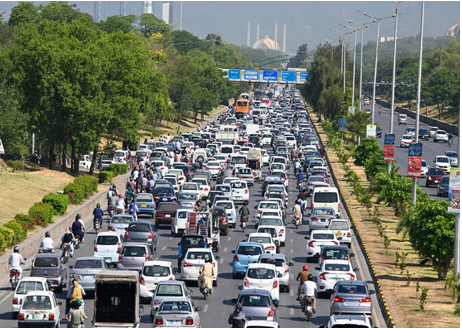
Credit: INP-WealthPk
متعلقہ مضامین