



آئی این پی ویلتھ پی کے

Sale of certified seed begins as early cotton sowing kicks off in Punjab
March 04, 2026
By Muhammad Luqman
The Punjab Seed Corporation (PSC) will provide certified seed of six cotton varieties to farmers across the province for the ongoing early sowing of the silver fiber crop, says Shahid Qadir, Director PSC.
Talking to Wealth Pakistan, he said the varieties available for sale include SS-32, SS-102, NIAB-878, NIAB-Kiran, NIAB-Sanib and NIAB-545.
He added that the price of certified fuzzy seed of approved varieties has been fixed at Rs3,700 per 10kg bag, while certified delinted seed will be available at Rs2,500 per 5kg bag.
Mr Qadir said the seed would be available at all the PSC sales centers and through its authorized dealers to ensure a smooth supply.
The Punjab government has set a target of bringing 0.7 million acres under early-sown cotton in the southern and central Punjab divisions of Multan, Sahiwal, Faisalabad, Sargodha and D.G. Khan. Meanwhile, cotton cultivation will be encouraged in the Bahawalpur division in line with the traditional time window, as the provincial government plans to develop the Bahawalpur division into a cotton valley.
Early sowing of cotton, which was discouraged in Punjab just a few years ago due to fear of pest attack, has been promoted over the past couple of years due to climate change, according to experts.
“There is no doubt that early cultivation of cotton was counterproductive in the past, but changing climate conditions have necessitated early sowing for better crop yields,” said Sajid Mehmood, Head Technology Transfer at the Central Cotton Research Institute (CCRI), Multan.
Talking to Wealth Pakistan, he said triple-gene varieties are recommended for early sowing in Punjab. However, effective crop management is critical for optimal growth of any variety.
He added that for cotton cultivation, daytime temperatures should range between 28 and 32 degrees Celsius, while nighttime temperatures should remain between 16 and 18 degrees Celsius.
“At these temperatures, cotton can grow well in this region,” Sajid Mehmood said.
According to the ginners’ community, there is a likelihood of increased cotton cultivation this year due to the efforts of the Sindh and Punjab governments to promote early sowing.
“Cotton cultivation began in the coastal districts of Sindh — including Badin, Thatta, Sanghar, Tando Mohammad Khan, Fazil Rahu and Gharo — during the second week of February. Now it is being cultivated in Punjab,” said Ihsan-ul-Haq, Chairman of the Cotton Ginners Forum.
He expressed hope that with an increase in the cultivated area and production, Pakistan’s dependence on imported cotton would decline significantly.
According to the Pakistan Cotton Ginners Association, cotton production in this region continues to face significant challenges. Arrivals at ginneries reached approximately 5.49 million bales by mid-January, falling well below initial projections and indicating stagnation. Output for the 2025-26 season is estimated at around 6.8 million bales — 34% below the 10.18 million bale target — mainly due to pest attacks and adverse climate conditions.
Punjab accounts for roughly 60% of total arrivals (about 2.58 million bales), while Sindh recorded 2.91 million bales, reflecting a 4% increase in Sindh and a 4% decrease in Punjab compared to the previous year.
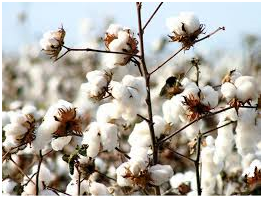
Credit: INP-WealthPk
متعلقہ مضامین