


i INP-WEALTHPK
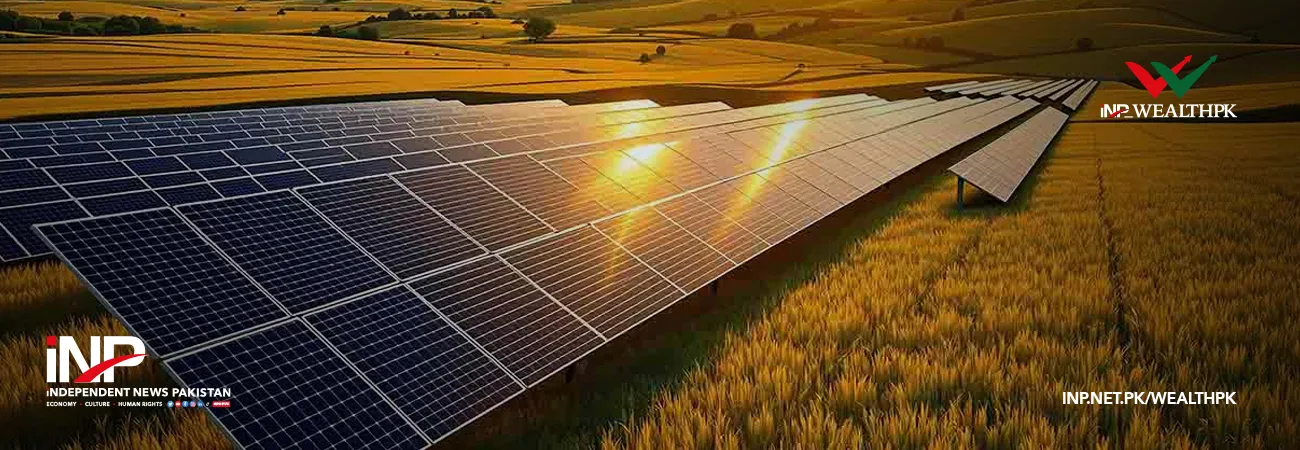
Govt plans low-cost daytime power package for industry amid solarisation surgeتازترین
June 02, 2026
By Muhammad Luqman
The Ministry of Energy is working on a time-of-use (ToU) electricity package for the industrial sector that would allow manufacturers to utilize surplus daytime power at significantly lower rates, as Pakistan seeks to balance a rapidly changing demand profile driven by large-scale solar adoption.
“We have consulted the industrial sector in this regard. Once the package is introduced, industries will get electricity at a rate of Rs6 per unit during the daytime while continuing to pay fixed charges,” Syed Faizan Ali, Energy Advisor to the Ministry of Energy (Power Division), told Wealth Pakistan.
He said industrial consumers would receive electricity at a rate of Rs10 per unit during nighttime hours, in addition to fixed charges.
At present, Pakistan’s industrial sector pays around Rs30 per unit, excluding fixed charges, making electricity costs one of the key challenges affecting industrial competitiveness.
According to Ali, the proposed package is intended to address the growing gap between daytime and nighttime electricity demand caused by the ongoing solarisation boom across the country.
Massive consumer-led adoption of solar energy has fundamentally reshaped Pakistan’s electricity demand pattern, significantly reducing reliance on the national grid during daylight hours.
“Daytime power demand is currently hovering between 13,000 and 14,000 megawatts, while demand at night is around 22,500 megawatts,” he said.
The government is also pursuing complementary measures to increase electricity consumption during off-peak periods. Alongside the industrial ToU package, it plans to accelerate the adoption of electric vehicles (EVs), which would increase electricity usage through battery charging.
Ali said a policy for the promotion of Battery Energy Storage Systems (BESS) is also under consideration, enabling consumers to store cheaper electricity generated during the day for use during nighttime hours.
“A policy to encourage local production of BESS is also being pursued so that people can benefit from this technology more easily,” he said.
According to Ali, the government is taking steps to ensure adequate electricity supply during peak nighttime demand.
“When solar systems kick in during the daytime, we reduce the use of reserve generation sources such as hydel and gas-fired power plants so that they can be utilized at night,” he said.
He explained that hydropower and gas-fired plants can be brought online quickly when demand rises, whereas coal-fired and nuclear power plants are comparatively less flexible in adjusting output.
Ali said the Ministry of Energy has also decided not to initiate any new imported fossil fuel-based power projects as part of broader efforts to reduce Pakistan’s import bill and lower electricity generation costs.
According to him, electricity generation from fossil fuels has declined significantly in recent years due to sustained policy measures.
“In 2020, power generation from fossil fuels accounted for 60 percent of the total energy mix. Today, that share has fallen to 45 percent,” he said.
He added that all new power projects are now based on local fuel sources or renewable energy, including solar, wind and hydropower.
“We want to increase the share of renewable and non-fossil-fuel energy in Pakistan’s power mix to 90 percent within the next few years,” Ali said.
Under that vision, only 10 percent of electricity would be generated from fossil fuels, with imported fuels accounting for just 5 percent of the total energy mix.
“These measures could reduce the fossil-fuel import bill from $2.4 billion to around $0.4 billion,” he added.
The industrial community has welcomed the government’s efforts to lower electricity costs and improve the availability of affordable energy for manufacturers.
“By lowering energy prices for the industrial sector, the government can make Pakistani products more competitive in international markets,” said Zaki Aijaz, Senior Vice President of the Federation of Pakistan Chambers of Commerce and Industry (FPCCI).
Talking to Wealth Pakistan, he said Pakistan’s industrial sector currently faces significantly higher energy costs than regional competitors, including India, Bangladesh and Sri Lanka.
He urged the government to implement the proposed low-tariff package without delay and translate policy announcements into practical relief for industry.
Aijaz also argued that no new Independent Power Producer (IPP) plants should be established, saying capacity payments to existing plants have been a major factor behind Pakistan’s high electricity costs.
He further called for the abolition of peak-hour tariff slabs to facilitate consumers and improve affordability across the country.
Industry stakeholders believe that lower-cost electricity, coupled with a more balanced and efficient power system, could help boost industrial output, improve export competitiveness and support broader economic growth.
Credit: INP-WealthPk
متعلقہ خبریں