

i INP-WEALTHPK
Transport infrastructure dominates future PSDP funding requirementsتازترین
June 14, 2026
By Ayesha Saba
Transport infrastructure projects are set to absorb the largest share of future federal development resources, with major road and railway schemes requiring trillions of rupees for completion over the coming years.
According to a presentation prepared for the Annual Plan Coordination Committee (APCC), transport-sector projects account for some of the biggest financing requirements within Pakistan’s federal development portfolio, reflecting the government's continued focus on improving national connectivity and logistics infrastructure.
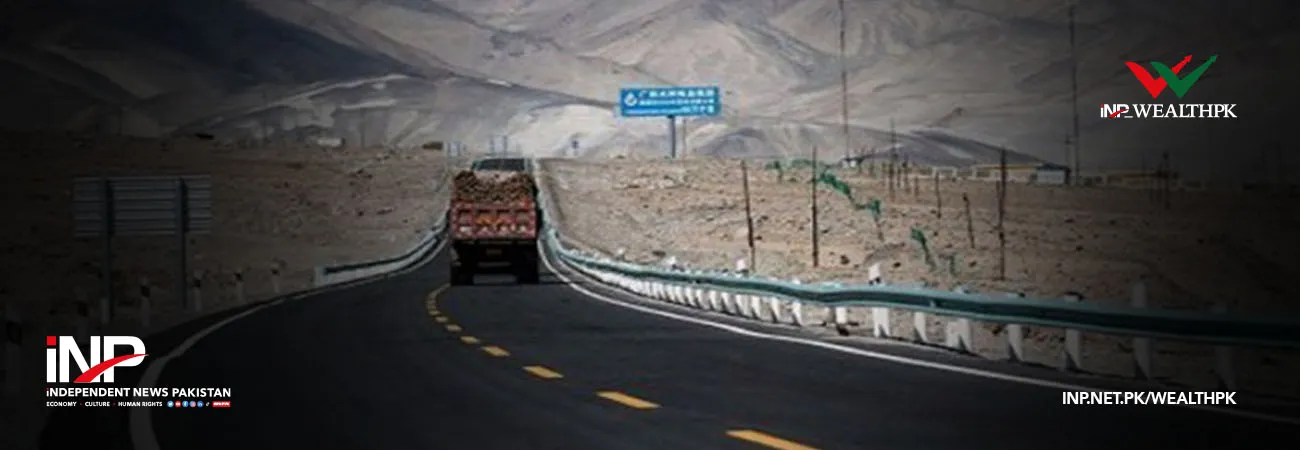
Data presented by the Planning Ministry show that projects being executed by the National Highway Authority (NHA) alone carry a combined cost of Rs3.69 trillion and a throw-forward of Rs3.01 trillion. Among them, the N-25 highway project, also referred to as the Pakistan Expressway, represents the largest immediate funding requirement. The project has a total cost of Rs415.1 billion and a throw-forward of Rs390.1 billion. It received Rs100 billion under PSDP 2025-26 and requires an estimated Rs290.1 billion in FY2026-27.
The realignment of the Karakoram Highway is another major commitment. According to the presentation, the project carries a cost of Rs502.6 billion and a throw-forward of the same amount, with financing requirements of nearly Rs250 billion for the next fiscal year. Similarly, the M-6 Sukkur-Hyderabad Motorway has a total cost of Rs363.7 billion and an outstanding liability of Rs363.7 billion. The project is projected to require Rs122 billion in FY2026-27. The M-8 motorway project, which aims to improve east-west connectivity across Balochistan, carries a throw-forward of Rs38.9 billion and requires Rs44 billion next year.
The document also highlights financing requirements for the N-5 (GT Road), one of the country's most important transport corridors. The project carries a cost and throw-forward of Rs155.4 billion and requires Rs26.1 billion during FY2026-27. Beyond highways, the railway sector is expected to remain a major consumer of development resources. The presentation identifies Main Line-1 (ML-1) as one of the largest projects in the federal portfolio.
ML-1 has a total project cost of Rs1.97 trillion and a throw-forward of the same amount. Although it received an allocation of Rs3 billion during FY2025-26, the project is projected to require Rs90 billion in FY2026-27. The document also includes ML-3 bridge financing and Thar Rail Connectivity among major railway-sector commitments. According to the presentation, Pakistan Railways projects collectively have a cost of Rs2.45 trillion and a throw-forward of Rs2.23 trillion. The sector received Rs22.4 billion in FY2025-26 and is projected to require Rs180 billion next year.
The Planning Ministry’s figures indicate that transport infrastructure alone accounts for a substantial portion of future PSDP financing needs. Road and railway projects collectively carry outstanding liabilities exceeding Rs5 trillion. The presentation suggests that meeting these requirements will remain a major challenge as policymakers seek to balance strategic connectivity projects with limited development resources and competing development priorities.
Credit: INP-WealthPk
متعلقہ خبریں