

i NEWS PAK-CHINA
Pakistani Official applies Chinese expertise after Wuhan Agri-Trainingتازترین
April 24, 2026
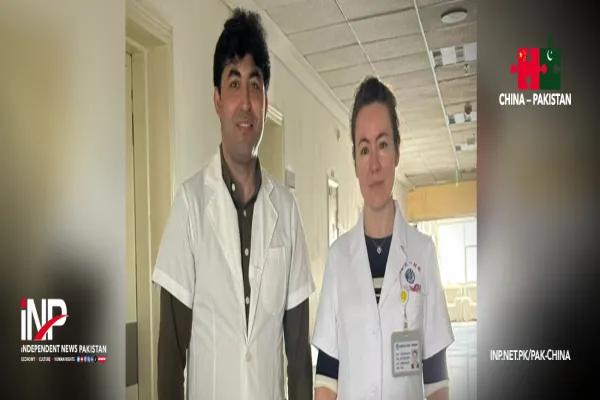
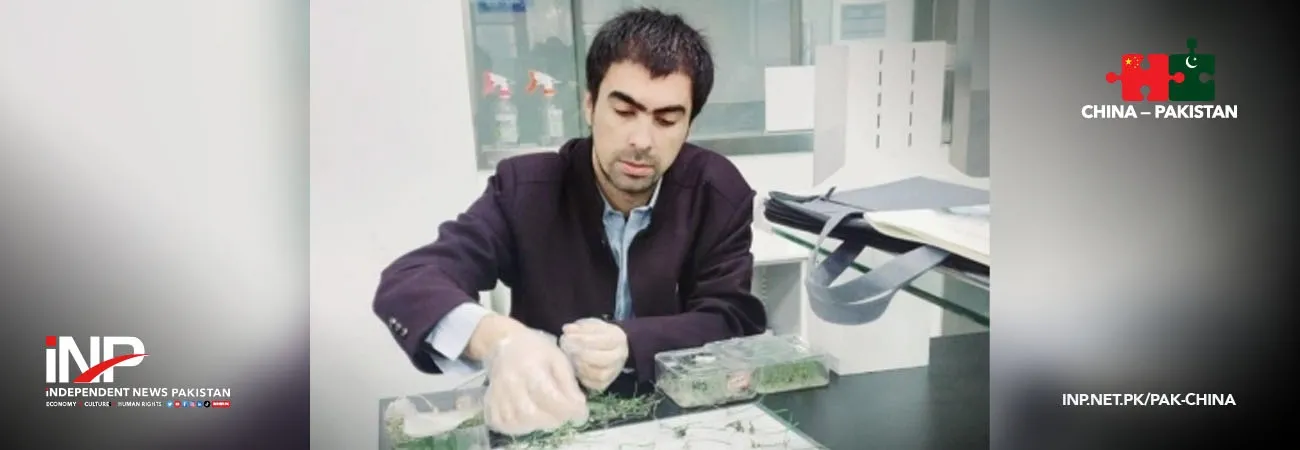
Syed Najeebullah Taran, an Assistant Director in Balochistan’s Food Department responsible for food safety, quality control and monitoring food operations, completed a training program in Wuhan, China earlier this year.
Now back at his post in Quetta, he is applying what he learned to transform food safety in his province, and he has just received approval for a PhD at Huazhong Agricultural University (HZAU),Wuhan for further study.
According to China Economic Net, the training course in seed production and processing technology is part of a capacity building initiative for 1,000 agricultural graduates of Pakistan, launched by Pakistani Prime Minister Shehbaz Sharif.
“I joined this training to gain advanced knowledge, learn modern technologies, and improve my professional skills, especially in agriculture and food systems,” Najeebullah Taran says.
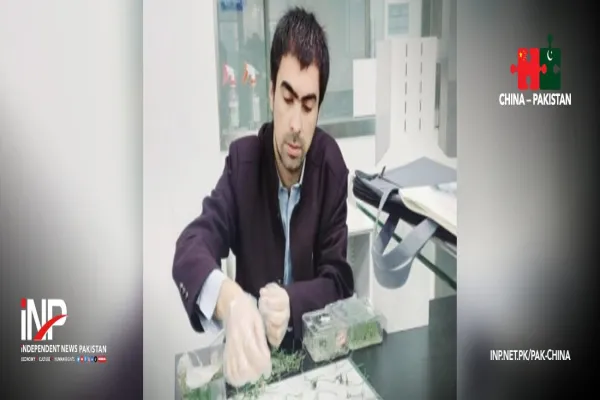
Among the many techniques he learned in Wuhan, one stands out: seed viability testing. “Now I can assess in advance whether a seed is suitable for germination or select a better variety, which helps prevent losses and improve productivity.”
During his training in Wuhan, Najeebullah Taran experienced firsthand the growth of different vegetable varieties and rice, and conducted experiments on seed breeding.
He witnessed a wide range of food types that are both high-yield and safe. “I was impressed by the advanced research techniques and modern seed development systems,” he recalls.
“Technologies like improved seed production, quality testing, and modern storage systems can easily be implemented in Pakistan to increase productivity.”
Back in Balochistan, Najeebullah Taran’s current role focuses primarily on increasing wheat seed production per acre by selecting high-quality varieties and applying advanced techniques.
“I have learned modern methods in China for evaluating seed quality and selecting suitable varieties, which helps improve wheat production and reduce losses during germination,” he explains.
His second responsibility involves the procurement of wheat from farmers, along with its proper storage, preservation, etc.
For preservation, Najeebullah Taran previously used chemical methods such as fumigation. However, his training in China introduced him to modern and innovative biological control techniques, including the application of phages and lysins.
“These are effective, environmentally friendly and cost-efficient,” he says.
Najeebullah Taran speaks highly of his interactions in China. “These theoretical modules helped me understand the complete seed industry system, from production to distribution, in a structured way.” Beyond specific technologies, he finds inspiration in China’s broader development model.
“The Chinese model inspired me to focus on innovation, planning and support for agricultural development in Pakistan,” he says. He now encourages other professionals to seek similar opportunities.
Since his return to Balochistan, Najeebullah Taran has begun to apply and adapt the advanced techniques he has learned in his current work.
And in a recent development, he applied for a PhD at HZAU and was accepted, marking the next step in his journey to bring modern agricultural science to Balochistan.
Credit: Independent News Pakistan (INP) — Pak-China
متعلقہ خبریں