

i NEWS PAKISTAN
Govt has launched comprehensive campaign to address issue of out-of-school children, NA toldتازترین
May 12, 2026
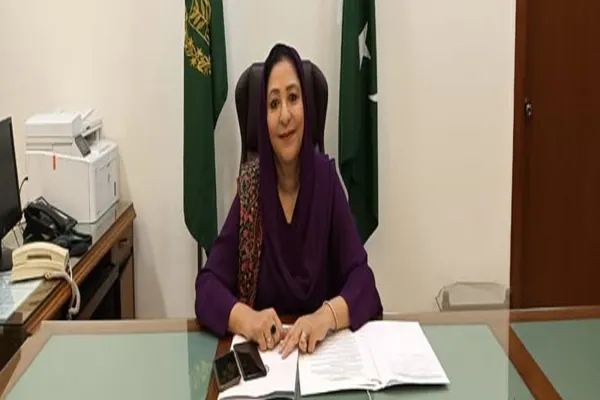
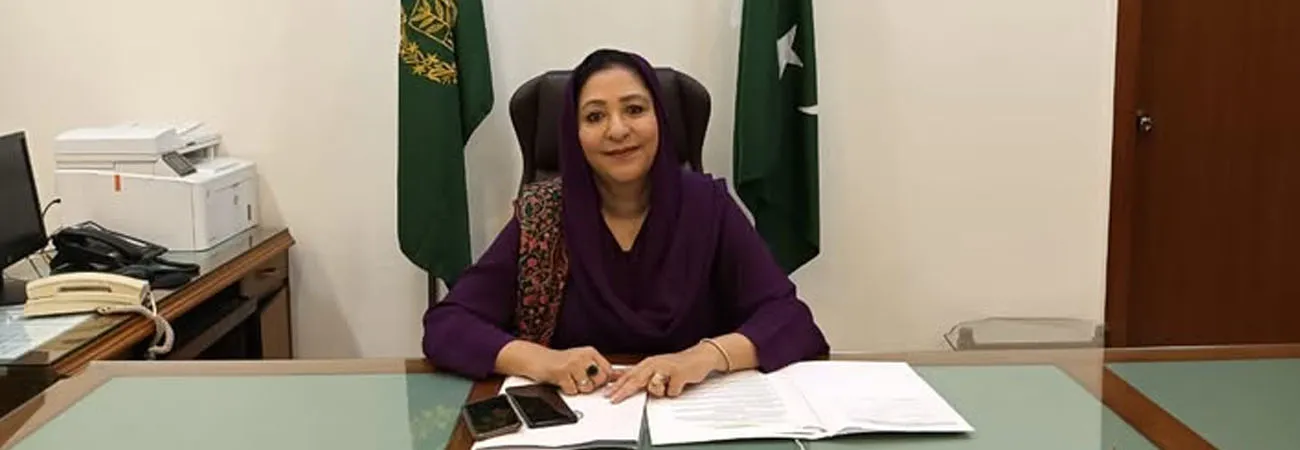
Minister of State for Federal Education and Professional Training Wajiha Qamar on Tuesday informed the National Assembly that the government had launched a comprehensive campaign to address the issue of out-of-school children and learning poverty across the country.
Responding to a Calling Attention Notice moved by MNAs Ibrar Ahmad, Anjum Aqeel Khan, and Malik Shakir Bashir Awan regarding the presence of around 26 million out-of-school children, the minister said the government was implementing targeted interventions through formal and non-formal education sectors.
She said a campaign titled “No Child Left Behind” had been launched in the Islamabad Capital Territory (ICT) in collaboration with the Ministry of Federal Education and Professional Training, the National Commission for Human Development (NCHD), Basic Education Community Schools, and several non-governmental organizations.
Wajiha Qamar informed the House that a door-to-door survey had been initiated in March to identify educational “hotspots” affected by migration, climate-related disruptions, poverty, and lack of access to schools. She said 36 union councils had been identified, of which surveys in 30 had already been completed, leading to the identification of around 17,000 to 18,000 out-of-school children.
The minister said separate plans had been devised for children aged five to nine years and those aged nine to 16 years, considering the different reasons behind school dropouts and non-enrollment in both age groups. She said accelerated learning programmes, technical education pathways including Middle Tech and Matric Tech, and recognition of prior learning initiatives were being introduced to equip children with both education and employable skills.
The minister added that NCHD had also initiated pilot accelerated learning programmes in seminaries, which would be expanded further. Highlighting additional measures, she said school meal programmes, digital learning initiatives, and connected classrooms through interactive boards were also being introduced to improve student retention and educational access.
Wajiha Qamar informed the House that the matter had also been discussed during the 38th Inter-Provincial Education Ministers Conference (IPEMC), where provinces shared their respective strategies and plans to tackle out-of-school children according to local dynamics and challenges. Responding to a supplementary question raised by MNA Anjum Aqeel Khan, the minister acknowledged that education data had long remained a challenge, adding that the ministry had established the Institute of Education as a technical arm to improve data protocols and management systems.
She said the ministry had developed an education portal where complete records of enrolled children were maintained, including their addresses, parents’ CNIC numbers, and contact details to ensure proper verification and tracking. Wajiha Qamar said the system also enabled authorities to track students if they shifted from one school to another, moved to unregistered institutions, or enrolled in seminaries, ensuring continuity of educational records.
The minister informed the House that under the Prime Minister’s directives, an Education Voucher Programme had been launched to support children from financially disadvantaged families who were unable to attend schools. She said evening classes and accelerated learning programmes had shown encouraging results, while NCHD and other educational institutions had collectively enrolled thousands of children in schools.
The minister said some of the enrolled children belonged to Islamabad, while others were enrolled through NCHD and associated programmes operating in different parts of the country. Wajiha Qamar said the causes of out-of-school children varied across regions and included poverty, migration, climate-related disruptions, social factors, lack of school facilities, and long travel distances,
particularly affecting girls’ education after the primary level. She said the government believed that financial support alone was not enough and emphasized the importance of equipping children with skills and employment opportunities. Replying to another supplementary question, the minister said that after the 18th Constitutional Amendment, certain limitations existed regarding the operational scope of NCHD in provinces.
Referring to Punjab and other provinces, the minister said provincial governments had shared their education plans with the federal government and were actively focusing on addressing the challenge of out-of-school children. She said the federal government was extending all possible technical assistance and coordination support to provinces to strengthen their educational initiatives and improve enrollment and retention rates across the country.
Credit: Independent News Pakistan (INP)
متعلقہ خبریں