


INP-WealthPk
China-Egypt poultry initiative offers model for strengthening Pakistan's rural economy
July 20, 2026
By Azam Tariq
China's "New Hope" poultry training programme in Egypt, which has helped rural women earn additional household income through scientifically managed poultry farming, offers a practical model that Pakistan could adapt to strengthen its rural economy and women's livelihoods, experts say.
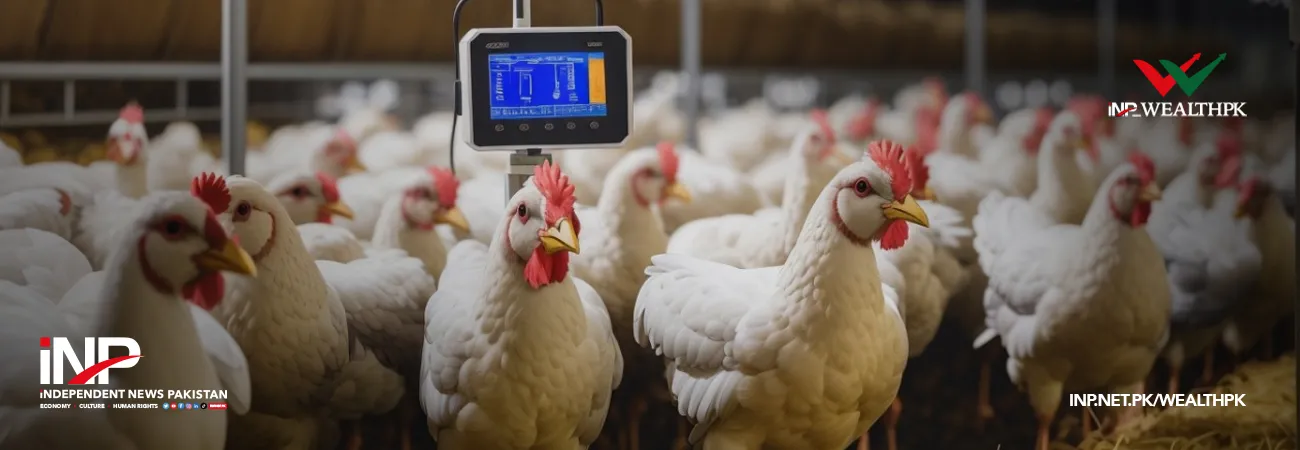
The second phase of the China-Egypt programme was launched in Egypt's Giza Governorate in June 2026, building on the success of its first phase, which reportedly generated up to 10,000 Egyptian pounds in additional income per participating household, according to the Chinese Embassy in Egypt. The initiative provides participants with starter kits comprising chicks, feed and medicines, along with regular veterinary support, enabling families to transform traditional backyard poultry rearing into organised income-generating enterprises.
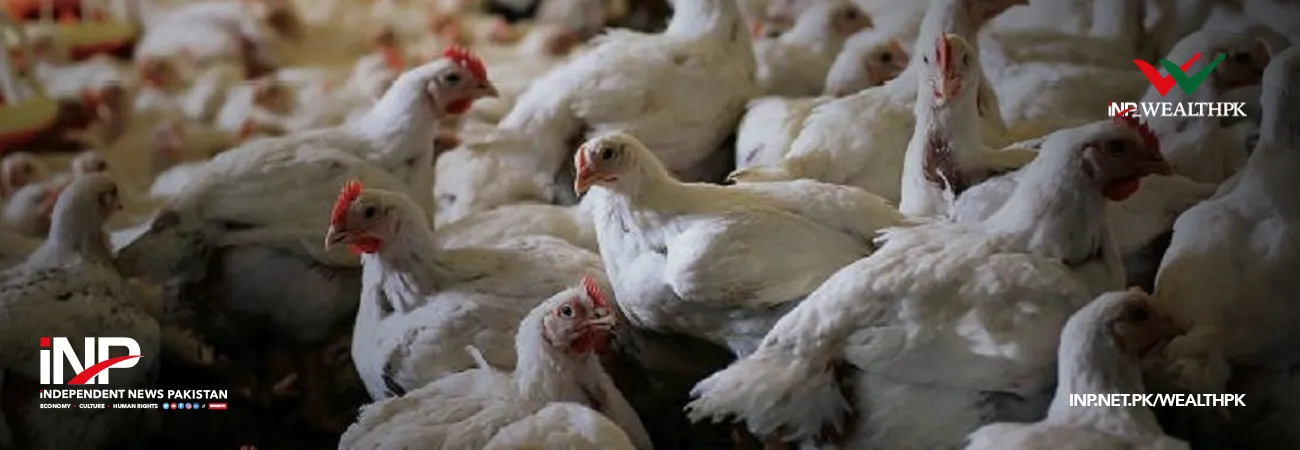
Pakistan already has a well-established poultry industry. According to the Pakistan Economic Survey 2025-26, the sector generated a gross value addition of Rs999 billion, employed more than 1.5 million people and contributed about 43.3% of the country's total meat production. Poultry meat production reached an estimated 2.826 million tonnes during 2025-26, while egg production stood at 28.279 billion.
Speaking with Wealth Pakistan, Sher Ahmed, former Chief of the Mountain Agricultural Research Centre (MARC) at the Pakistan Agricultural Research Council (PARC), said Pakistan should focus on learning from China's integrated poultry development model rather than simply importing breeding material.
"The real lesson is integrated poultry development," he said. "It covers breeding, feed efficiency, hatchery management, disease control, farm biosecurity, processing, cold-chain development and market information systems."
Ahmed noted that the recent shipment of 172,800 Guangming No. 2 hatching eggs to Pakistan highlighted the potential for expanding poultry production, as the eggs could eventually produce more than 50,000 parent broilers and over seven million commercial broilers.
However, he cautioned against adopting foreign breeds without proper evaluation.
"Chinese breeds such as Guangming No. 2 should first be tested under Pakistani conditions," he said. "They need to be evaluated for heat tolerance, feed conversion efficiency, survival rates, disease resistance, hatchability, parent-stock performance and meat quality."
He stressed the need for a national poultry genetics and breeding platform involving PARC, the National Agricultural Research Centre (NARC), the University of Veterinary and Animal Sciences (UVAS), private hatcheries, feed manufacturers and the Pakistan Poultry Association to strengthen domestic breeding capacity.
Ahmed also said that agricultural cooperation under CPEC 2.0, which has recently expanded into sheep in vitro fertilisation, dairy cattle breeding and joint agricultural training, should be extended to poultry genetics, breeding and feed research.
Echoing these views, Dr Mohsin Raza, Production Manager (Broiler Farms) at Sindh Feed, said the China-Egypt programme demonstrates how poultry farming can become an effective tool for poverty reduction in rural Pakistan.
"Our rural women are mostly concentrated in one skill—stitching," he said. "The New Hope programme offers a practical model that can be replicated here to diversify their income opportunities."
Raza said Pakistan already operates small-scale poultry distribution schemes, but many beneficiaries lack technical guidance on feeding practices, poultry health and farm management.
"Feed management remains largely informal, with many households relying on food leftovers without understanding their impact on poultry health and productivity," he said.
He said structured training programmes supported by veterinary services could help beneficiaries establish sustainable micro-enterprises rather than remain dependent on welfare assistance.
Raza also identified market concentration as a major challenge for small poultry farmers.
"Large companies often dominate the market through pricing strategies that make it difficult for new entrants to compete," he said, urging the government to strengthen market oversight and ensure fair competition for small-scale producers.
Experts believe Pakistan's poultry sector has the scale, infrastructure and market demand needed to benefit from a China-inspired rural poultry development model. They say that combining technical training, improved breeding, veterinary support and stronger research collaboration could not only raise poultry productivity but also generate employment, strengthen rural incomes and enhance women's economic participation.
Credit: INP-WealthPk
Related Articles