

INP-WealthPk
China-EU trade understandings offer new opportunities for global commerce
October 29, 2026
By Ayesha Saba
Recent trade understandings between China and the European Union have bolstered prospects for international commerce stability. By enhancing market access, regulatory cooperation, and predictability in trade relations, these developments offer vital tailwinds for export-oriented developing economies like Pakistan.
The understandings emerged from the second meeting of the China-EU Trade and Investment Consultations, held in Beijing on October 8–9 and co-chaired by Chinese Commerce Minister Wang Wentao and European Commissioner for Trade and Economic Security Maroš Šefčovič.
The consultations covered trade and investment, export controls, intellectual property protection and World Trade Organisation (WTO) reform, reflecting efforts by the two major trading partners to manage commercial differences while maintaining economic cooperation.
According to China's Ministry of Commerce, the discussions produced an understanding on principles governing hybrid vehicle trade, including non-discrimination, compliance with WTO rules and arrangements allowing continued growth from the 2025 import baseline. The two sides also discussed procedures for price undertakings involving Chinese battery-electric vehicles.
Waqar Ahmed, a trade policy expert at the Trade Development Authority of Pakistan (TDAP), told Wealth Pakistan that the developments highlighted the growing importance of regulatory compliance and market-specific standards for export-oriented economies such as Pakistan.
“For Pakistani exporters, the important lesson is that market access is becoming more conditional. Tariff preferences alone are no longer sufficient. Exporters increasingly have to meet technical standards, sustainability requirements, product certification and other regulatory conditions that vary across major markets,” he said.
Ahmed said the evolving China-EU trade relationship demonstrated how major economies were increasingly addressing commercial differences through sector-specific arrangements, regulatory mechanisms and negotiations.
He noted that such developments could create opportunities for developing countries to strengthen their participation in international markets, provided businesses adapted their products and production processes to changing requirements.
“Pakistan needs to identify product lines where changing trade arrangements create commercial space rather than treating large trade agreements only as geopolitical developments. Textiles, light engineering, surgical goods, food products and selected technology services all require different market-entry strategies,” he said.
The significance of the China-EU consultations is reflected in the scale of trade between the two economies, particularly in manufactured goods, electronics and advanced technology products.
According to Eurostat data released in April 2026, the EU imported goods worth €559.4 billion from China during 2025, while its exports to China stood at €199.6 billion, resulting in a merchandise trade deficit of €359.8 billion.
EU exports to China declined by 6.5% compared with 2024, while imports from China increased by 6.4%, illustrating the persistent imbalance in bilateral merchandise trade.
China also remained a major supplier of high-tech products to the European market. More than half of the EU's high-tech imports in 2025 came from China and the United States, with China alone supplying €150.4 billion, largely in electronics, telecommunications equipment and computers.
More recent Eurostat figures showed that China remained the EU's largest external supplier during the second quarter of 2026, accounting for €153.6 billion, or 21.9%, of the bloc's total goods imports.
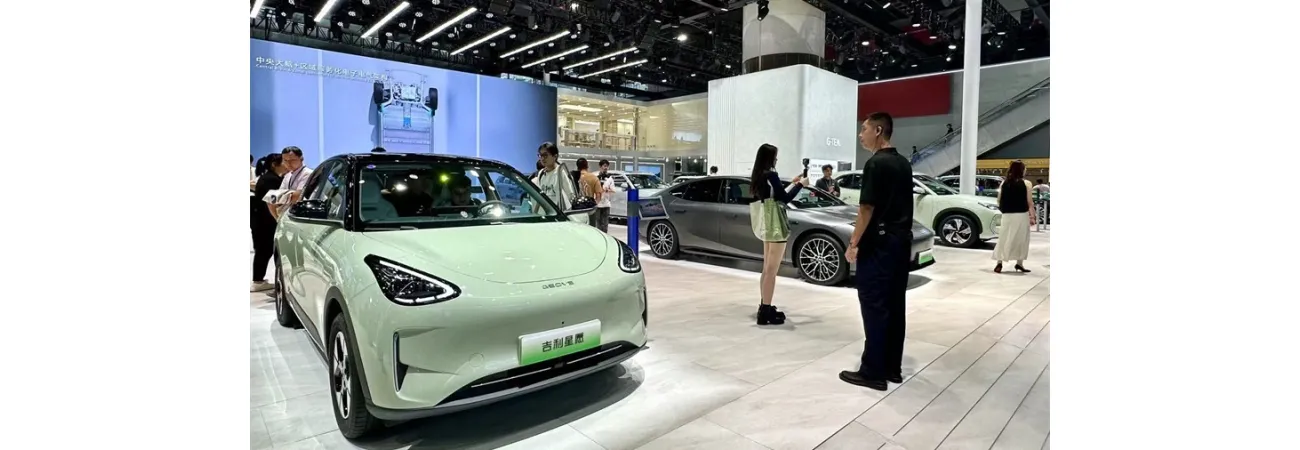
The automotive sector has become an important area of bilateral engagement as Chinese manufacturers expand their presence in European markets.
Citing Eurostat figures, China's Ministry of Commerce said EU imports of Chinese hybrid vehicles increased from 107,000 units in 2024 to 302,000 in 2025, highlighting the growing commercial importance of the sector.
The understanding on hybrid vehicle trade and discussions on battery-electric vehicle price undertakings could help provide clearer mechanisms for managing trade differences, although their practical impact will depend on implementation and applicable regulatory procedures.
For developing economies, the broader significance of the consultations lies in the increasing role of technical standards, product certification and regulatory requirements in determining access to major international markets.
Ahmed said Pakistan needed to strengthen coordination between trade policymakers, exporters and industrial associations to respond effectively to changing international trade arrangements.
He emphasised that exporters should closely monitor regulatory developments in major markets and improve their production processes to meet evolving quality, certification and sustainability requirements.
“The countries that understand new standards early, upgrade production processes and maintain consistent compliance will be better placed to secure orders. For Pakistan, trade policy therefore has to move closer to industry-level market intelligence rather than remaining focused mainly on tariff negotiations,” he said.
The recent China-EU trade understandings reflect continued efforts to maintain commercial engagement between two major economies despite differences over industrial competition, market access and trade imbalances.
For Pakistan, the developments underline the importance of identifying export opportunities arising from changing international trade arrangements while strengthening product competitiveness and regulatory compliance.
The longer-term significance of the understandings will depend on their implementation and the ability of China and the EU to manage outstanding trade differences. Their wider implications highlight the growing importance of regulatory cooperation, predictable market conditions and industry-specific export strategies in supporting international commerce.
Credit: INP-WealthPk
Related Articles