


INP-WealthPk
China’s climate monitoring model offers roadmap for Pakistan’s disaster preparedness
May 07, 2026
By Hasan Salahuddin
Pakistan’s rising exposure to extreme weather events is intensifying the need for a more proactive, data-driven disaster management framework, with China’s integrated climate monitoring system offering a potential model to strengthen early warning capabilities and reduce economic losses. The urgency of this shift is underscored by the catastrophic floods of 2022, which affected around 33 million people and displaced more than 8 million.
According to the World Bank, flooding causes average annual losses of about $1 billion in Pakistan, while the 2022 disaster alone resulted in damages exceeding $14.9 billion and total economic losses of approximately $15.2 billion. China, by contrast, has developed one of the world’s most comprehensive climate-monitoring systems by integrating land, sea, air and space-based observation networks.
In its 2025 annual climate report, the Ministry of Ecology and Environment of China stated that the country has built more than 90,000 ground-based automatic meteorological stations, multiple Fengyun satellites and the world’s largest weather radar network, enabling real-time data collection and multi-layered forecasting. This system continues to expand.
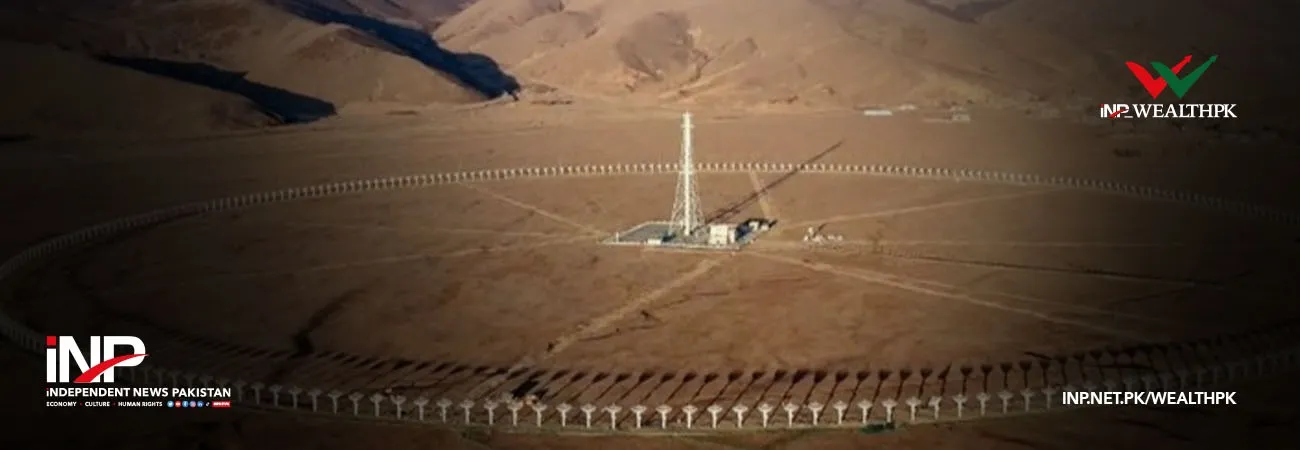
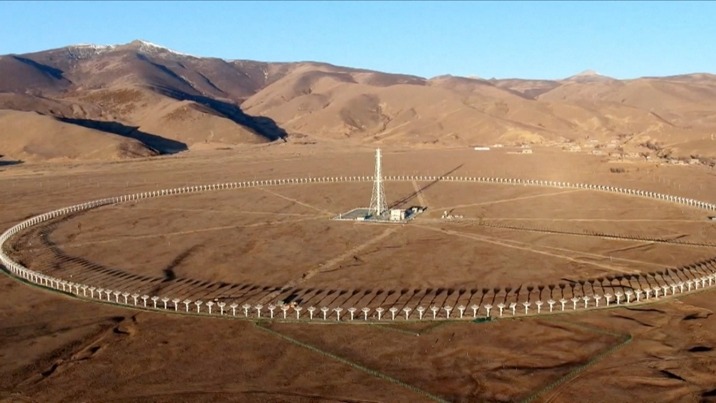
On April 1, 2026, China inaugurated its 27th national climate observatory in Xiong’an New Area, where a central station and eight auxiliary stations feed continuous meteorological data into a cloud-based big-data platform to enhance early warning systems and sector-specific forecasting services. In comparison, Pakistan’s monitoring infrastructure remains significantly constrained.
A 2025 Crisis Preparedness Gap Analysis by the World Bank found that functional radar coverage extends to less than 50% of the country’s area, while meteorological observatories exist in only 97 out of 170 districts. Automatic weather-station coverage is currently limited to just 40 districts. To address these gaps, Pakistan has initiated efforts under the World Bank-backed IFRAP programme, targeting the installation of four weather radars and 110 automatic weather stations by 2028.
While these steps indicate progress, experts say the scale and integration of systems remain key challenges. Speaking with Wealth Pakistan, Dr Rizwan Rasheed, Assistant Professor of Environmental Science and Sustainability at Government College University Lahore, said that while China’s model provides a useful reference, Pakistan must ensure economic sustainability to support long-term climate infrastructure. He explained that for developing economies, durable climate systems depend first on economic stability.
While cooperation with China can facilitate technology transfer and training, he cautioned that reliance on externally financed investments could increase fiscal pressure if not managed prudently. Junaid Iqbal Awan, Manager Climate Change and Programme Development at the Strengthening Participatory Organization, said Pakistan should adopt a targeted approach by expanding monitoring systems in high-risk zones such as glacier-fed valleys, flood-prone basins and coastal areas.
He noted that China’s advantage lies not only in advanced equipment but also in the integration of multiple data streams into operational platforms supported by strong institutional coordination. For Pakistan, he said, the immediate priority is to establish enforceable data-sharing protocols among institutions including the Pakistan Meteorological Department, the Water and Power Development Authority (WAPDA), the National Disaster Management Authority and provincial agencies.
Awan added that China’s use of artificial intelligence and cloud-based forecasting demonstrates how real-time, multi-source data can significantly improve nowcasting and extreme-weather prediction. However, he stressed that such cooperation must be paired with domestic capacity building to avoid long-term dependency. On satellite capabilities, he noted that while Pakistan may not achieve full data sovereignty in the near term, it can enhance resilience through diversified partnerships and stronger regional data-sharing arrangements.
Beyond technological systems, experts highlighted the role of community-based observation. In regions such as Chitral, Hunza and Skardu, local populations often detect environmental changes — including glacier shifts, river turbidity and unusual animal behaviour — before formal alerts are issued. Awan suggested formalising local observation networks, training community volunteers and deploying mobile-based reporting tools to strengthen feedback loops between communities and technical agencies.
Integrating such grassroots insights with advanced monitoring systems can improve the effectiveness of early warnings. Saad Iqbal, Monitoring and Evaluation Officer at the Ministry of Climate Change and Environmental Coordination, said Pakistan can benefit from adapting China’s integrated model, which combines weather stations, satellite systems and ground sensors into a unified monitoring framework.
He added that China’s application of artificial intelligence and big-data analytics offers practical lessons for improving forecasting accuracy. He also pointed to China’s experience in flood control and water management, including large-scale infrastructure such as the Three Gorges Dam, as an example of long-term planning in climate resilience.
Experts say strengthening Pakistan’s climate-monitoring framework will require sustained investment, institutional coordination and the integration of advanced technologies with local knowledge systems. As climate risks intensify, closer cooperation with China in climate science, data systems and early warning technologies could provide Pakistan with a structured pathway to transition from reactive disaster response to proactive risk management, helping protect lives, infrastructure and economic stability.
Credit: INP-WealthPk
Related Articles