INP-WealthPk
China’s smart ports strategy offers roadmap for Pakistan to modernise trade logistics
March 17, 2026
By Hasan
As China enters the 15th Five-Year Plan period for 2026–2030, experts say its smart ports strategy offers Pakistan practical guidance on modernising trade logistics through stronger connectivity, improved sequencing and deeper digital integration.
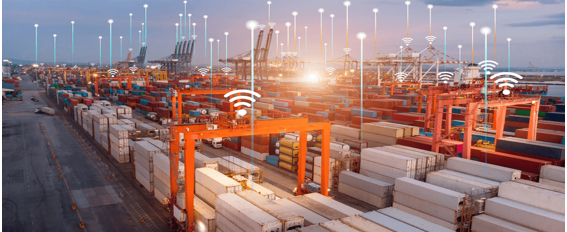
Smart ports rely on automation, real-time data systems and connected logistics networks to move cargo faster, reduce delays and improve shipment tracking across the supply chain. China’s 2026 Report on the Work of the Government said the Smart Customs cooperation partnership will be advanced, linking port modernisation more closely with customs reform and trade facilitation.
China’s shift toward smart port logistics is already visible across its port and waterway network. Official figures released ahead of the 2025 North Bund Forum showed that China had built 60 automated container terminals, maintaining its global lead in smart port construction, while its national electronic waterway chart now covers more than 10,000 kilometres.
According to China’s Ministry of Transport, the country’s waterway freight volume reached 6.56 billion tonnes in the first eight months of 2025. During the same period, port cargo throughput reached 12 billion tonnes and container throughput totalled about 230 million twenty-foot equivalent units (TEUs), with all three indicators recording year-on-year growth.
For Pakistan, experts say the key lesson is not simply to expand port facilities but to make trade gateways more coordinated, predictable and efficient.
Speaking with Wealth Pakistan, Adeel Rehman, Trade Facilitation Logistics Expert at the Ministry of Commerce, said Pakistan should begin port modernisation by strengthening basic logistics systems rather than focusing immediately on advanced automation.
In his view, the sequencing of reforms offers the most relevant lesson. China introduced automation on top of a reliable power supply, integrated multimodal logistics and functioning digital customs systems, while Pakistan still needs to strengthen those foundations.
He said Pakistan should focus on improving infrastructure, developing a unified Port Community System and fully implementing a single-window customs framework before introducing advanced tools such as AI-driven berth scheduling.
Rehman cited Karachi’s port-to-road transition as an example of why logistics fundamentals remain critical. Congestion on Mauripur Road, the absence of a dedicated freight corridor, delays in completing the Hyderabad-Sukkur Motorway and the missing M-6 segment continue to slow cargo movement after it leaves port terminals. Rail freight also remains an unreliable alternative, leaving road transport to carry the overwhelming share of port traffic.
He warned that fragmented digital solutions layered on top of weak systems can worsen delays instead of reducing them. In the near term, he said Pakistan would gain more from better customs-port integration, real-time container tracking and AI-assisted cargo scheduling than from costly terminal automation.
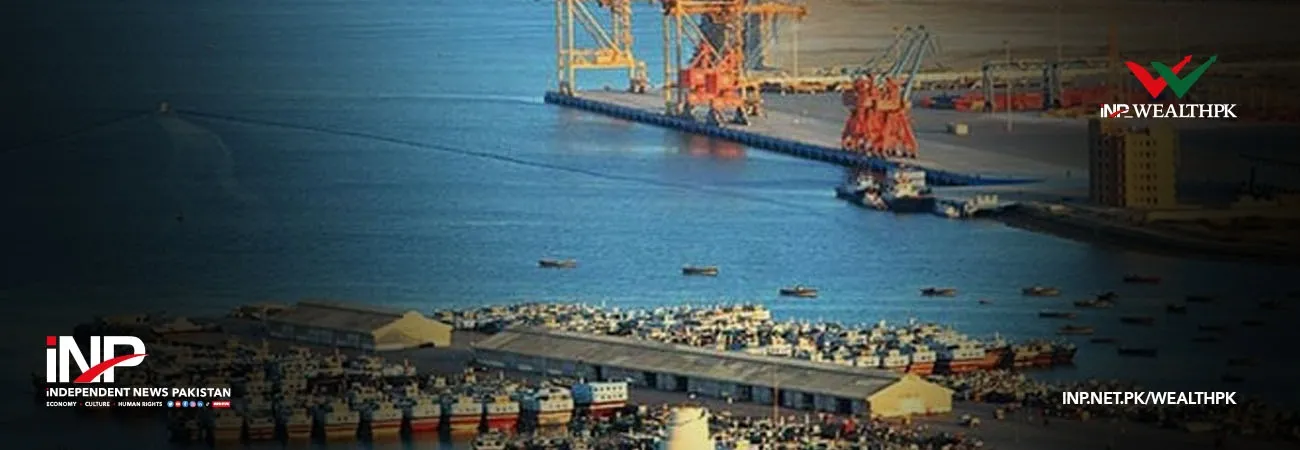
In Gwadar, he added, the opportunity lies in developing the port as a genuine multimodal hub, but only if the supporting infrastructure, such as a reliable power supply, transhipment facilities, free-zone activity, and digital customs systems, is fully operational.
Trade Facilitation Expert Hina Ayra of the federal government said smart ports depend on data integration across the entire logistics chain rather than simply larger cranes or terminals.
She noted that leading Chinese ports function as connected ecosystems where customs authorities, terminal operators, freight forwarders and inland transport providers have cargo visibility before vessels even berth. In Pakistan, by contrast, customs clearance, documentation checks and truck scheduling often occur sequentially rather than simultaneously, slowing cargo movement even when terminals are ready.
Ayra said Pakistan could reduce container dwell times by improving real-time data sharing among ports, customs authorities and inland transport networks. She also recommended wider use of risk-based facilitation systems, allowing trusted traders to move goods with minimal intervention while inspections focus on high-risk shipments.
Beyond digital coordination, she said Pakistan also needs truck holding areas, digital gate appointment systems and stronger road links connecting ports to national transport corridors. Artificial intelligence can also support pre-arrival documentation analysis and risk assessment, allowing authorities to address potential issues before cargo reaches inspection yards.
Zein Masoud, Imports and Shipping Specialist at Engro Corporation Limited, said port modernisation now depends as much on digitalisation and integrated logistics systems as on physical infrastructure.
He explained that smart ports link vessel scheduling, cargo handling, customs clearance and inland transport through unified digital platforms. Technologies such as AI-based planning systems, automated equipment and Internet of Things (IoT)-enabled cargo tracking can reduce vessel turnaround times and lower operating costs.
For Pakistan, Masoud said, this points to the need for a coordinated strategy combining regulatory reform, infrastructure upgrades and gradual technology adoption.
He also urged Pakistan to retain more domestic value from port activity by strengthening local participation in port ownership and operations. In addition, he called for a national smart ports strategy, stronger connections with railways, highways, dry ports and logistics parks, and wider adoption of digital customs and single-window clearance systems.
As China advances its smart ports strategy under the 2026–2030 development framework, experts say Pakistan can draw practical lessons for improving the efficiency of its trade logistics system.
Addressing bottlenecks outside port terminals, improving coordination between ports, customs and inland transport, and gradually expanding digital systems could help Pakistan reduce cargo delays and strengthen its competitiveness in regional trade.
Credit: INP-WealthPk
Related Articles