


INP-WealthPk
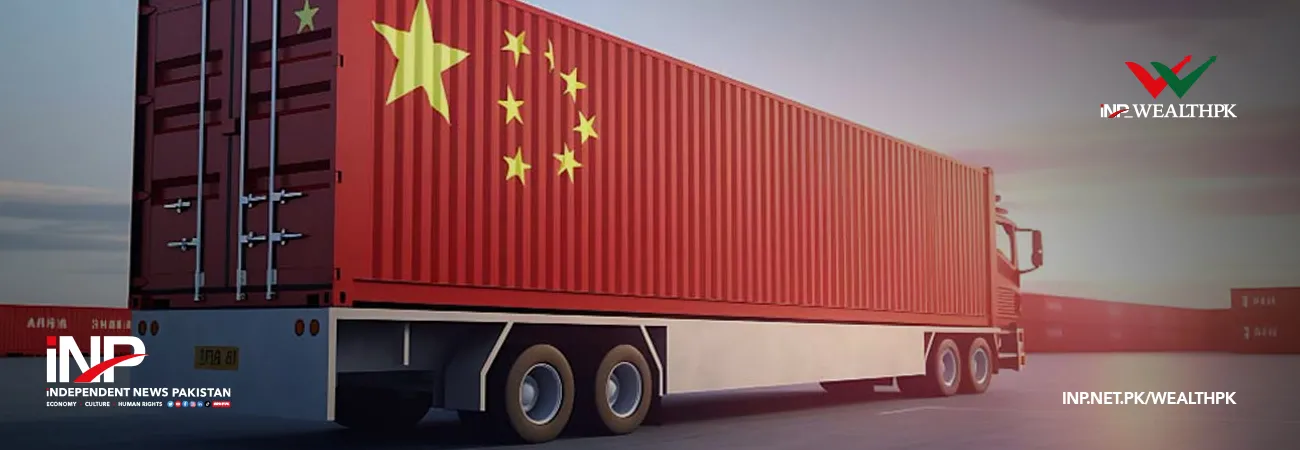
Rising exports to China create opportunity for Pakistan’s value-added agriculture sector
May 25, 2026
By Hasan Salahuddin
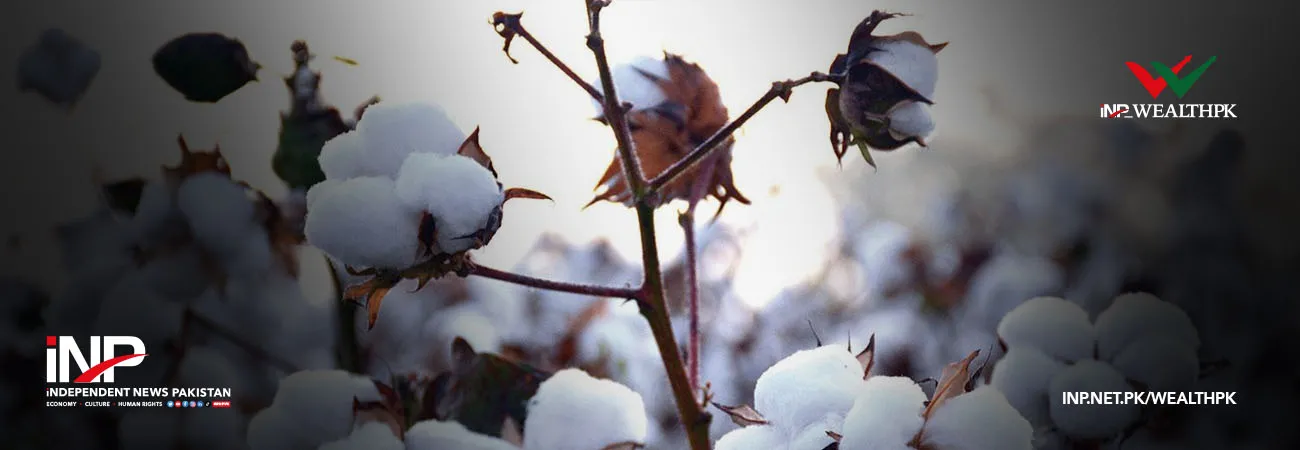
Pakistan’s agricultural exports to China are showing renewed momentum in early 2026, with cotton yarn and sesame seeds emerging as key growth drivers, creating fresh opportunities for the country to expand into higher-value exports and strengthen bilateral trade ties. According to the General Administration of Customs of China, Pakistan’s cotton-related exports to China reached $74.63 million during January-February 2026, up 3% from the $71.63 million recorded during the same period last year.
The report noted that uncombed cotton yarn was exported mainly to China’s textile hubs, including Fujian and Zhejiang, while sesame seed exports exceeded $14.07 million, with shipments destined for Anhui, Beijing, and Fujian for food processing and edible oil production. Official Chinese customs data further showed that Pakistan’s cotton yarn exports to China surpassed $451 million in 2025, indicating that the Chinese market remains a major destination for Pakistan’s textile-related exports.
The growing demand from China comes at a critical time for Pakistan’s agriculture and export sectors. The Pakistan Economic Survey 2024-25 reported agricultural growth of only 0.56%, with major crops witnessing sharp declines and cotton production falling to 7.08 million bales. At the same time, the Ministry of Commerce’s Yearbook 2024-25 stated that textiles and apparel account for nearly 56% of Pakistan’s total exports, contribute 40% of industrial employment, and represent 24% of industrial value addition, highlighting the sector’s importance to the broader economy.
Analysts believe the increase in exports to China presents Pakistan with an opportunity to move beyond raw and semi-processed commodities toward value-added products, including finished fabrics, garments, edible oils, and processed food items. Talking to Wealth Pakistan, Dr Adeel Ahmad, Assistant Professor of Agriculture at Superior University, said rising Chinese demand offers Pakistan an important opportunity to diversify into higher-value export segments instead of relying primarily on cotton yarn and sesame seeds.
He said expanding into finished textiles, technical fabrics, edible oils, and processed foods could help improve export earnings, reduce exposure to commodity price fluctuations, and strengthen Pakistan’s trade balance with China. Dr Adeel Ahmad also emphasized the importance of improving compliance and quality standards to meet China’s strict import requirements. He said reforms in grading, traceability, certification, and phytosanitary systems would help Pakistan maintain market access and compete in premium international markets.
He stressed that the transition toward value-added exports requires a comprehensive skills development strategy across the cotton value chain. According to him, farmers need improved expertise in contamination-free and high-yield cotton production, while processors and exporters require modern training in grading, handling, quality control, and value addition. He said targeted training programmes, stronger industry-academia linkages, extension services, certification systems, and public-private partnerships could help strengthen the cotton sector and reduce production losses.
Talking to Wealth Pakistan, Dr Ambreen Afzal, CEO of Blue Economy Research & Consulting Pvt Ltd, said China’s growing demand for agricultural products reflects strong trade complementarity between the two countries. She noted that China’s large population and evolving consumption patterns have increased demand for food and agro-based imports. Pakistan, she said, has comparative advantages in rice, fruits, cotton, and seafood, but could generate greater export earnings by focusing on processed textiles, packaged foods, fruit juices, and edible oils instead of raw commodities.
Dr Ambreen Afzal added that improved logistics and technology transfer under the China-Pakistan Economic Corridor could help Pakistan meet Chinese quality standards and integrate more effectively into regional supply chains. Ali Raza Gilal, an agricultural consultant based in Karachi, told Wealth Pakistan that the recent rise in exports to China is encouraging, but long-term benefits will depend on Pakistan’s ability to shift toward value-added production.
He said cotton yarn and sesame seed exports provide a strong starting point, but Pakistan should use the momentum to revive domestic industries, particularly the textile sector, by focusing on high-quality finished fabrics and premium garments instead of raw yarn exports alone. According to him, value-added textile exports could help reopen closed industrial units, support the expansion of operational mills, and create employment opportunities for skilled workers affected by the recent slowdown.
Gilal also noted that sesame offers higher export margins if Pakistan invests in local processing and edible oil extraction instead of exporting raw seeds only. He said aligning local production standards with Chinese market requirements and promoting “Made in Pakistan” finished products could help Pakistan transform the recent export growth into a sustainable long-term trade advantage.
Analysts believe Pakistan’s rising agricultural exports to China could support broader industrial development if the country successfully shifts from commodity-based trade toward higher-value manufacturing and processing sectors.
Credit: INP-WealthPk
Related Articles