


INP-WealthPk
EU–India FTA prompts Pakistan textile sector to reassess EU competitiveness
February 02, 2026
By Moaaz Manzoor
The conclusion of the EU–India free trade agreement last week has prompted Pakistan’s textile industry and market analysts to reassess their competitiveness in the European market, with experts pointing to narrowing tariff gaps and persistent domestic cost pressures.
Industry representatives say Pakistan continues to enjoy a strong foothold in the EU, but caution that its competitive advantages could erode once India’s preferential access under the agreement becomes operational. The emphasis, they argue, should be on how exporters adapt rather than on the agreement itself.
Speaking with Wealth Pakistan, Muhammad Hasan Shafqaat, Chief Executive Officer of the Pakistan Textile Council, said Pakistan’s export position in the EU remains broadly comparable to India’s.
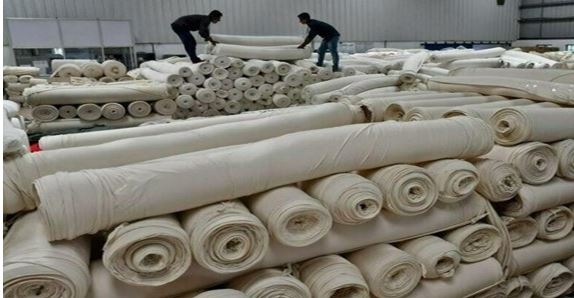
He said Pakistan’s textile and apparel exports to the EU stood at $7.04 billion in 2024, while India exported about $7.18 billion over the same period, giving India a marginal lead of roughly $140 million. However, Pakistan continues to hold a clear edge in value-added textiles. Under HS Chapters 61, 62 and 63, Pakistan’s exports were about $6.2 billion, compared with roughly $5.6 billion for India, translating into an advantage of nearly $600 million.
Shafqaat cautioned that this edge could come under pressure once India’s duty disadvantage of around 9.6 percent is eliminated following the implementation of the EU–India FTA, increasing price-related competitiveness stress for Pakistani exporters.
According to him, Pakistan’s competitiveness has weakened mainly due to the high cost of doing business, particularly rising minimum wages, taxation and energy prices. He highlighted that electricity tariffs for industrial consumers in Pakistan are around 11 cents per kilowatt-hour even after the recently announced reduction, compared with about 6.5 cents per kilowatt-hour in India. This gap, he said, puts Pakistani exporters at a disadvantage despite their strengths in garments and made-ups.
He welcomed recent government measures, including a Rs4.04 per unit cut in electricity tariffs, wheeling charges below Rs9 per kWh for industry, and a reduction in the export refinance scheme rate to 4.5 percent from 7.5 percent. He described these as positive and bold steps, noting that Pakistan is operating under an IMF programme.
However, sustaining competitiveness would require deeper structural reforms, he said. These include maintaining a market-managed exchange rate, as Pakistan’s real effective exchange rate (REER) is hovering around 104–105, which he described as effectively subsidising imports and making exports expensive. Bringing the REER to a fair value of 99–100 would require an exchange rate of around Rs294 to Rs297 per dollar. He added that lower taxation, improved long-term financing and a zero-rated regime for export-oriented inputs would also be critical.
From a financial market perspective, Waqas Ghani, Head of Research at JS Global Capital, said the EU–India trade pact carries meaningful implications for Pakistan, as the country’s GSP+ advantage was already narrow. He noted that India’s stronger value addition and supply-chain integration could quickly translate into pricing and reliability gains in the EU once tariffs are reduced.
Pakistan’s main vulnerability, he said, remains its high cost of production, though recent measures — including a 300-basis-point cut in the Export Finance Scheme rate to 4.5 percent and an around Rs4 per unit reduction in industrial power tariffs — would provide near-term relief to textile margins. Defending EU market share, Ghani stressed, would require sustained focus on cost competitiveness, energy pricing stability, export financing and moving up the value chain.
Similarly, Syed Zafar Abbas, manager at Zahid Latif Khan Securities, said the trade deal between India and the EU would “definitely have an impact”. He noted that it would bring the two sides closer economically and, given India’s large industrial base, Pakistan would need to carefully rethink its export strategy in response.
Credit: INP-WealthPk