



INP-WealthPk
Government targets stronger farm growth in FY2027 through mechanisation, higher credit
July 06, 2026
By Abdul Ghani
The government has set an ambitious 3.6% agricultural growth target for FY2026-27, anchored in higher farm credit, better mechanisation, the adoption of climate-smart technologies and livestock reforms—key measures aimed at strengthening one of Pakistan's most important economic sectors.
According to the Finance Division's Monthly Economic Update & Outlook (June 2026), the agriculture sector grew by 2.9% during FY2025-26 despite flood-related damage. Building on this recovery, the government expects stronger performance across major subsectors during the new fiscal year through targeted policy interventions and improved availability of agricultural inputs.
The report projects livestock to lead agricultural growth with an expected expansion of 3.9%, followed by other crops at 3.5%, important crops at 2.9%, fisheries at 1.7%, and cotton ginning at 1.5%. According to the Finance Division, these targets are supported by measures aimed at improving farm productivity and strengthening rural incomes.
The document states that the government's strategy focuses on improving the availability of quality farm inputs, expanding mechanisation, promoting climate-smart agricultural technologies, strengthening agricultural research and extension services, reforming the livestock sector, developing aquaculture and improving farmers' access to finance. These initiatives are expected to enhance productivity while making agriculture more resilient to climate-related challenges.
According to the report, the availability of key agricultural inputs for the ongoing Kharif 2026 season has improved, providing favourable conditions for crop production. Enhanced input availability is expected to support higher yields and help drive progress toward the sector's growth targets during FY2026-27.
Agricultural financing also continued to expand during the current fiscal year. The report notes that agricultural credit disbursement increased by 18.9% to Rs2.458 trillion during July-April FY2025-26, compared with Rs2.067 trillion during the corresponding period of the previous year. The increase reflects continued efforts to improve farmers' access to institutional finance for purchasing inputs, machinery and other production requirements.
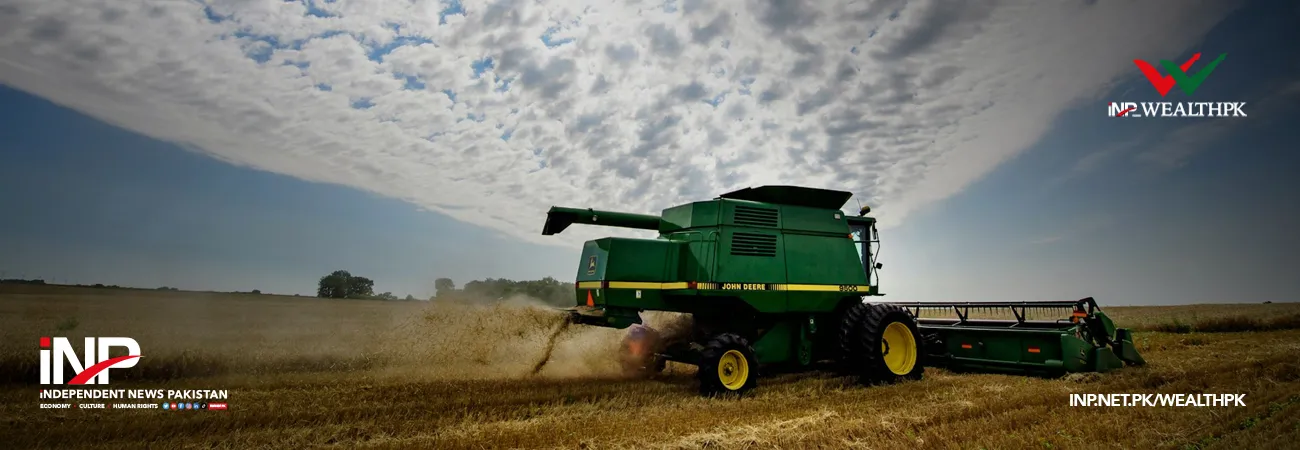
Mechanisation gained further momentum as imports of agricultural machinery and implements increased by 24.8% to $123.8 million during July-May FY2025-26, up from $99.2 million in the same period last year. According to the report, greater use of modern farm equipment is expected to improve efficiency, reduce production costs and enhance overall agricultural productivity.
The report also provides an update on fertiliser usage during the current Kharif season. Urea offtake during April-May 2026 reached 882,000 tonnes, representing an increase of 31.9% over the corresponding period last year. In contrast, DAP offtake declined by 24.3% to 146,000 tonnes, which the Finance Division attributes primarily to higher prices of the fertiliser.
According to the Finance Division, improving productivity in agriculture remains essential for ensuring food security, supporting exports and sustaining rural livelihoods. The report notes that continued investment in technology, farm mechanisation, agricultural finance and livestock development is expected to strengthen the sector's resilience while contributing to broader economic growth.
The report concludes that the government's agriculture strategy seeks to build on the recovery achieved during FY2025-26 by improving productivity across crops, livestock and fisheries. With stronger policy support, better input availability and expanded access to finance, the sector is expected to make a larger contribution to Pakistan's economic growth during FY2026-27.

Credit: INP-WealthPk
Related Articles