INP-WealthPk
Middle East crisis accelerates Pakistan’s pivot to renewable energy
April 07, 2026
By Syed Muhammad Ghaznavi
Rising global fuel prices amid ongoing geopolitical tensions in the Middle East, particularly around key oil and LNG supply routes, have once again exposed Pakistan’s vulnerability to external energy shocks. However, policy experts say the situation may also create an opportunity to accelerate the country’s transition towards domestic renewable energy sources.
Dr Khalid Waleed, Research Fellow at the Sustainable Development Policy Institute (SDPI), said Pakistan can use the current global volatility to rethink its long-term energy strategy and reduce reliance on imported fuels.
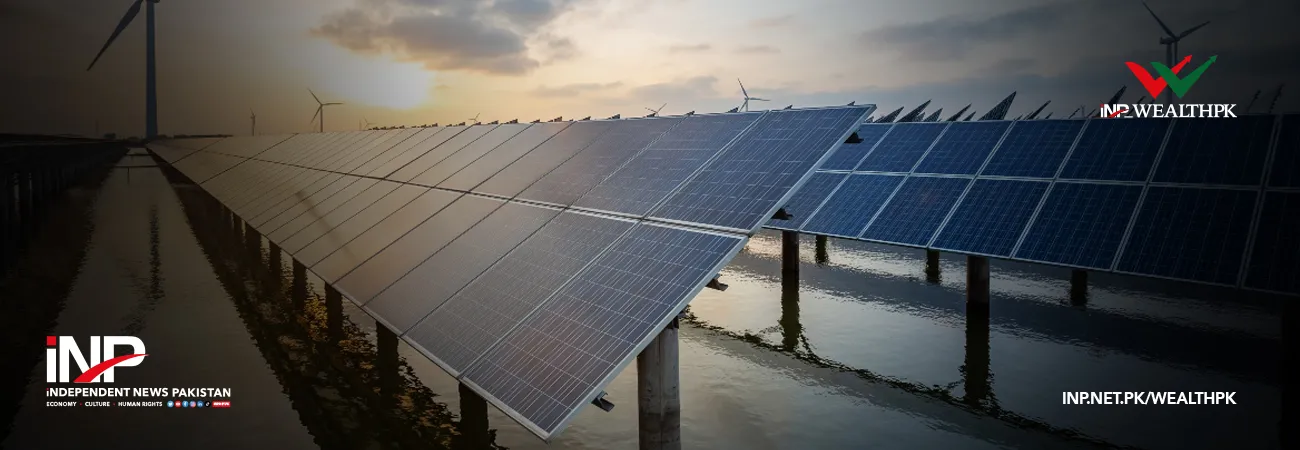
He pointed to the country’s recent surge in solar adoption as evidence of both urgency and feasibility. Pakistan’s rooftop solar capacity has reached an estimated 5.3 gigawatts by 2025, following rapid growth in installations over the past two years. Imports of solar panels have also increased significantly, reflecting strong consumer demand for alternatives to grid electricity.
This expansion has already started to affect the power system. In some areas, solar energy has reduced daytime grid demand by around 8–10%, easing pressure on peak generation and improving system stability.
However, Pakistan remains heavily dependent on conventional energy sources. Thermal power still accounts for about 59% of electricity generation, while fossil fuels make up more than 60% of installed capacity. As a result, fluctuations in global oil and LNG markets continue to translate directly into domestic cost pressures.
Dr Waleed said this gap between progress and dependence highlights the need for a more coordinated transition. He noted that the growing global focus on climate finance provides an additional opportunity. International financial institutions such as the Asian Development Bank and the World Bank have expanded funding for clean energy initiatives in emerging economies.
According to global estimates, climate finance flows have crossed $1 trillion annually, with an increasing share directed towards renewable energy and energy system transformation. Dr Waleed said Pakistan can utilise such financing not only to expand renewable capacity but also to gradually restructure existing energy commitments linked to imported fuels.
A significant portion of Pakistan’s energy costs is tied to long-term contracts, including capacity payments and fuel import obligations. He said concessional financing could help create fiscal space to shift towards domestic energy sources.
Pakistan has set a target of generating 60% of its electricity from renewable sources by 2030. Existing strengths, including Sindh’s wind corridor, hydropower potential in the northern regions and the rapid spread of distributed solar systems, provide a foundation for this transition.
At the same time, Dr Waleed emphasised that scaling up renewable energy will require investment in grid infrastructure and energy storage systems to address intermittency challenges. “Energy transition is not only about increasing generation capacity, but also about strengthening the overall system,” he said.
He also highlighted the importance of expanding access to clean energy through community-level solutions and targeted financing, so that the benefits of the transition are shared across different income groups.

Credit: INP-WealthPk
Related Articles