

INP-WealthPk

Pakistan aims to turn booming sesame exports to China into higher-value trade
November 13, 2026
By Ayesha Saba
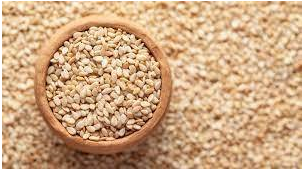
Pakistan's booming sesame exports to China are unlocking opportunities to develop a value-added agro-processing industry. Agricultural experts noted that processing raw sesame into oil, paste, hulled seeds, and packaged products can maximize export earnings while strengthening domestic manufacturing.
According to China's General Administration of Customs, Pakistan exported 103,340 tonnes of sesame seeds worth $105.29 million to China during January–July 2026, compared with 49,031 tonnes valued at $61.13 million during the corresponding period of 2025.
The figures represent an increase of 110.8% in export volume and 72.2% in value, reflecting the expansion of Pakistan's sesame trade with China and the growing opportunities for agricultural exporters.
However, Pakistan's sesame exports remain largely concentrated in raw seeds, with comparatively limited downstream processing. According to World Bank WITS data, the country's exports of sesame oil and its fractions amounted to only $228,470 in 2024, highlighting the potential for developing higher-value products.
Ahtisham Iqbal, Senior Scientific Officer at the Pakistan Agricultural Research Council (PARC), told Wealth Pakistan that China's growing demand for Pakistani sesame offered an opportunity to transform the crop into a more commercially valuable export commodity.
However, he emphasised that sustained export growth would require improvements in agricultural productivity, post-harvest handling and supply-chain management.
"Pakistan's sesame exports have expanded considerably, but higher shipment volumes do not automatically translate into better returns for farmers. The real challenge is to improve per-acre productivity, reduce post-harvest losses and ensure that growers receive prices reflecting the quality of their produce," he said.
Iqbal noted that China's large food-processing industry provided a substantial market for Pakistani sesame, while diversification of export destinations and products could help strengthen the sector's long-term competitiveness.
"Export diversification should accompany product diversification. Pakistan needs to develop a more organised sesame supply chain where farmers have access to improved seed varieties, technical guidance and reliable buyers. Without these improvements, rapid export growth could remain vulnerable to inconsistent production and price volatility," he explained.
He added that contract farming, organised procurement and stronger linkages between growers and exporters could improve product traceability and help Pakistan meet international quality requirements.
According to World Bank WITS data, Pakistan's global sesame seed exports reached $187.31 million in 2025, with China accounting for approximately $85.90 million.
South Korea, Kazakhstan, the United States and the Netherlands were among the other major destinations for Pakistani sesame, indicating opportunities to expand the country's presence in international agricultural markets.
Experts believe that developing domestic processing facilities could help Pakistan move beyond raw commodity exports and increase the commercial value of its sesame trade.
Talking to Wealth Pakistan, M. Haroon, Assistant Professor at Pir Mehr Ali Shah Arid Agriculture University Rawalpindi (PMAS), said growing Chinese demand could encourage Pakistan to establish a competitive sesame-processing industry, particularly in hulled seeds, sesame oil, tahini and ingredients used by bakeries and food manufacturers.
"Different sesame products serve different industrial and consumer markets. Pakistan should first identify which processed products Chinese buyers actually require, because investment in machinery without confirmed demand could leave processing facilities commercially unviable," he said.
Haroon explained that modern cleaning, dehulling, sorting and oil-extraction technologies could improve product consistency and help manufacturers meet international food-industry requirements.
He said investing in processing equipment should be paired with stronger testing, certification and quality-control systems to ensure that Pakistani products meet the standards of international buyers.
"Compliance is a main barrier to entering higher-value food markets . Buyers increasingly require reliable testing for pesticide residues, microbial contamination and other food-safety risks. Pakistan needs accredited laboratories, stronger traceability and internationally recognised certification alongside new processing facilities," he observed.
Haroon suggested that partnerships with Chinese equipment manufacturers could support the development of Pakistan's agro-processing industry through machinery installation, workforce training and technical maintenance services.
Such cooperation could help domestic firms adopt modern processing technologies while gradually strengthening their own technical expertise and production capabilities.
"Technology transfer should extend beyond purchasing processing equipment. Pakistani firms need to understand production processes, quality-control systems and product development so they can gradually build their own technical capabilities," he added.
Haroon cautioned that the profitability of sesame processing would depend on several commercial factors, including raw material prices, energy costs, processing yields and competition from established international suppliers.
He recommended product-specific feasibility studies and a phased approach to expanding into higher-value sesame products, ensuring that investments were supported by market demand and commercially viable production costs.
Credit: INP-WealthPk
Related Articles