



INP-WealthPk
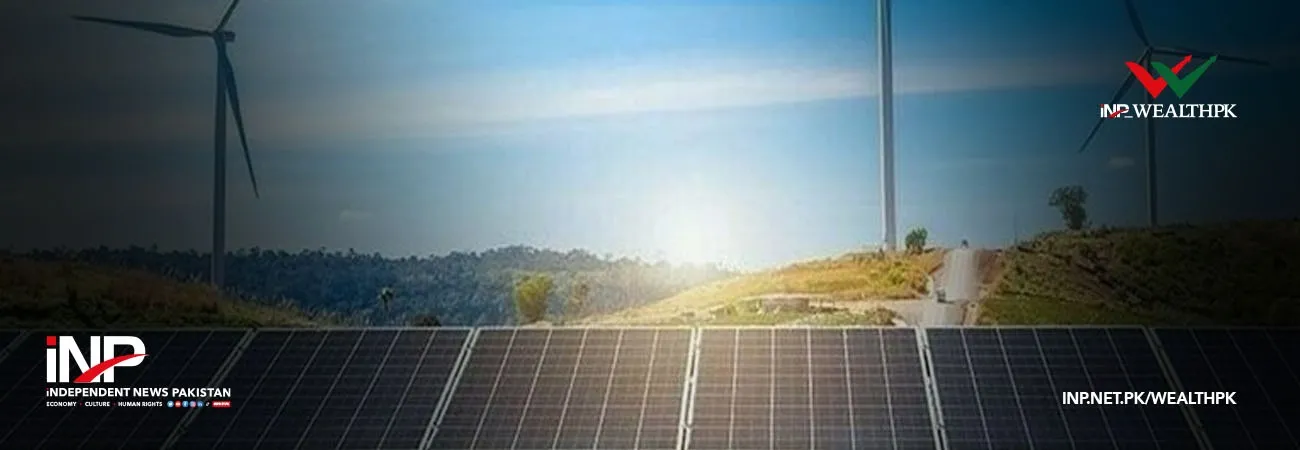
Pakistan can scale up solar transition through China's integrated energy model
August 25, 2026
By Muhammad Zulqarnain
Pakistan can build on its rapid rooftop solar expansion by developing utility-scale projects alongside transmission networks, battery storage and private investment, experts say, pointing to China's integrated approach as a useful model for creating a more affordable and reliable power system. Pakistan has witnessed rapid growth in rooftop solar as households and businesses seek relief from high electricity prices.
According to estimates by the Pakistan Research Institute for Equitable Development (PRIED) and Renewables First, the country had imported enough solar photovoltaic modules by FY2025-26 to support around 33-38 gigawatts of distributed solar capacity. Speaking to Wealth Pakistan, Amina Shahab, a research associate at PRIED, said rooftop solar had helped reduce consumer electricity bills and accelerate clean-energy adoption, but distributed generation alone could not meet Pakistan's growing electricity demand, improve industrial competitiveness or support long-term economic growth.
She said utility-scale solar could complement distributed generation by producing electricity at lower costs through economies of scale, making power more affordable for industries and other bulk consumers. As solar generation expands, the power system would also need battery energy storage, hydropower, demand-side management and flexible generation to maintain reliability and resilience, she said. Unlike scattered rooftop installations, utility-scale projects could be strategically developed alongside transmission networks, storage facilities and modern grid-management systems.
"Utility-scale solar projects can be strategically integrated into national transmission planning," Shahab said, adding that coordinated development of generation and transmission would improve grid reliability and enable Pakistan to absorb a higher share of renewable energy. She said large-scale solar could help diversify Pakistan's energy mix, reduce dependence on imported fossil fuels, strengthen energy security and support power-sector decarbonisation.
It could also improve industrial competitiveness by supplying affordable electricity to bulk consumers through mechanisms such as the Competitive Trading Bilateral Contract Market (CTBCM). Greater demand for grid electricity could improve the utilisation of existing transmission infrastructure and contribute to a more financially sustainable power sector, she added. Shahab stressed that transmission expansion must keep pace with renewable-energy deployment and called for integrated resource planning, stronger grid codes, coordinated transmission development and clear interconnection standards.
Drawing lessons from China, she said Pakistan could benefit from an approach that combines supportive public institutions, financing mechanisms and coordinated grid planning to encourage large-scale private investment in renewable energy. Pakistan could adapt these principles to its own economic conditions by creating a financial and regulatory environment that lowers investment risks and enables the private sector to develop utility-scale solar projects, she said.
Shahab said blended finance and concessional funding from institutions such as the Green Climate Fund and multilateral development banks could provide guarantees and other risk-sharing instruments to address payment, currency, project-preparation and curtailment risks. Such measures could lower financing costs and encourage private investment. She said public resources should primarily support enabling infrastructure. Transmission networks could be developed ahead of renewable-energy auctions in priority solar corridors, while pre-approved solar parks could provide land, permits and grid connections to investors.
Pakistan could also strengthen payment security through escrow accounts, payment-security funds and multilateral guarantees, while expanding domestic green financing through State Bank of Pakistan refinancing, Green Sukuk, sustainable bonds and investment from pension funds, insurance companies and mutual funds, she said. Shahab said competitive auctions, standardised power purchase agreements, credible payment security and integrated grid planning would also be important. She cited K-Electric's 2025 renewable auctions as evidence that Pakistan could attract lower-cost private investment when procurement was competitive and off-taker risks were better managed.
"Pakistan need not copy China's scale; it should copy its enabling principle: use the state to de-risk and enable private capital, while allowing the private sector to build and operate utility-scale solar assets," she said. Afia Malik, an energy expert, said China's experience showed that high renewable-energy penetration required corresponding investment in transmission, storage, digital technologies and coordinated planning. She said Pakistan needed an integrated electricity system in which distributed solar, utility-scale projects, battery storage, flexible demand through time-of-use tariffs and a modern grid worked as complementary components.
Malik said the grid's role should evolve from merely supplying electricity to ensuring coordination, flexibility and reliability. This would involve ensuring fair charges for network access, promoting competition and prioritising demand response and energy storage rather than relying only on additional generation. She warned that continued uncoordinated individual investment could weaken the financial sustainability of distribution companies, delay transmission and distribution upgrades and leave low-income consumers without solar systems carrying a larger share of power-sector costs. Experts said Pakistan's next phase of solar expansion should integrate rooftop generation with utility-scale projects, storage, transmission investment and competitive electricity markets, while using public policy and financing mechanisms to reduce investment risks and mobilise private capital.
Credit: INP-WealthPk
Related Articles