INP-WealthPk
Pakistan's battery storage requirement set to double as solar penetration rises
September 02, 2026
By Azam Tariq
Pakistan's system-level battery storage requirement is projected to double from 750 megawatt-hours (MWh) during 2025-27 to 1,500 MWh from 2031, as growing solar penetration changes electricity demand patterns and increases the need for greater flexibility in the national grid.
The emerging requirement reflects a broader shift in Pakistan's power sector, where rapidly expanding solar generation is reducing daytime demand from the grid while increasing the importance of managing electricity requirements after sunset.
Speaking to Wealth Pakistan, Syed Faizan Shah, Energy Expert and Advisor to the Power Ministry, said Pakistan's priority should no longer be simply adding generation capacity but developing an electricity system capable of responding efficiently to changing patterns of supply and demand.
“Expanding indigenous solar generation, supported by battery energy storage and other modern technologies, can improve system flexibility and reliability, reduce losses, optimize existing infrastructure and provide consumers with greater protection against international fuel price fluctuations,” Shah said.
The growing role envisaged for battery storage is reflected in official power-sector planning.
According to the Indicative Generation Capacity Expansion Plan (IGCEP) 2025-35, prepared by the Independent System and Market Operator (ISMO) and submitted to the National Electric Power Regulatory Authority (NEPRA), system-level battery energy storage system (BESS) capacity is estimated at 750 MWh in each year from 2025 to 2027.
The requirement increases to 1,100 MWh in 2028, 1,200 MWh in 2029 and 1,400 MWh in 2030 before reaching 1,500 MWh from 2031 onwards.
The planning study says battery storage can provide rapid response to fluctuations in renewable generation and help maintain power balance and system stability.
Asim Riaz, Energy Advisor at the All-Pakistan Textile Mills Association (APTMA), told Wealth Pakistan that growing solar deployment was changing the timing of Pakistan's demand for grid electricity.
He said solar generation has lowered daytime grid requirements, but the electricity system continues to require dispatchable supply during evening peaks, periods of low hydropower availability and for overall system balancing.
Riaz said batteries, alongside transmission investment and time-sensitive electricity tariffs, could help reduce the costly residual electricity requirement that persists after sunset.
As solar generation is concentrated during daylight hours while substantial electricity demand continues into the evening, storage can help shift part of the available electricity across those hours while supporting grid balancing.
Pakistan is also exploring battery storage at the transmission level, indicating that storage could increasingly become part of broader efforts to modernise the electricity network.
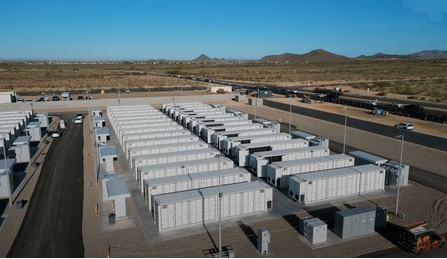
According to the Asian Development Bank (ADB), preliminary findings of an ongoing feasibility study for its proposed Grid-Integrated Battery Energy Storage System for Stability and Resilience Project envisage two BESS installations along the North-South transmission corridor, each provisionally sized at approximately 500 MW/1,000 MWh.
Together, the installations would provide around 1,000 MW/2,000 MWh of capacity.
ADB says the proposed facilities are intended to improve grid flexibility, address transmission bottlenecks and provide services including frequency response, congestion management and peak shifting. The project remains proposed, with its final configuration subject to the outcome of the feasibility study.
International experience also shows how battery storage is increasingly being deployed alongside renewable-energy expansion.
Saudi Arabia provides a recent regional example. According to the Saudi government's official portal, the Saudi Power Procurement Company signed agreements on August 20 for four BESS projects totalling 2,000 MW with four hours of storage, equivalent to 8,000 MWh.
Saudi authorities say the projects are aimed at strengthening electricity-system reliability and efficiency as the kingdom expands renewable generation.
Riaz said greater deployment of storage, supported by appropriate transmission investment and electricity-pricing signals, could help Pakistan manage the changing pattern of grid demand as solar penetration increases, particularly by providing greater flexibility during evening hours when solar generation is no longer available.
Credit: INP-WealthPk
Related Articles