INP-WealthPk
Pakistan's pharma industry faces value-addition test as export targets rise
September 02, 2026
By Qudsia Bano
Pakistan faces the challenge of moving its pharmaceutical industry beyond conventional generic medicines towards higher-value, research-driven products and internationally regulated markets as the government targets a major expansion in pharmaceutical exports.
The challenge has become more pressing following a weak FY2026 for pharmaceutical manufacturing and exports, even as recent investment agreements, technology-transfer initiatives and a new government roadmap have set ambitious targets for transforming the sector.
The Pakistan Economic Survey 2025-26 showed pharmaceutical production contracting 5.1% during July-March FY2026, while pharmaceutical exports declined 30.1% to around $248 million during the period. The survey attributed the weaker manufacturing performance particularly to lower production of liquids and syrups, injections and capsules.
More complete data released by the Pakistan Bureau of Statistics in August showed pharmaceutical production ultimately declining 8.87% during the full July-June FY2026 period. Production in June alone fell 17.61% year-on-year, even as overall large-scale manufacturing expanded 4.98% during the fiscal year. Pharmaceuticals consequently made a negative contribution of 0.54 percentage points to overall LSM growth.
The downturn followed a strong FY2025, when pharmaceutical exports surged 34.14% to around $457 million from $341 million a year earlier. State Bank and Ministry of Commerce data linked that expansion mainly to higher export volumes, increased market access and improved availability of raw materials, demonstrating the sector's export potential but also the challenge of sustaining growth.
The latest trade figures suggest the recovery remains uneven. PBS data for July 2026 showed pharmaceutical exports rising more than 25% from June to around $28.2 million but remaining approximately 16% below their July 2025 level.
Pakistan's pharmaceutical export strategy itself identifies a deeper structural constraint. The Trade Development Authority of Pakistan (TDAP) says exports remain largely dominated by generics and concentrated in a limited number of markets, with significant potential still untapped. The strategy identifies innovation, international quality compliance, higher value addition and market diversification as key requirements for expanding Pakistan's international pharmaceutical footprint.
Talking to Wealth Pakistan, Farah Hanif, Research Officer at TDAP, said the country had developed considerable capability in producing quality generic medicines, but the next phase of export growth would require the industry to climb the value chain.
Instead of competing predominantly through conventional formulations and price, she said, manufacturers needed to progressively expand into complex generics, biosimilars, vaccines, specialised injectables, improved drug-delivery systems and branded pharmaceutical products capable of generating higher export value.
Achieving this transition would require policy continuity alongside investment in technology, specialised human resources and internationally recognised manufacturing standards, she said.
Farah said technology-transfer partnerships, including those being developed with Chinese companies, could shorten the technological learning curve, but domestic manufacturers would also need to strengthen their own product-development capabilities.
Greater access to highly regulated markets, she said, would allow Pakistani manufacturers to move away from predominantly volume-driven exports towards products offering stronger margins and more sustainable international demand.
Recent developments indicate an attempt to broaden the industry's technological base. The Pakistan-China Pharmaceutical B2B Conference held in Islamabad on July 17-18 generated 22 commercial agreements worth $629.5 million and 84 memoranda of understanding with an estimated value of around $800 million.
Importantly, the agreements extended beyond conventional formulations to local vaccine production, active pharmaceutical ingredients, clinical trials and medical-device manufacturing.
The government says Pakistan imports around 95% of the raw materials used in medicine manufacturing despite producing nearly 85% of finished pharmaceutical products domestically. It has therefore identified API localisation, vaccine manufacturing, clinical-trial capacity, biotechnology skills and technology transfer as priority areas for collaboration.
The innovation agenda gained further policy support on August 14 when the Planning Commission convened a pharmaceutical-sector roundtable and called for a roadmap extending to 2030 and beyond, with the objective of developing Pakistan into a competitive, innovation-driven and globally export-oriented pharmaceutical hub.
The roadmap envisages moving from the $457 million FY2025 export base towards $2 billion, followed by a $3 billion target through PharmEx within three years and $10 billion within eight years. Pakistan currently has 662 pharmaceutical manufacturers, while sector revenue stood at Rs523 billion in FY2025, up 19.4%.
Meeting these targets, however, will depend heavily on Pakistan's ability to enter more highly regulated international markets.
According to the government, Pakistan currently has access to 52 WHO Level-2 markets and is targeting WHO Maturity Level 3 status by April 2027, which could facilitate access to more than 150 markets. Eight Pakistani pharmaceutical companies currently hold approvals from bodies including WHO, PIC/S or the UK's MHRA, while another 10 to 15 companies are expected to obtain international approvals by 2028.
Dr Muhammad Sajid, Associate Professor at the Department of Pharmacy, University of Lahore, told Wealth Pakistan that manufacturing capacity alone would not be sufficient to develop innovation-led pharmaceutical exports.
Pakistan needed a stronger research-to-market ecosystem connecting universities, pharmaceutical companies, clinical research organisations and regulators, he said.
“Expanding credible bioequivalence and bioanalytical facilities, clinical-trial capacity and regulatory-science expertise would enable Pakistani firms to generate the evidence required for registration in more demanding international markets,” he said.
Sajid said the longer-term objective should be to convert domestic pharmaceutical research into commercially scalable products.
This would require industry-funded research, joint university-industry laboratories, stronger intellectual-property and technology-commercialisation mechanisms and incentives for companies investing in complex formulations, biotechnology and novel drug-delivery technologies.
Pakistan conducted significant pharmaceutical research academically, he said, but greater economic value would come from translating that research into products capable of securing international regulatory approval and generating export earnings.
The government has also recognised this research-commercialisation gap. At the August roundtable, Planning Minister Ahsan Iqbal called for stronger partnerships among universities, pharmacy departments, research institutions and pharmaceutical companies, stressing that laboratories should generate new knowledge with commercial and industrial applications.
He identified research, innovation, technology and higher-value pharmaceutical manufacturing as important components of strengthening the domestic value chain.
Farah said Pakistan's existing manufacturing capabilities, combined with technology transfer, stronger research and development, international certification and access to regulated markets, could enable the pharmaceutical industry to progressively move towards higher-value exports.
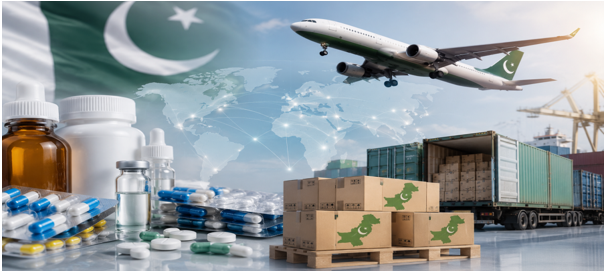
Credit: INP-WealthPk
Related Articles