


INP-WealthPk
Punjab launches Rs20bn project to preserve indigenous Sahiwal cow, Nili Ravi buffalo
April 07, 2026
By Muhammad Luqman
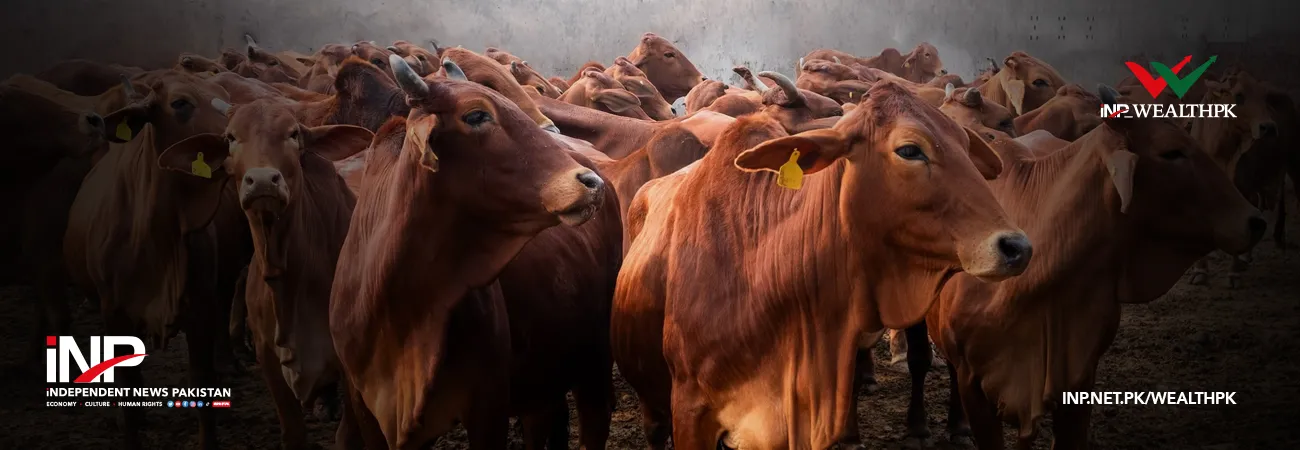
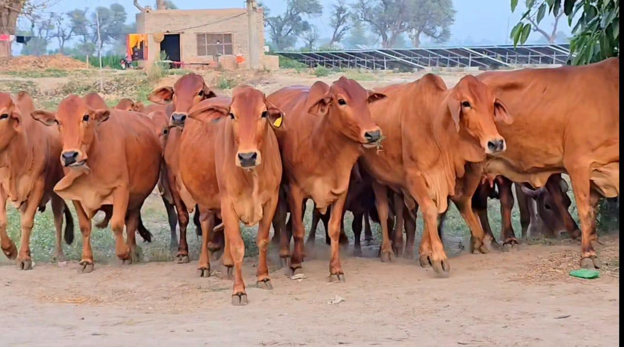
The Punjab government has launched an initiative to preserve and promote indigenous livestock breeds, including the Sahiwal cow and the Nili Ravi buffalo, under its Rs20 billion Punjab Herd Transformation to Enhance Livestock Productivity programme.
Out of the total allocation, Rs4 billion has been earmarked for the Progeny Testing Programme (PTP), a key component aimed at improving genetic potential and breed quality.
“Schemes for the production of sex-sorted semen of indigenous breeds — Nili Ravi buffalo, Sahiwal, and Cholistani cattle — for animals registered under the PTP are underway,” said Dr Khaliq Shafee, Director of the Punjab Livestock Department.
Talking to Wealth Pakistan, he noted that unchecked crossbreeding with exotic breeds has severely affected indigenous livestock, resulting in unpredictable genetic traits and compromised physical characteristics.
Punjab is home to approximately 500,000 Sahiwal cattle and 2-2.5 million Cholistani cattle, while the Nili Ravi buffalo population ranges between 13 and 15 million.
Dr Shafee said the programme is being implemented in collaboration with the Sahiwal Cattle Breeders Society and the Buffalo Breeders Association. Key interventions include establishing breed conservation units, expanding the PTP, a Bull Dam (bull mother) scheme, and structured breeding and bull selection based on lactation performance exceeding 3,000 litres.
The project is being executed by institutions, including the Buffalo Research Institute in Pattoki, the Livestock Production Research Institute Bahadurnagar (Okara), and the Research Centre for Conservation of Indigenous Breeds in Jhang. However, breeders say the initiative, though welcome, has come late.
“Had this project been launched a decade ago, Pakistan could have fully capitalised on the potential of its indigenous breeds,” said Dr Muhammad Imran Basharat, Director Technical at the Sahiwal Cow Breeders Society.
He criticised the lack of a commercial framework for breed development and the failure to utilise genetic resources effectively. “Bull dams were not properly identified to produce superior breeding stock,” he said.
Dr Basharat stressed the need for cooperative livestock and dairy farming models, arguing that without them, the sector cannot achieve sustainable growth.
He also pointed to economic challenges, noting that livestock prices have declined following the suspension of trade with Afghanistan. “The cost of rearing animals now exceeds their market price,” he said.
According to him, only a limited number of high-yielding animals remain — Nili Ravi buffalo, producing around 4,000 litres annually and Sahiwal cows about 3,500 litres.
He further warned that unethical practices, such as the use of recombinant bovine somatotropin (RBST) injections to boost milk production in competitions, are harming livestock fertility and longevity.
“Until 2009, there were around 200 Sahiwal cows in Punjab producing up to 18 litres of milk per day. Now, fewer than 100 remain,” he said, adding that the situation is similar for Nili Ravi buffaloes.
Other structural issues include the lack of proper bull registration systems for breeding.
Despite these challenges, Dr Basharat emphasised that indigenous breeds remain more cost-effective than exotic ones, which are expensive to maintain in Pakistan’s tropical and sub-tropical climate.
“Only indigenous animals can ensure sustainable production of quality milk and dairy products. They are naturally resilient to extreme weather conditions,” he said.
He also highlighted strong international demand for Sahiwal breed semen and embryos in countries such as Bangladesh, Kenya, and Sri Lanka, but noted that Pakistan lacks a developed system to meet this demand.
Credit: INP-WealthPk
Related Articles