


INP-WealthPk
Rs300m livestock wool project proposed to boost GB, AJK farmers’ income
April 07, 2026
By Azeem Ahmed Khan
The Ministry of National Food Security and Research has proposed a Rs300 million initiative for inclusion in the Public Sector Development Program (PSDP) 2026-27 to transform livestock wool resources into engines of rural prosperity, reports Wealth Pakistan.
According to an official document, the initiative offers a strategic opportunity to transform the underutilized livestock fiber resources of Gilgit-Baltistan (GB) and Azad Jammu and Kashmir into a structured rural industrial value chain.
With modest federal investment, the project will enhance farmer incomes, generate employment, strengthen institutional capacity, and promote sustainable rural industrialization aligned with national development priorities.
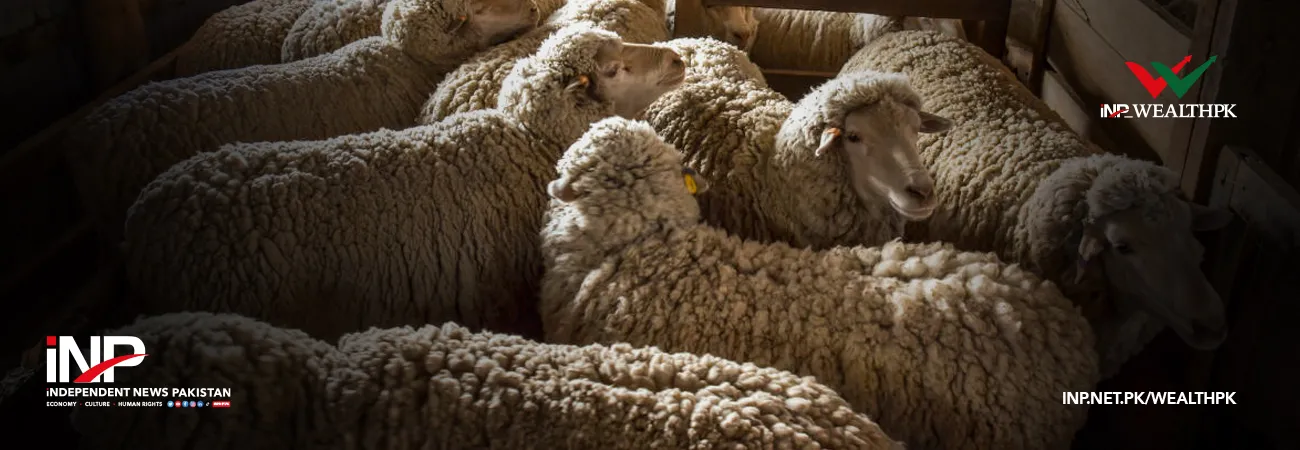
By organizing the fiber value chain from collection to finished products, the project seeks to open new income streams for livestock farmers in remote mountain regions. The initiative focuses on converting raw fiber such as wool, hair, and mohair into value-added products like carpets, shawls, blankets, sweaters, and hats.
The three-year project, titled “Livestock/Value Added Products (Wool, Hair & Mohair) for Rural Industrialization of Pakistan (GB & AJK),” will be implemented by the Livestock & Dairy Development Board from July 2026 to June 2029 across all districts of Gilgit-Baltistan and Neelum Valley in Azad Jammu & Kashmir.
As part of the plan, 35 raw material collection units will be established – 30 in Gilgit-Baltistan and five in Azad Jammu & Kashmir. In addition, 11 cleaning and spinning processing units will be developed, including one in each district of Gilgit-Baltistan and one in Neelum Valley.
The project also proposes the establishment of four weaving and four stitching centers across the two regions to convert raw fibers into market-ready products.
A key feature of the initiative is the formation and institutional strengthening of a Yak Dwellers Association with linkages to international yak networks. The project aims to increase the income of livestock farmers by 15-20% through value addition while promoting community ownership of collection and processing facilities.
The project will also facilitate linkages with tourism markets and private sector buyers. Tourist-oriented display and marketing centers will be promoted for finished products, while capacity-building programs will be conducted for farmers, artisans, and entrepreneurs.
To improve fiber quality, the project includes vaccination and deworming of 25,000 animals, ensuring healthier livestock and improved raw material for value-added processing, the document said.
Credit: INP-WealthPk
Related Articles