INP-WealthPk

Shangla achieves 95% 4G coverage, fibre rollout still limited
May 04, 2026
By Ayesha Saba
Telecommunications infrastructure continues to expand in the Shangla district, with both fixed-line and cellular operators improving connectivity, even though challenges in fibre deployment and cost constraints persist, according to official documents available with Wealth Pakistan. Pakistan Telecommunication Company Limited (PTCL) remains the dominant fixed-line service provider in the district, serving 1,312 copper-based subscribers through eight operational exchanges.
In comparison, Pace Telecom has recently entered the market with a limited footprint, offering fibre-to-the-home (FTTH) services to around 50 customers, mainly in Puran tehsil, bringing the overall number of fixed-line subscribers in Shangla to 1,362, with fibre penetration still minimal. Despite the presence of Universal Service Fund (USF)-supported infrastructure, fibre deployment remains limited due to high per-line costs. PTCL has installed five USF nodes in Alpuri, Chakisar, Karora, Martung, and Puran; however, most connections continue to rely on legacy copper networks.
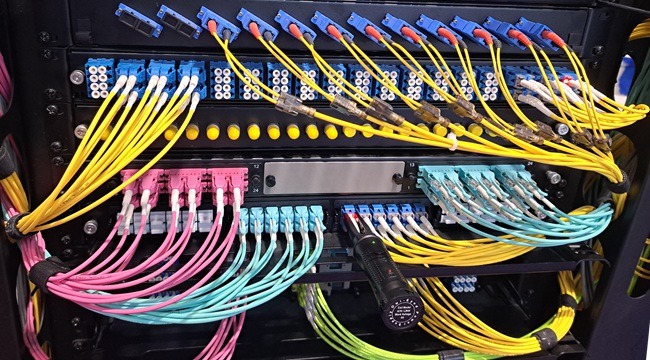
The utilisation of these nodes also remains low, reflecting underdeveloped demand and infrastructure gaps. The document further says that long-haul optic fibre cable (OFC) infrastructure in the district has reached a cumulative length of approximately 455.67 kilometres, deployed by multiple operators, including Special Communications Organisation, Wateen Telecom, LinkDotNet, and PTCL.
Among these, Wateen leads with over 154 kilometres of fibre, followed by LinkDotNet and PTCL, indicating a reasonable backbone presence but limited last-mile connectivity. Meanwhile, cellular connectivity in Shangla has shown significant progress. The district currently hosts 113 cellular sites, of which around 95% are 4G-enabled, ensuring relatively reliable voice and data services across the region.
This reflects ongoing efforts by cellular mobile operators to improve coverage in underserved areas. Meanwhile, a recent spectrum auction in March 2026 has introduced new rollout obligations for mobile operators, requiring them to deploy at least 1,000 4G/5G sites annually over the next nine years.
The 4G sites shall be proportionately distributed between urban and rural areas in each province, and the implementation of 5G across Pakistan will be carried out in four phases. According to the phased plan, 5G services will initially be launched in major cities, including Islamabad, Karachi, Lahore, Peshawar, and Quetta, between 2026 and 2028, followed by gradual expansion to additional cities through 2035.
In terms of service quality, the Pakistan Telecommunication Authority (PTA) has introduced enhanced Quality of Service (QoS) benchmarks. These include increasing 4G data speeds from 4 Mbps to 20 Mbps, with a phased target of 50 Mbps, while 5G services are expected to start at 50 Mbps and eventually reach 100 Mbps, aiming to significantly improve user experience.
Credit: INP-WealthPk
Related Articles