




i INP-WEALTHPK

China’s AI-related industries expected to exceed 10 trillion yuan by 2030Breaking
March 14, 2026
By Special Correspondent
China’s artificial intelligence (AI)-related industries are expected to exceed 10 trillion yuan by the end of the 15th Five-Year Plan period (2026–2030), according to the country’s top economic planner.
Zheng Shanjie, head of the National Development and Reform Commission (NDRC), shared the projection at a press conference held on the sidelines of the fourth session of the 14th National People’s Congress in Beijing.
China will continue to advance its “AI Plus” initiative during the 2026–2030 period, aimed at promoting the wider application of artificial intelligence across industries and economic sectors.
The country’s AI sector has already experienced rapid expansion in recent years. China’s core artificial intelligence industry reached a scale of more than 1.2 trillion yuan in 2025, according to Li Lecheng, minister of industry and information technology.
The number of AI companies in China surpassed 6,200 last year, reflecting strong growth in the country’s technology ecosystem.
Artificial intelligence technologies are increasingly being deployed across both industrial production and daily life. By the end of 2025, more than 30 percent of manufacturing enterprises with annual main business revenue of at least 20 million yuan had adopted AI technologies.
Chinese companies have also introduced more than 300 humanoid robot products, highlighting advances in robotics and intelligent manufacturing.
AI development has been highlighted in the government work report submitted to the national legislature. The report notes that China will promote new forms of the smart economy by encouraging large-scale commercial applications of AI in key sectors.
Plans also include the development of new infrastructure projects, including hyperscale intelligent computing clusters and the acceleration of satellite internet development.
China has also reported record levels of investment in research and development as part of its push to strengthen innovation capacity.
Total R&D investment exceeded 3.92 trillion yuan in 2025, accounting for 2.8 percent of the country’s gross domestic product, according to the Ministry of Science and Technology.
Funding for basic research reached nearly 280 billion yuan last year, representing 7.08 percent of total R&D spending and marking the first time the share surpassed the 7 percent threshold.
Chinese officials highlighted technological progress in areas including humanoid robots, artificial intelligence models and semiconductor development.
In the pharmaceutical sector, China approved 76 innovative drugs for market entry in 2025, while the total value of out-licensing agreements exceeded $130 billion.
The government has also outlined plans to increase nationwide R&D spending by at least 7 percent annually during the 2026–2030 period.
Authorities aim to build three international centers for science and technology innovation and develop them into world-class engines for technological advancement.
China also plans to expand the role of the digital economy, with a target of raising the value added of core digital economy industries to 12.5 percent of gross domestic product over the next five years.
In addition, the government has pledged to accelerate breakthroughs in key technologies and strengthen self-reliance in science and technology.
Priority areas include integrated circuits, machine tools, high-end instruments, basic software, advanced materials and bio-manufacturing, according to the government work report and the outline of the 15th Five-Year Plan.
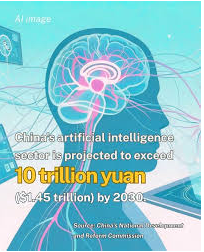
Credit: INP-WealthPk
Related News