i INP-WEALTHPK

China’s ecological strategy offers model for Pakistan’s environmental policyBreaking
March 26, 2026
By Hassan
China’s 15th Five-Year Plan (2026–2030) places ecological conservation more firmly at the centre of development policy, offering Pakistan a practical model to integrate environmental protection into long-term economic planning. The new plan sets five key indicators for green and low-carbon development, covering carbon reduction, pollution control and ecological conservation. It targets a 17% reduction in carbon dioxide emissions per unit of GDP and includes 18 major projects focused on green transition, conservation and ecosystem restoration.
For Pakistan, where environmental degradation, climate vulnerability and weak enforcement remain persistent challenges, China’s approach highlights the importance of embedding ecological priorities into national development strategies rather than treating them as separate policy areas.
China’s policy direction is supported by measurable environmental progress and stronger legal safeguards. According to the Ecological Conservation Redline Blue Book 2025, forest area within protected zones has increased by 3,344 square kilometres and water area by 320 square kilometres since 2022, while marine use in ecological redline areas has declined by more than 35%. Data from China’s National Greening Commission shows that forest and grassland coverage has exceeded 56%, with 3.56 million hectares afforested and nearly 4.93 million hectares of degraded grassland restored in 2025.
These developments underline a key lesson for Pakistan: ecological conservation becomes more effective when supported by clear legislation, scientific planning and consistent enforcement. Haris Khurshid, Senior Scientist at the National Agricultural Research Centre, told Wealth Pakistan that China’s ecological progress reflects long-term political commitment, science-based decision-making and firm enforcement. He said Pakistan can benefit by grounding environmental policies in credible data rather than short-term administrative considerations.
He stressed that implementation remains critical. Environmental laws, he said, must be enforced consistently across public institutions, private sector actors and local communities. He also called for stronger protection of ecologically sensitive and biodiversity-rich areas, along with expanded safeguards for vulnerable ecosystems exposed to encroachment and degradation.
Khurshid said environmental sustainability should be integrated across all sectors of national planning, including major initiatives such as CPEC, so that conservation becomes a core component of development rather than an afterthought. He also highlighted the importance of cooperation with China in areas such as green energy, green finance, ecological monitoring and remote sensing technologies.
Gul Nawaz, Biodiversity Specialist at SAMA Verte, said China’s experience demonstrates the value of placing ecological conservation at the centre of economic planning. He said China’s concept of ecological civilisation shows that environmental protection and economic development can advance together rather than in conflict.
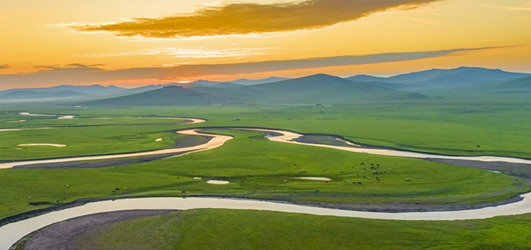
He pointed to China’s long-term ecosystem restoration efforts, including afforestation, watershed management and desertification control, as useful models for Pakistan’s fragile mountain, river basin and arid regions. He also noted that China’s strong ecological monitoring systems highlight the need for Pakistan to develop better biodiversity databases, improve surveillance and strengthen research institutions.
Nawaz said Pakistan should adopt a more integrated approach by improving coordination among environmental, agricultural and development institutions, while increasing community participation in conservation efforts.
He added that involving local communities through ecosystem service payments, sustainable farming support and environmental awareness programmes can help ensure long-term success. Faiza Sharif, Assistant Professor at the Sustainable Development Study Centre, Government College University Lahore, said China’s new plan is notable for addressing the “triple planetary crisis” of climate change, biodiversity loss and pollution within a single policy framework. She said Pakistan should adopt similar strategies by developing low-carbon industrial zones, increasing investment in renewable energy and strengthening biodiversity conservation and restoration efforts.
She noted that sustainable development becomes more effective when ecological protection and economic growth are advanced together.
Experts said China’s experience shows that environmental conservation works best when treated as an integral part of development, supported by strong laws, scientific monitoring and long-term planning. They said Pakistan’s path forward lies in strengthening environmental governance, enforcing regulations more effectively and ensuring that development projects incorporate ecological safeguards from the outset. Improved institutional capacity, better scientific data and closer cooperation in green technologies and conservation practices would help Pakistan move from policy intent to effective environmental protection.
Credit: INP-WealthPk
Related News