


i INP-WEALTHPK

China’s innovation model offers a roadmap for strengthening Pakistan’s research–industry linkagesBreaking
March 25, 2026
By Qudsia Bano
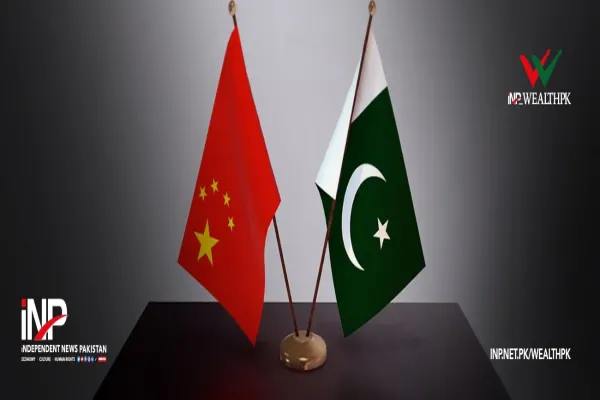
China’s 15th Five-Year Plan (2026–2030) places a strong emphasis on building a robust innovation ecosystem, offering Pakistan a practical model for strengthening collaboration among universities, research institutions and industry, as well as improving the commercialisation of research. Approved during the Two Sessions in March 2026, the plan outlines a comprehensive framework to integrate the innovation, industrial, capital and talent chains into a more cohesive development model.
It reflects a shift toward enterprise-led innovation, where businesses play a central role in shaping research priorities, investing in development and translating scientific breakthroughs into marketable products. For Pakistan, where academic research often remains disconnected from industrial needs, China’s approach highlights the importance of aligning research with economic priorities to drive innovation-led growth.
Dr Atta ur Rahman, Professor of Economics at the International Islamic University Islamabad, told Wealth Pakistan that China’s model demonstrates how strong university–industry collaboration can bridge the gap between research and market demand. He said developing countries frequently produce research with limited commercial application, and closer institutional linkages are needed to ensure innovation contributes directly to economic development.
He added that policies encouraging joint research, shared infrastructure and effective technology transfer mechanisms can significantly improve the commercialisation of research outputs. A defining feature of China’s strategy is the elevation of enterprises as key drivers of technological innovation. Companies are given greater autonomy in setting research directions, selecting partners and allocating funding, ensuring that innovation is guided by industrial demand rather than remaining confined to theoretical work.
The plan promotes collaboration between enterprises, universities and research institutions through joint projects, particularly in key industrial technologies. Leading firms are encouraged to form innovation consortia to undertake research, pilot testing and commercialisation. Reforms in technology transfer, including flexible licensing models such as “use first, pay later,” are also being introduced to help smaller firms access innovation. Dr Sohail Raza, Senior Economist at the Pakistan Institute of Development Economics, said the emphasis on enterprise-led innovation provides a useful model for developing countries.
He said empowering private firms to lead research while leveraging academic expertise can accelerate commercialisation and strengthen domestic industries. China is also investing heavily in scientific infrastructure, including advanced research facilities, data platforms and innovation hubs in Beijing, Shanghai and the Guangdong-Hong Kong-Macao Greater Bay Area, aimed at strengthening its position as a global centre for research and development.
The plan further integrates education, science and talent development by aligning academic programmes with industrial needs and expanding training in emerging fields such as artificial intelligence and integrated circuits. Financial and policy support mechanisms, including tax incentives, venture capital expansion and stronger intellectual property protection, are also being enhanced to create a conducive environment for innovation.
Experts say Pakistan can benefit by strengthening institutional linkages among universities, industry and research organisations, while encouraging greater private sector participation in innovation. They said aligning education with industry needs, improving technology transfer systems and creating incentives for collaborative research will be essential to building a competitive innovation ecosystem.
As global competition in technology intensifies, China’s strategy highlights that innovation systems work best when research, industry and talent development are closely integrated. For Pakistan, the way forward lies in bridging the research–industry gap and ensuring that innovation policies are directly linked to economic and industrial priorities.

Credit: INP-WealthPk
Related News