i INP-WEALTHPK
Climate disasters inflict Rs822bn losses across Pakistan in 2025Breaking
June 15, 2026
By Azam Tariq
Climate-related disasters caused economic losses of Rs822 billion in Pakistan during 2025, underscoring the country's growing vulnerability to extreme weather events and the increasing economic cost of climate change, according to the Pakistan Economic Survey 2025-26 released by the Ministry of Finance.
The survey highlights climate change as one of the most serious challenges confronting Pakistan's economy, affecting agriculture, infrastructure, housing, livelihoods and public finances.
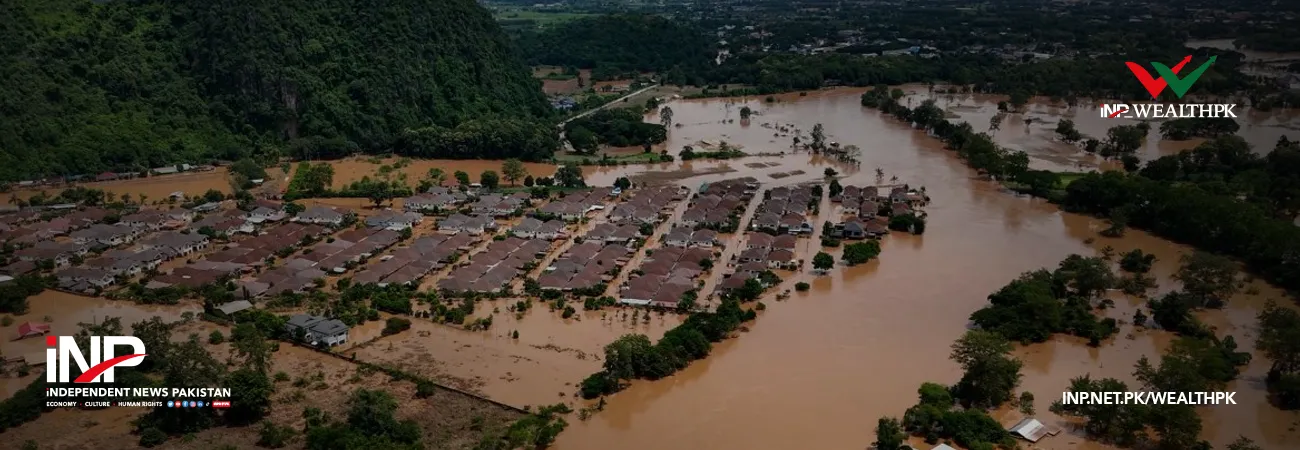
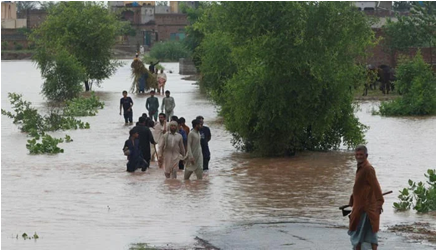
According to the survey, heavy monsoon rains and floods during July and August 2025 caused widespread destruction across multiple regions, damaging roads, bridges, irrigation systems, public facilities, agricultural land and private property.
The Ministry of Finance notes that the losses disrupted economic activity and imposed substantial recovery and reconstruction costs on both the government and affected communities.
The survey indicates that agriculture was among the hardest-hit sectors. Floodwaters damaged standing crops, harmed livestock and disrupted farming operations in various regions, leading to lower productivity and significant losses in rural incomes.
Despite these challenges, the agriculture sector still managed to grow by 2.89% during FY2025-26, supported by recovery measures, improved input availability and stronger performance in livestock and several crop segments.
According to the survey, climate-related shocks continue to pose significant risks to food security and agricultural sustainability because of Pakistan's dependence on weather-sensitive economic activities.
The report notes that infrastructure damage represented another major component of the economic losses. Roads, transportation networks, irrigation facilities, water systems and public infrastructure suffered extensive damage, requiring substantial rehabilitation efforts.
Housing was also significantly affected. Thousands of households experienced damage to homes and community infrastructure, particularly in vulnerable and flood-prone areas.
The survey highlights that climate-related disasters have increasingly become a recurring economic challenge for Pakistan, placing pressure on development budgets and diverting resources toward emergency response and reconstruction.
According to the Ministry of Finance, Pakistan remains among the countries most vulnerable to climate change despite contributing only a small share of global greenhouse gas emissions.
The survey points out that rising temperatures, changing rainfall patterns, floods, droughts and glacial-related risks are creating long-term challenges for economic planning and sustainable development.
Climate-related disruptions also have implications for poverty and social welfare. The report notes that low-income households are often disproportionately affected because they possess fewer resources to recover from disasters and are more dependent on climate-sensitive sectors such as agriculture.
The survey indicates that the government continued implementing climate adaptation and resilience measures during FY2025-26. These efforts include strengthening disaster preparedness, improving early warning systems, enhancing water management and promoting climate-resilient infrastructure.
According to the report, investments in resilience are becoming increasingly important as the frequency and intensity of extreme weather events continue to increase.
The survey also highlights Pakistan's efforts to mobilize international climate finance and strengthen cooperation with development partners to support adaptation and mitigation initiatives.
Environmental sustainability has emerged as a key policy priority, with increasing emphasis on renewable energy, ecosystem restoration, water conservation and climate-smart agriculture.
According to the Ministry of Finance, strengthening resilience to climate shocks is essential not only for environmental protection but also for safeguarding economic growth and development gains.
The survey notes that climate-related risks now affect virtually every sector of the economy, including agriculture, energy, transport, health, water resources and urban development.
The estimated losses of Rs822 billion illustrate the scale of the challenge facing the country and highlight the growing economic importance of climate adaptation, disaster risk reduction and resilient infrastructure development.
As climate-related events become more frequent and severe, the survey emphasizes the need for sustained investment in resilience-building measures to reduce future losses and protect livelihoods, infrastructure and economic activity across Pakistan.
Credit: INP-WealthPk
Related News