


i INP-WEALTHPK
Olive sector can add Rs7.6bn annually to Pakistan’s economyBreaking
September 24, 2026
By Azeem Ahmed Khan
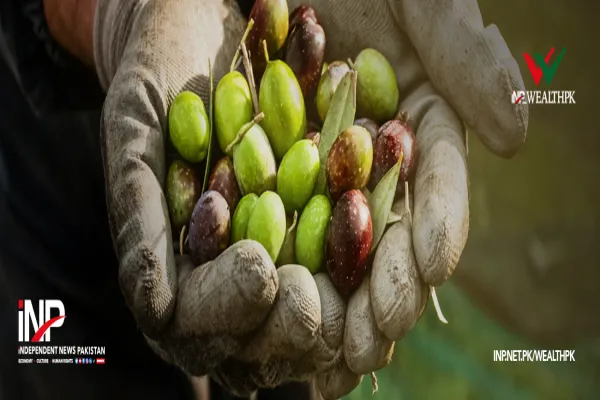
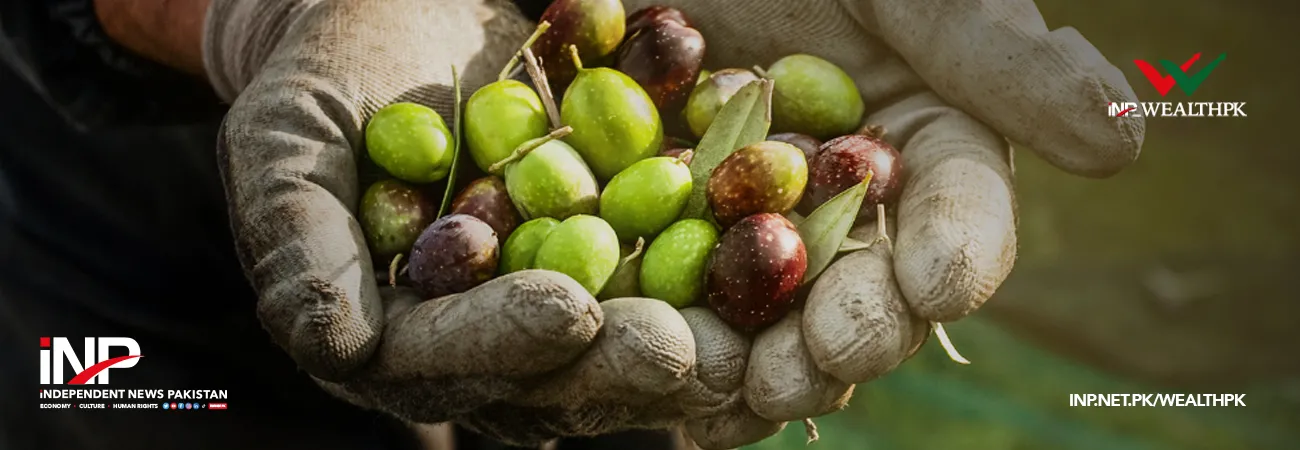
Pakistan’s developing olive industry could contribute Rs7.6 billion annually to the national economy 10 years after completion of a project covering 33,000 acres, as the country builds a farm-to-fork value chain spanning cultivation, processing, quality control and value addition.
According to documents of the Ministry of National Food Security and Research available with Wealth Pakistan, economic modelling suggests the sector could generate this annual contribution while continuing to generate benefits for the national economy through sustained quality standards and farm-to-fork practices.
Pakistan has more than 4 million hectares of potential olive plantation area, along with millions of wild olive trees. The country has developed defined olive-growing clusters across different zones and approved 22 olive varieties for cultivation.
Initially dependent on sapling imports from Mediterranean countries, Pakistan has successfully shifted to domestic propagation of olive plants since 2022, helping save foreign exchange through public-private partnerships and targeted capacity building.
Under federal, provincial and international development programmes, more than 7.5 million olive trees have been planted nationwide over around 60,400 acres. Of these, 66%, or 5 million trees, have been planted under the PSDP Olive Project, covering 60 districts and engaging 12,000 olive farmers.
Another 6,594 acres of olive groves have been equipped with water-saving irrigation systems to improve water-use efficiency.
To strengthen post-harvest processing, 51 olive oil extraction units have been installed across Punjab, Balochistan, Khyber Pakhtunkhwa and Azad Jammu and Kashmir. These include 15 extraction units established under the PSDP project, while others have been funded by provincial governments, the World Bank, Pakistan Poverty Alleviation Fund, TIKA and other agencies.
Supporting infrastructure includes six fruit-processing units, 500 pre- and post-harvest kits, 14 DS nursery tunnels, five weather stations and four laboratories equipped for olive oil quality analysis.
Human resource development has also formed a major part of the programme. A total of 276 capacity-building programmes covering orchard and nursery management, post-harvest handling, Good Agricultural Practices, Good Manufacturing Practices, oil extraction and value addition have benefited 17,986 stakeholders nationwide.
The sector has also expanded into entrepreneurship and value-added production. Pakistan now has more than 100 olive-sector entrepreneurs, up from only a handful initially, producing olive oil and value-added products including pickles, jams, cosmetics, soaps and nutraceuticals, each under its own brand.
The documents said maintaining quality standards to enable future exports remains a major focus. Pakistan has already received international recognition for quality through the award-winning “LO-Loralai Olives.”
The national olive cultivation programme, spearheaded by the Ministry of National Food Security and Research, has been running for a decade and has helped turn barren lands into productive orchards while developing a more resilient and sustainable olive ecosystem.
FAOSTAT data cited in the documents show a promising trend, with olive oil imports declining significantly while exports have increased over the same period.
Beyond its economic potential, the documents identify carbon sequestration, climate resilience and improved public health, which could help reduce future healthcare expenditures, among the wider benefits of olive-sector development.
Pakistan has also been granted permanent status in the International Olive Council. A national olive policy and action plan has been formulated, while the Olive Policy has been approved by the cabinet and officially launched by the Prime Minister.
The policy provides a framework for sustainable growth and regulation of the industry, with emphasis on increasing agricultural productivity, promoting value addition and reducing dependence on imported edible oils.
Credit: INP-WealthPk
Related News