




i INP-WEALTHPK

PTC calls for five-year protected textile policy, proposes energy, tax and financing reformsBreaking
March 06, 2026
By Moaaz Manzoor
The Pakistan Textile Council (PTC) has called for the introduction of a five-year legally protected textile and apparel policy framework, along with a series of energy, tax and financing reforms, according to its Monthly Report of Pakistan’s Textile & Apparel Exports for July–January FY26.
In the policy interventions section of the report, the PTC recommends a stable five-year export, textile and industrial policy with legal cover to provide continuity and certainty for exporters. The report states that such a framework should avoid ad-hoc statutory regulatory orders (SROs) and be supported by transparent monitoring mechanisms, including the publication of key performance indicators (KPIs) on a monthly basis.
The report also outlines specific measures related to energy pricing. It calls for regionally competitive and predictable energy tariffs for export-oriented industries, stating that pricing aligned with competitor countries is necessary for the sector.
On taxation and liquidity, the PTC recommends the reduction of taxes and the removal of friction in the refund system. It proposes the introduction of 72-hour automated refunds supported by a risk-based post-audit mechanism. The report also recommends zero-rating of inputs under the Export Facilitation Scheme.
To support export financing, the PTC calls for strengthening the Export-Import Bank (EXIM Bank) and enhancing limits under the Export Facilitation Scheme (EFS) and the Long-Term Financing Facility (LTFF). It further proposes financing schemes to support innovation, renewable and sustainable energy adoption, green projects and related investments within the textile and apparel sector.
For value-added segments under Chapters 61–63, the report suggests a time-bound incremental export rebate linked to value addition. It also recommends tax credits for investment in balancing, modernization and replacement (BMR), as well as incentives tied to compliance with Sustainable Development Goals (SDGs) and Environmental, Social and Governance (ESG) requirements.
For traditional textile segments under Chapters 50–60, the PTC calls for structural reforms aimed at improving cotton quality and yield. It also recommends measures to reduce the cost of doing business for spinning and weaving units.
The report also proposes aligning wage and overtime regulations with practices in key competitor countries.
These recommendations form part of the concluding section of the Monthly Report of Pakistan’s Textile & Apparel Exports for the July–January FY26 reference period.
The export figures and policy proposals presented in the report are based on calculations derived from data sourced from the Pakistan Single Window (PSW) and the Pakistan Bureau of Statistics (PBS).
According to the document, the proposed measures are intended to support export growth and improve the international competitiveness of Pakistan’s textile and apparel sector under a stable and predictable policy environment.
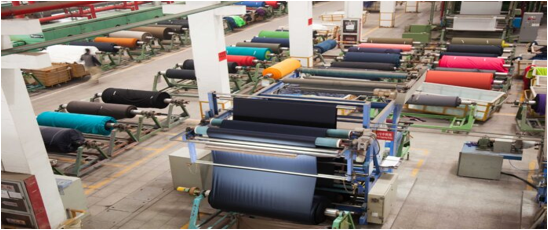
Credit: INP-WealthPk
Related News