


i INP-WEALTHPK
With extraction 142% above recharge, Pakistan looks to China’s groundwater monitoring modelBreaking
April 13, 2026
By Azam Tariq
China’s experience in large-scale groundwater monitoring offers a potential roadmap for Pakistan as it struggles with a deepening water crisis marked by weak data systems and limited regulatory oversight.
Pakistan faces severe pressure on its groundwater resources, with extraction exceeding natural recharge by 142%, raising serious concerns about long-term sustainability.
According to data released by the Water Resources Zone of the Punjab Irrigation Department, Pakistan extracts approximately 60 billion cubic meters of groundwater annually. Punjab alone accounts for around 90% of this extraction, driven by more than 1.5 million tube wells across the province.
The pressure on aquifers is increasingly visible. Punjab’s water table is declining by 0.5 to 1.0 meters annually, while 6.6% of the region has already fallen below the critical 60-foot threshold as of 2024. This represents a 25% increase in depletion zones since 2020.
In contrast, China has addressed groundwater stress through large-scale monitoring and technological intervention. Data from China’s Ministry of Water Resources show that between 2015 and 2020, the country established more than 20,000 national-level groundwater monitoring stations, forming a network capable of real-time tracking and early warning.
By the end of 2025, areas under comprehensive groundwater management in northern China reported average rebounds of 3.76 meters in shallow groundwater and 7.65 meters in deep groundwater compared to 2020 levels, indicating measurable recovery linked to improved monitoring and regulation.
Speaking with Wealth Pakistan, Dr Muhammad Faisal Ali, Assistant Professor at the Pakistan Institute of Development Economics, said the country’s groundwater crisis is not only about scarcity but also about weak management of an under-monitored resource.
He noted that real-time data on groundwater extraction is largely unavailable, while the understanding of aquifer recharge remains limited. In addition, hotspot mapping is still too weak to support effective, evidence-based policymaking.
According to him, these gaps make it difficult for policymakers to determine where depletion is most severe, who is extracting how much water, and where regulatory action should begin.
He emphasised that licensing, metering and stronger institutional arrangements should form the core of a more effective groundwater governance system.
Dr Faisal said Pakistan can benefit from China’s experience in groundwater monitoring and early-warning systems, but stressed that such approaches must be adapted to local institutional realities rather than being replicated directly.
He pointed out that after the 18th Amendment, groundwater governance largely falls under provincial jurisdiction. Therefore, provincial governments would need to take the lead in implementation, while the federal government can support coordination and facilitate broader cooperation frameworks.
A World Bank report titled Groundwater in Pakistan’s Indus Basin: Present and Future Prospects notes that the Indus Basin aquifer stores at least 80 times more freshwater than the country’s three largest dams combined. It also highlights that more than 70% of Pakistan’s drinking water supply depends on groundwater.
Dr Faisal said that digital tools, data analytics, remote sensing and improved metering systems can help shift Pakistan’s approach from delayed response to early detection of depletion and contamination. Such tools can also strengthen aquifer mapping and improve policy targeting.
Ali Farooq, Water Management Officer at the Agriculture Department’s On-Farm Water Management wing in Punjab, also linked improved groundwater outcomes to better monitoring systems.
He said Pakistan’s heavy reliance on groundwater makes it essential to develop accurate and timely data through wells, satellite observations and digital platforms. This can support more rational allocation of water, identify depletion hotspots and make regulatory mechanisms more practical.
He added that monitoring is critical for early warning, as falling water tables and contamination are easier to manage at an early stage than after they evolve into large-scale crises.
He viewed China’s experience with dense monitoring networks, integrated data platforms and early-warning systems as relevant for Pakistan, particularly for strengthening drought preparedness, improving predictive planning and expanding the use of modern technologies such as remote sensing.
However, he stressed that cooperation alone will not be sufficient. While technology transfer, training, joint research and financing can accelerate progress, sustainable improvements will depend on domestic reforms in governance, enforcement, transparency and institutional coordination.
Pakistan’s groundwater crisis highlights the urgent need for real-time monitoring and stronger regulatory systems. In this context, China’s experience offers a practical reference point for building a more data-driven and sustainable groundwater management framework.
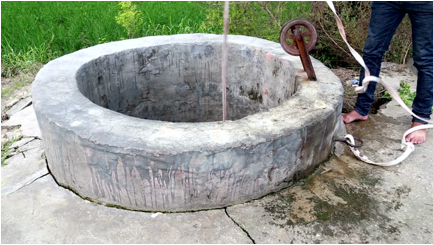
Credit: INP-WealthPk
Related News