


i NEWS PAK-CHINA
Economists warn 19% U.S. tariff is hitting Pakistan’s export engineBreaking
December 14, 2025
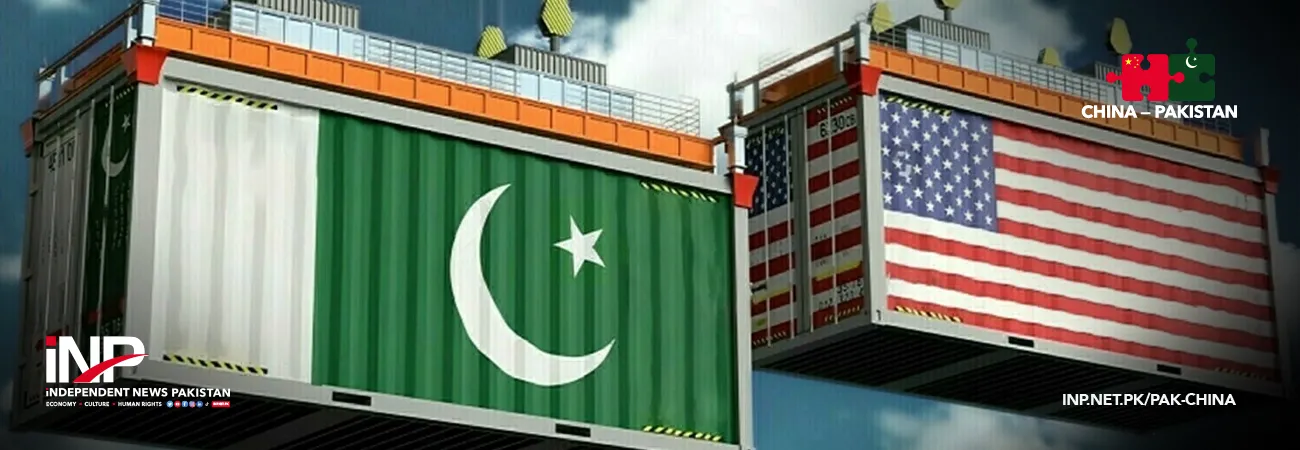
Pakistan’s export sector is bracing for a sharper downturn as a new report by the SAARC Chamber of Commerce & Industry (SCCI), the apex regional trade body, and the South Asian Federation of Accountants (SAFA) warns that the United States’ 19 percent reciprocal tariff is eroding competitiveness, disrupting orders and deepening economic vulnerabilities.
The report, which examines the impact of U.S. tariff escalation across all SAARC countries, identifies Pakistan as among the most exposed due to its heavy reliance on textile and apparel exports to the United States.
According to Gwadar Pro, the study notes that Pakistan “was initially subjected to a 29% tariff,” but even after negotiations brought it down to 19 percent in August 2025, the reduction “did not entirely prevent short-term losses,” particularly in textiles, the backbone of the country’s exports.
The SCCI-SAFA report states that Pakistan’s “export footprint to the United States, primarily in textiles, rendered it vulnerable to reciprocal levies,” adding that the new duties “has increased the landed cost of Pakistani textiles and apparel by up to 18 percent,” contributing to a “decline in export volumes of 20-30 percent.”
Think tanks cited in the study warn that export revenues could fall by “20-25 percent” if tariff pressures persist, threatening the rupee, foreign reserves and industrial employment. The report further cautions that Pakistan’s “delicate macroeconomic situation implied that currency, inflation, and fiscal stability could be further affected by diminished export earnings.”
Textile exporter and former Karachi Chamber of Commerce and Industries (KCCI) Vice-President Tanveer Barri said the impact is already being felt on the ground.
“The 19% U.S. tariff makes Pakistani exports more expensive for American buyers, which is expected to erode their competitive edge and potentially lead to a decline in exports, job losses, and pressure on the Pakistani rupee,” he told Gwadar Pro.
He added that Pakistan’s key earners— textiles, leather goods, surgical instruments, and sporting goods — operate on tight margins and “will bear the brunt of the added cost.”
Muhammad Jawed Bilwani, former president of the Karachi Chamber of Commerce and Industry (KCCI) and a leading voice for textile and value-added exporters, described worsening conditions for manufacturers.
“Unemployment has already increased and it’s rising every single day. Spinning units in the textile sector are shutting down, weaving units are shutting down as well,” he told Gwadar Pro.
“The reason is that tariffs have gone up, and on top of that, electricity has become extremely expensive.” While acknowledging the external shock of 19% tariff, he cautioned that domestic inefficiencies remain central: “Before blaming tariffs alone, we must confront our own cost structure, energy prices, logistics bottlenecks, and inconsistent policies.
A more competitive base lowers vulnerability to external shocks.”
Islamabad-based economist Malak Tanveer Ahmad said the full effect of the tariff has yet to unfold due to the way export orders are scheduled. “The US has slapped a 19% tariff on Pakistani products, which will significantly increase their landed cost,” he told Gwadar Pro.
“The tariff was imposed in August, and… the full impact will appear at the end of January and February. The real hit is coming in the next cycle of orders.”
Still, some analysts see a mixed landscape. Sardar Shuakat Popalzai, President of the Balochistan Economic Forum, told Gwadar Pro that while the tariff has raised costs, Pakistan’s relative position in the region has improved.
“The United States imposed a reciprocal tariff… initially around 29%, later revised downward to roughly 19%. While this tariff has increased the landed cost of Pakistani goods…, it has not eliminated Pakistan’s competitive edge. In fact, Pakistan currently enjoys the lowest tariff rate in South Asia, with U.S. duties on India and Bangladesh set higher.”
He argued that this could spur modernization and export diversification, saying the tariff environment “has pushed Pakistani industries to improve efficiency, upgrade quality, and diversify their product range, strengthening long-term resilience.”
Economist Subhan Ansari said the findings of the SCCI-SAFA report aligns with market observations. “The tariff escalation by the United States would unquestionably tighten the squeeze on Pakistan’s textile and garment exporters,” he told Gwadar Pro. “When your largest buyer suddenly adds 15–20% to the landed price, you lose competitiveness overnight.
So yes, a 20–30% hit to export volumes is very much within the realm of possibility.”
The SCCI-SAFA report also stresses broader vulnerabilities. It warns that Pakistan’s delicate macroeconomic position means “currency, inflation, and fiscal stability could be further affected by diminished export earnings.”
The U.S. market accounts for more than 80 percent of Pakistan’s textile and apparel shipments, and the report estimates annual revenue losses of up to USD 0.49 billion under the new tariff structure.
At the policy level, the study urges Pakistan and other South Asian economies to diversify trade partners to reduce exposure to U.S. tariff volatility.
The SCCI-SAFA report finds that “regional trade may allow settlement in local currencies” and that expanding SAARC-based supply chains could “bolster economic resilience,” even though South Asia remains one of the least integrated regions globally.
Economist Professor Dr. Zilakat underscored this need for broader diversification. “Reducing reliance on the US market cannot be achieved simply by shifting to regional trade,” he said.
He argued that Pakistan needs a “multi-pronged strategy” extending to ASEAN, the Middle East, and East Africa, paired with upgraded standards and better-negotiated market access.
Despite pockets of optimism, exporters warn the immediate environment is tightening. With costs rising, orders shrinking, and global competition intensifying, Pakistan’s 19 percent tariff challenge is shaping into a decisive test for the country’s most critical export industries, and the livelihoods tied to them.
Credit: Independent News Pakistan (INP) — Pak-China
Related News