


i NEWS PAK-CHINA
Pakistan looks to Chinese Investors as It launches Tea commercialisation strategyBreaking
December 12, 2025
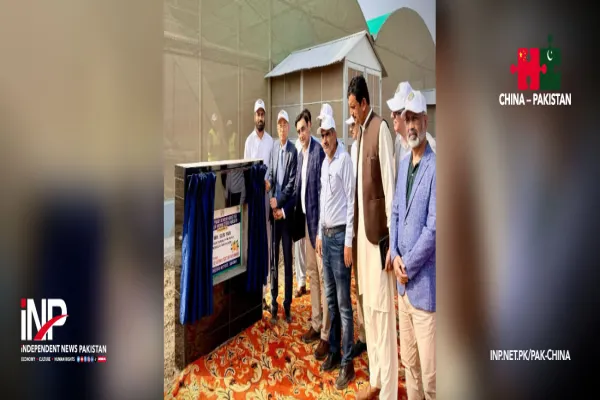
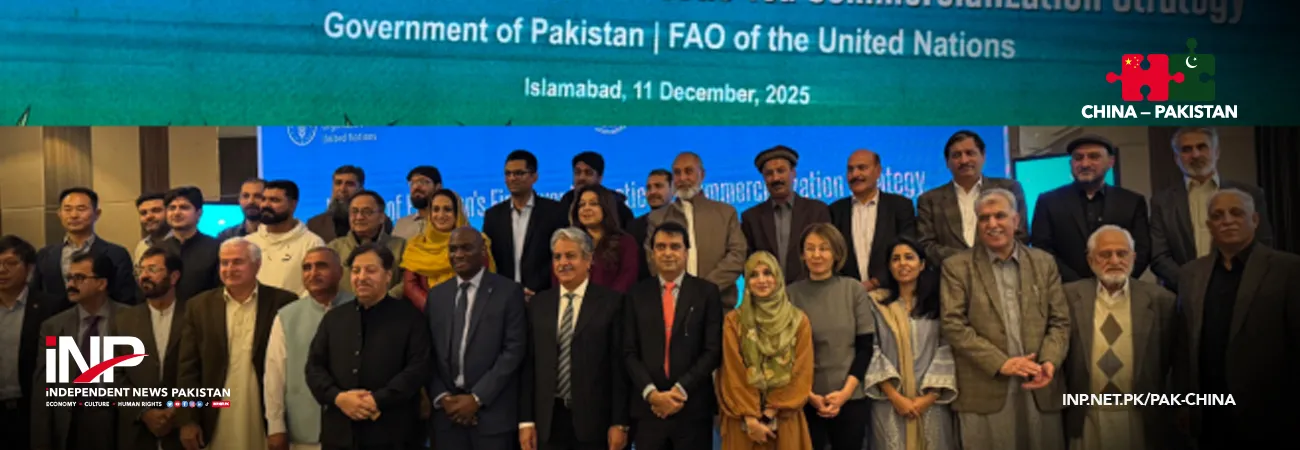
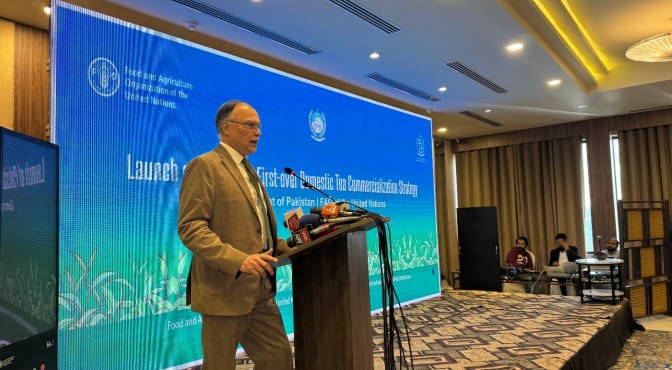
Pakistan on Thursday formally launched its Domestic Tea Cultivation and Commercialisation Strategy, but officials and experts made clear that the plan’s success will depend heavily on attracting international investors, with Chinese investment under the China-Pakistan Economic Corridor (CPEC) seen as the most promising and transformative option. Supported by the Food and Agriculture Organization (FAO), the strategy aims to reduce Pakistan’s USD 650 million annual tea import bill by initiating large-scale tea cultivation in Khyber Pakhtunkhwa (KP), Gwadar Pro reported on Friday.
The roadmap targets 600 acres of privately operated tea gardens in Mansehra by 2030, expected to produce 2,500 metric tons of green leaf annually and serve as the foundation for a fully integrated tea industry by 2040. Federal Minister for Planning Development and Special Initiative Ahsan Iqbal said the country’s broader agricultural modernization, reinforced by China’s training of 1,000 Pakistani agricultural scientists, has positioned Pakistan to diversify into high-value crops. “Effective measures in tea processing, packaging, and branding will enable Pakistani tea to secure a distinguished position in the global market,” he said.
FAO’s National Tea Policy Consultant Dr. Muhammad Khurshed underscored that investor confidence is rising, but Chinese partners remain uniquely aligned with Pakistan’s needs. “One Chinese investor tested Mansehra’s soil here and in China and came back ready to begin commercial work. If the Chinese are involved, they will make it happen,” he said, adding that bringing such investors under CPEC would ensure stronger institutional backing from both governments.
International Tea Consultant Dr. Jhon Snell also stressed the critical role of external financing.
“There are CPEC partners interested in investment in tea production from plantation to consumer-packaged goods,” he said, noting that official approval of the programme has “opened up external funding sources immeasurably.” FAO officials emphasized that the long-term success of Pakistan’s tea sector will hinge on sustained foreign investment, robust extension services and globally competitive processing standards, areas where Chinese collaboration has already begun.
FAO KP Head of Office Mujibur Rahman highlighted the strategic urgency: Pakistan consumes 252,000 tons of tea annually and imports 99% of it. He added that tea cultivation can also fuel tea tourism, with potential integration with CPEC connectivity projects and as well as other major routes including Kalam and Malam Jabba in Swat. By 2040, the strategy envisions a workforce of 10,000 in KP’s tea fields, supporting an estimated 70,000 rural residents.
The plan includes distributing proven Chinese and Sri Lankan tea clones through national nurseries and offers investment opportunities via smallholder, cluster-farm and plantation models.
Credit: Independent News Pakistan (INP) — Pak-China
Related News