

i NEWS PAKISTAN
Pakistan can play role of bridge for regional peace, stability: Speakers Breaking
October 07, 2026
Pakistan can play the role of a bridge for peace and stability in the region, while dialogue, responsible communication and cooperation are essential for achieving sustainable peace, speakers said at a panel discussion held at the Punjab University on Tuesday. The panel discussion, titled “Pakistan as a Bridge for Peace and Stability: The Way Forward,” was organised jointly by the Press Information Department (PID), Lahore, and the Department of Digital Media, Punjab University.
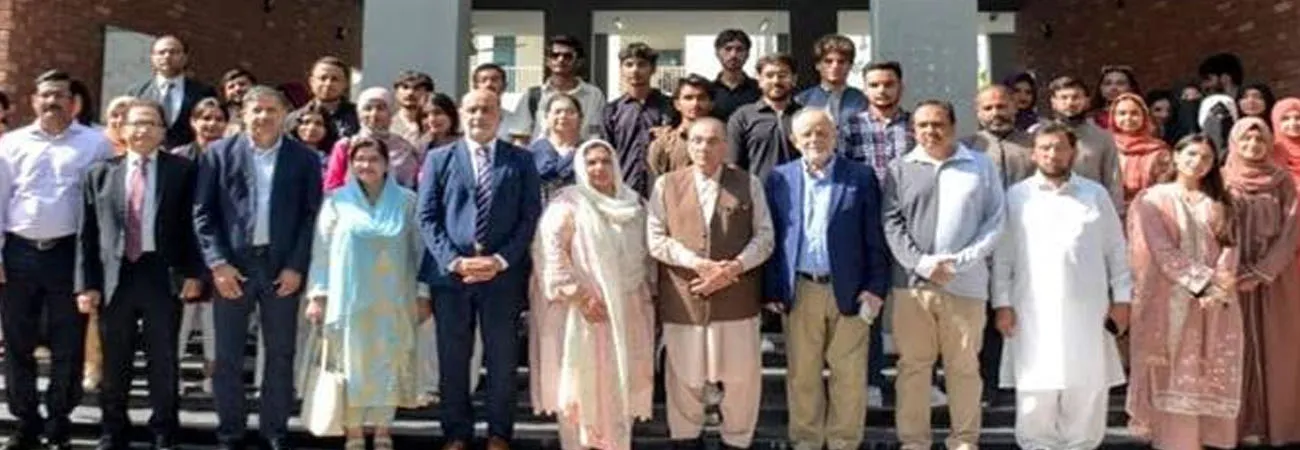
The event was attended by senior journalists Mujeebur Rehman Shami, Salman Ghani and Irshad Arif, columnist Muhammad Mehdi, University of Lahore Dean Dr Fariha Kazmi, PID Director General Shafqat Abbas, Punjab University Department of Digital Media Chairperson Dr Sawaira Shami, Dr Shafiq Ahmed, faculty members, students, journalists and media professionals. The participants discussed Pakistan’s role in promoting regional peace and stability, the importance of cooperation and digital media, and possible strategies for the future.
Addressing the session, senior journalist Mujeebur Rehman Shami said Pakistan’s geographical location gave it unique strategic importance, making it an important link between South Asia, Central Asia, the Middle East and China. He said this geographical position provided Pakistan with an opportunity to serve not only as a centre for trade and economic connectivity but also as a bridge for dialogue, cooperation and peace among different regions and nations. He said the world was facing wars, conflicts, extremism, economic inequality and mistrust, making dialogue, cooperation and mutual respect more important than ever.
Mujeebur Rehman Shami said Pakistan had consistently advocated resolving regional issues through negotiations, diplomacy and mutual cooperation. Peace, he added, was not merely the absence of war but an environment in which people had equal opportunities for education, healthcare, employment, justice and development. He stressed that economic development and peace were closely interconnected and called for greater efforts to involve young people in the process.
He said media organisations and educational institutions could play an important role in promoting tolerance, constructive dialogue and social harmony. Columnist Salman Ghani said Pakistan had always preferred negotiations and diplomatic channels for promoting peace and reducing tensions in the region. He said under the leadership of Prime Minister Shehbaz Sharif and Field Marshal Syed Asim Munir, Pakistan had pursued diplomatic efforts aimed at promoting regional peace and stability and had played a role on different occasions in reducing tensions and facilitating dialogue.
Referring to various diplomatic initiatives, including the Makkah Agreement, Islamabad’s efforts to facilitate dialogue amid tensions between the United States and Iran, and Pakistan’s wider diplomatic efforts for peace, Ghani said these reflected the country’s policy of seeking solutions through dialogue. He said the media had a crucial role in shaping public opinion and presenting the national narrative.
Responsible journalism and constructive communication, he added, could help project Pakistan’s vision of peace, development and regional cooperation. Salman Ghani said digital media had enormous influence because news, photographs and videos could reach audiences across the world within seconds. However, he stressed that this influence came with responsibility.
Credit: Independent News Pakistan (INP)
Related News