



آئی این پی ویلتھ پی کے

Badr pact could strengthen defence manufacturing ties across three regions
November 13, 2026
By Abdul Wajid Khan
The Badr defence cooperation memorandum involving Pakistan, Türkiye, Qatar and Indonesia could strengthen defence manufacturing and technological cooperation across South Asia, the Middle East and Southeast Asia, creating opportunities for joint production, technology transfer, industrial investment and defence exports.
The Badr Memorandum of Understanding (MoU), signed in Doha on Oct. 21, focuses on joint defence production, research and development, technology transfer, military training and industrial capacity building.
The initiative seeks to bring together the participating countries' complementary capabilities, reduce dependence on external suppliers and establish a framework for greater defence-industrial cooperation.
Speaking to Wealth Pakistan, Dr Tughral Yamin, Senior Research Fellow at the Institute of Policy Studies Islamabad, said the agreement offered an opportunity to strengthen Pakistan's national security through defence-industrial cooperation, technological self-reliance and diversified strategic partnerships.
He said the significance of the pact lay in moving beyond conventional arms purchases towards a collaborative framework in which participating countries could pool their expertise, resources and manufacturing capabilities.
The four countries bring different but potentially complementary strengths to the arrangement. Pakistan has experience in aircraft production and defence manufacturing, while Türkiye has developed capabilities in unmanned systems, electronics and sensors.
Qatar could contribute financial resources and procurement capacity, while Indonesia offers expertise in maritime defence and shipbuilding, alongside access to Southeast Asian markets.
Yamin said these complementary capabilities could create opportunities for cooperation in surveillance, radar systems, electronic warfare, counter-drone technology, military communications and maritime defence.
Joint development and production could also reduce research costs, improve maintenance capabilities and strengthen the resilience of defence supply chains, he added.
The agreement carries significance for regional security at a time when South Asia and the Middle East face persistent geopolitical tensions and evolving security challenges.
For Pakistan, greater access to collaborative research, manufacturing and technical expertise could strengthen conventional deterrence while reducing vulnerabilities associated with dependence on foreign suppliers.
However, Yamin cautioned that joint production would not automatically ensure technological independence, as participating countries could remain dependent on third parties for critical components, software and export licences.
Meaningful technology transfer, intellectual property protections and guaranteed access to essential components would therefore be important for developing sustainable domestic capabilities.
Beyond its implications for Pakistan, the agreement could connect defence-industrial capabilities across three strategically important regions.
Türkiye and Qatar provide a bridge to the Middle East, while Indonesia extends the cooperation framework into Southeast Asia. This geographical reach could encourage broader collaboration in maritime security, military training and counterterrorism, although specific initiatives would require further agreements.
The initiative could also help participating countries diversify their defence partnerships and reduce excessive reliance on traditional arms suppliers.
However, Yamin stressed that the four countries had different strategic priorities and international relationships, making flexible cooperation more practical than commitments requiring them to adopt identical positions on regional conflicts.
He said the Badr framework should not be confused with a collective-defence alliance, as its primary focus was defence-industrial cooperation rather than an obligation to provide military assistance in the event of an attack against another signatory.
In this context, Yamin highlighted the distinction between the Badr MoU and the Makkah Agreement for Joint Defence involving Pakistan, Türkiye and Saudi Arabia.
While Badr focuses on joint production, research, training and technological cooperation, the Makkah arrangement is associated with broader strategic and mutual-defence commitments.
The two frameworks could complement each other by strengthening participating countries' defence capabilities while maintaining separate arrangements for military assistance and security commitments.
However, the publicly reported terms of Badr do not establish an automatic collective-defence obligation for Qatar and Indonesia.
Yamin also cautioned that closer defence cooperation should not aggravate existing regional rivalries.
Although stronger defensive capabilities could improve deterrence and reduce vulnerability to coercion, other countries might perceive an exclusive military grouping as a source of strategic concern.
He said Pakistan and its partners should therefore position the initiative as a platform for defensive preparedness, technological development and regional stability, supported by diplomatic engagement and confidence-building measures.
The pact's economic and strategic value will ultimately depend on its implementation.
For Pakistan, potential benefits include expanding defence exports, attracting industrial investment, creating skilled jobs and strengthening domestic research and manufacturing capabilities.
Yamin said Pakistan should prioritise commercially viable projects in surveillance, counter-drone systems, defence electronics and equipment maintenance.
Clear arrangements covering financing, technology transfer, local production, intellectual property and export rights would be essential to ensure that cooperation delivered sustainable benefits.
He also emphasised the importance of involving domestic manufacturers, universities and research institutions so that joint projects contributed to developing indigenous expertise rather than merely assembling imported components.
For the other signatories, the framework could provide opportunities to share technological expertise, expand industrial partnerships and develop products for wider international markets.
However, translating these possibilities into commercial gains would require sustained investment, competitive production and clearly defined implementation mechanisms.
Yamin said the Badr agreement should neither be viewed as the creation of a new military bloc nor dismissed as a symbolic declaration. Its significance would depend on the practical capabilities the four countries developed and their ability to sustain cooperation while preserving space for diplomacy.
If implemented effectively, the pact could strengthen defence-industrial links across South Asia, the Middle East and Southeast Asia, providing a platform for technological cooperation, joint manufacturing and diversified strategic partnerships.
Its contribution to regional stability, however, would depend on balancing stronger defensive capabilities with responsible diplomacy and a commitment to peaceful regional relations.
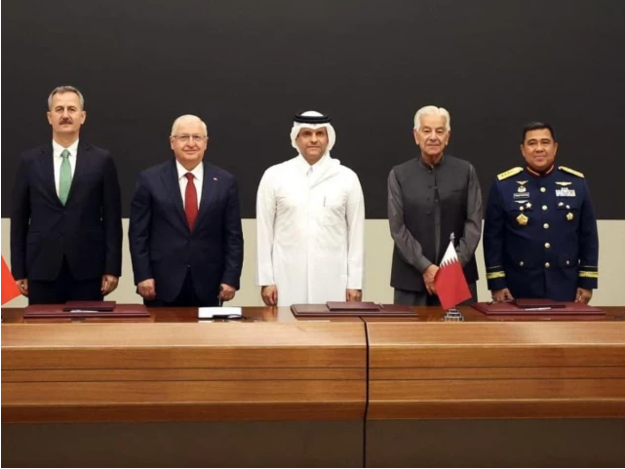
Credit: INP-WealthPk
متعلقہ مضامین