



آئی این پی ویلتھ پی کے

Pakistan’s major reservoirs hold 13.149 MAF against 18.646 MAF benchmark
November 13, 2026
By Ijaz Kakakhel
Pakistan’s three major reservoirs have a combined live storage capacity of 13.149 million acre-feet (MAF), compared with a benchmark capacity of 18.646 MAF following the raising of Mangla Dam, reflecting a shortfall of 5.497 MAF, according to official figures from the Ministry of Water Resources available with Wealth Pakistan.
The figures covering Tarbela, Mangla and Chashma show that their current combined live storage capacity is approximately 29.5% below the benchmark, highlighting the reduction in available reservoir storage.
According to the ministry, Tarbela Dam’s live storage capacity stands at 5.580 MAF in 2026, compared with its original capacity of 9.692 MAF in 1974. The difference of 4.112 MAF accounts for nearly three-quarters of the overall gap between the combined benchmark and current capacities.
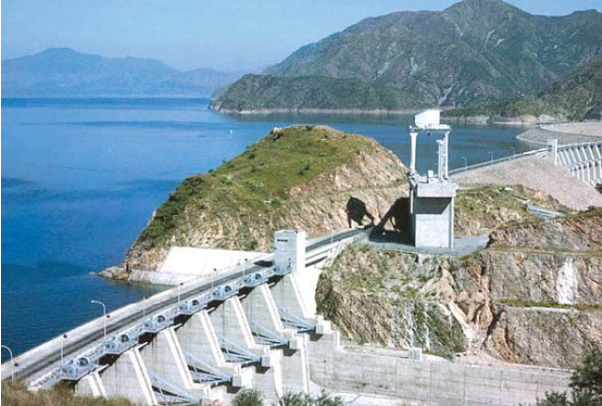
Mangla Dam has a live storage capacity of 7.258 MAF in 2026, compared with 8.237 MAF recorded in 2012 following the dam-raising project. Its original capacity was 5.86 MAF in 1967.
Meanwhile, Chashma’s live storage capacity stood at 0.311 MAF in 2024, compared with 0.717 MAF in 1971.
The combined benchmark of 18.646 MAF reflects Tarbela’s and Chashma’s original storage capacities along with Mangla’s capacity after its raising.
According to the document, Pakistan receives an average of 141.8 MAF of water annually from the western rivers — Indus, Jhelum, Chenab and Kabul — and eastern rivers, including Ravi, Sutlej and Beas.
However, the ministry reported that nationally available water storage is equivalent to only 33 days.
To expand the country’s storage capacity, the federal government is sponsoring 18 dam projects at a combined estimated cost of Rs1,041.389 billion.
These projects, at various stages of development, are expected to provide approximately 8.232 MAF of cumulative storage capacity and bring another 346,447 acres under irrigation upon completion.
Diamer Basha Dam alone is expected to provide 6.4 MAF of storage. According to the ministry, the project will enhance irrigation supplies to the existing 45 million acres of land irrigated through the Indus Basin Irrigation System.
The ministry also identified 14 additional reservoirs at the planning and design stages, with a proposed combined live storage capacity of 25.02 MAF.
Over the past decade, major reservoir projects completed through the Water and Power Development Authority have added 3.914 MAF of live storage capacity.
These include the Mangla Dam raising project, which added 2.88 MAF, Gomal Zam Dam with 0.892 MAF, Satpara Dam with 0.053 MAF and Darawat Dam with 0.089 MAF.
The government is implementing the National Water Policy 2018, which emphasises reservoir construction, rainwater harvesting and climate-resilient infrastructure for flood control and drought management.
For coordination, the government has constituted the National Water Council under the prime minister and the National Water Policy Steering Committee under the federal minister, with representation from relevant federal and provincial organisations.
The government is also installing a real-time water monitoring system at 27 locations across the Indus Basin Irrigation System.
The ministry reported 80% physical progress on the telemetry project, which is intended to improve the accuracy and transparency of water accounting and facilitate the verification of water deliveries among provinces.
Credit: INP-WealthPk
متعلقہ مضامین