INP-WealthPk
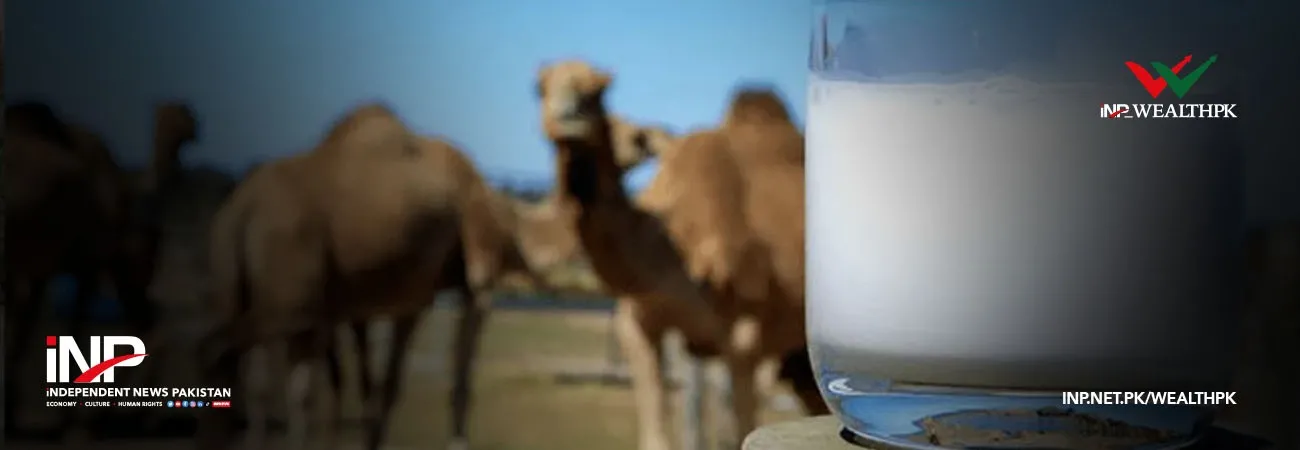
Pakistan expands camel milk exports to China, Gulf markets
August 21, 2026
By Muhammad Luqman
Pakistan's private sector is expanding exports of camel milk powder and other camel milk-based dairy products to China and Gulf markets, while efforts are also underway to strengthen domestic camel population and dairy value chain.
Speaking to Wealth Pakistan, Ehtisham-ul-Haq, Managing Director of ELC Biotechnology, said the company began exporting camel milk powder to China in 2023 and had since expanded shipments to Saudi Arabia, the United States and other markets.
Haq said camel milk had traditionally attracted limited demand in Pakistan because of its distinctive taste, but demand was stronger in markets such as China and Gulf countries because of its nutritional value.
He said Pakistani camel dairy products, including camel milk powder, had been tested and approved by relevant food-testing laboratories in China, the United Arab Emirates, Saudi Arabia and the United States.
According to Haq, importing countries demand strict purity and traceability of camel milk, often requiring DNA testing; consequently, any contamination with milk from other animals lead to shipment rejection.
He said camel milk was considered beneficial for diabetics because it contains naturally occurring insulin-like proteins.
ELC Biotechnology is also planning to introduce liquid camel milk in Pakistan in September. Haq said the product would be deodorised to make it more acceptable to local consumers.
The company has established 22 milk-collection centres in southern Punjab, particularly along the Multan-Sadiqabad belt, as part of efforts to develop an integrated camel milk value chain.
"Under the cooperative model, milk is collected from camels owned by farmers in these areas and transported to collection centres," he said.
Haq said the company currently had the capacity to collect between 15,000 and 20,000 litres of camel milk per day and was targeting annual exports of 500 to 600 tonnes of camel milk powder to China and other countries.
Dr Muhammad Junaid, a dairy consultant at the Federal Ministry of National Food Security and Research, said the Punjab and federal governments could facilitate private-sector efforts to expand camel milk and meat exports.
"The Punjab government can provide land for establishing dedicated camel farms, alongside financial assistance for chilling equipment and infrastructure," he said.
Junaid said there was considerable potential to expand camel dairy exports, although opportunities for camel meat exports were comparatively limited.
Meanwhile, the Punjab Livestock Department has launched a project to conserve and improve indigenous camel breeds to meet domestic requirements and support export-oriented livestock development.
Dr Khaliq Shafee, Director of Livestock Punjab, said camel breeding and research institutes in Bhakkar and Attock had been tasked with conserving and propagating important indigenous breeds.
The Camel Breeding and Research Station at Rakh Mahni in Bhakkar is working to improve the characteristics of the Marecha breed, while the Government Farm in Attock is focusing on the Bareera breed.
Shafee said the initiatives were aimed at making camel rearing more economically viable for farmers.
"The greater the number of camels in Punjab, the higher our chances of exporting meat and dairy products abroad," he told Wealth Pakistan.
Punjab's camel population currently stands at around 252,000, up 26% from approximately 199,000 previously. The province accounts for about 22% of Pakistan's total camel population.
Punjab is home to five primary dromedary breeds: Marecha, Bagri, including Booja, Bareera or Thalochi, Campbellpuri and Kala Chitta.
Shafee said state-backed research farms had helped farmers recognise the economic potential of camel farming, particularly because camels are well adapted to the harsh climatic conditions of the Thal region.
Credit: INP-WealthPk
Related Articles



5G rollout doubles across Pakistan
Aug 20, 26
View more