



INP-WealthPk
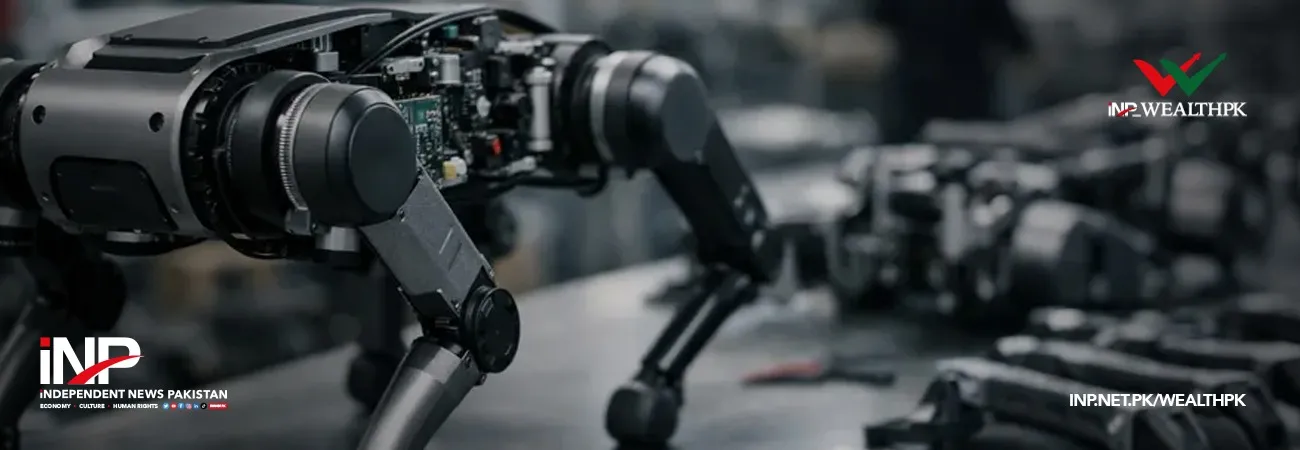
Unitree IPO spotlights China’s deep-tech commercialisation
August 18, 2026
By Qudsia Bano
China’s Unitree Robotics is showcasing the commercial viability of deep technology, as strong demand for its Shanghai initial public offering highlights growing investor interest in humanoid robotics and embodied artificial intelligence.
The Hangzhou-based robotics company priced its shares at 150.80 yuan each and is seeking to raise around 6.1 billion yuan, equivalent to about $904 million, through the sale of roughly 40.45 million new shares on Shanghai’s STAR Market. The offering values Unitree at around 61 billion yuan, or approximately $9 billion, and positions it to become China’s first mainland-listed humanoid robot manufacturer.
Investor demand has been particularly strong. Unitree’s retail offering was more than 8,000 times oversubscribed, with nearly 10 million retail investors submitting bids. The retail allotment success rate fell to about 0.018%, reflecting intense market interest in companies associated with robotics and artificial intelligence.
The investor response comes alongside rapid business growth. Unitree generated around 1.7 billion yuan in revenue in 2025, more than four times its 2024 level. Humanoid robots contributed about 867.8 million yuan during the year, overtaking the company’s four-legged robot business, while more than 40% of total sales came from overseas markets.
The IPO also provides Unitree with substantial capital to expand its technological and manufacturing capabilities. The company plans to invest about 4.2 billion yuan of the proceeds in intelligent robot model research, robot body research and development, new intelligent robot products and an intelligent robot manufacturing base.
Unitree’s development comes as China continues to move beyond its traditional manufacturing strengths towards higher-value economic activities involving advanced technology, innovation, branding and intellectual property.
Speaking to Wealth Pakistan, Prof Dr Muhammad Usman Ghani Khan, Director of the National Centre of Artificial Intelligence, said the strong investor response to Unitree’s IPO reflected growing confidence that artificial intelligence was transitioning from purely software-based applications into physical systems capable of interacting with the real world.
He said embodied AI represented an important next stage of technological development because it combined artificial intelligence with robotics, perception, movement and decision-making.
However, he said the commercial success of such technologies would ultimately depend on whether companies could move from impressive demonstrations to reliable and affordable real-world applications.
Yousuf Ibnul Hasan, former Registrar and Director of Planning and Development at the Metropolitan University Karachi, said China’s technological development reflected a broader shift from traditional manufacturing towards higher-value activities involving innovation, branding and technological capabilities.
He said the movement up the value chain was part of a wider transformation in China’s economic structure, as technological advancements increasingly translate into commercially viable businesses.
Unitree provides an example of this transition. The company has progressed from engineering and product development to large-scale sales, international market penetration and public equity financing, demonstrating how technological innovation can move beyond research funding and private venture investment into mainstream capital markets.
Unitree’s growing sales, continued investment in research and manufacturing, and collaboration with AI companies such as DeepSeek indicated that China’s robotics ecosystem was increasingly focused on converting technological advances into commercially scalable products, he added.
The convergence of AI and robotics is also reflected in Unitree’s relationship with Chinese AI developer DeepSeek. DeepSeek invested 140.8 million yuan, or about $20.8 million, in Unitree through the IPO and agreed to cooperate with the robotics company on artificial intelligence models for humanoid machines.
The partnership brings together advanced AI modelling and physical robotics capabilities at a time when embodied AI is emerging as an important area of technology investment.
Despite the strong investor demand, Unitree’s financial figures also highlight the high expectations attached to its future growth. The IPO valuation is equivalent to roughly 219 times the company’s 2025 earnings.
Unitree’s adjusted profit also declined 52.6% in the first quarter of 2026 despite a 68.5% increase in revenue, as spending on research, development and marketing increased.
Unitree’s expansion from technological development into international sales, manufacturing investment and public-market financing also illustrates China’s broader progress in turning deep-tech innovation into commercially scalable businesses. At the same time, the IPO provides an important test of whether rapid advances in China’s humanoid robotics and embodied AI industries can be converted into sustained commercial growth.
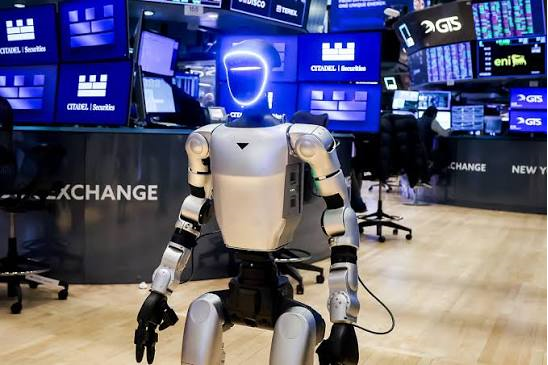
Credit: INP-WealthPk
Related Articles