INP-WealthPk
Pakistan reports normal drought conditions, keeps western Balochistan under watch
August 18, 2026
By Azeem Ahmed Khan
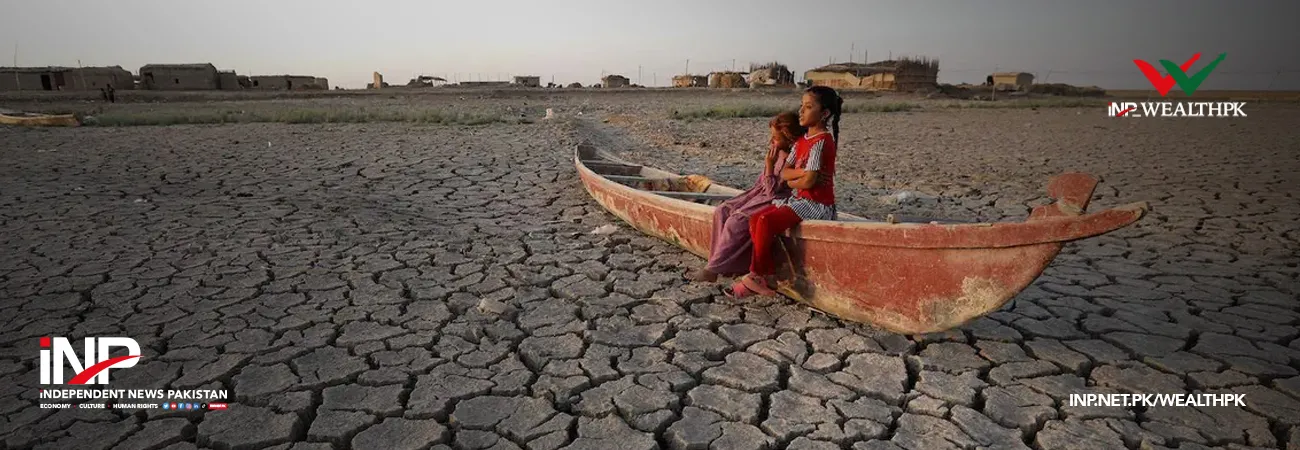
Pakistan is currently experiencing largely normal drought conditions, with only a mild rainfall deficit persisting in western districts of Balochistan, as the country's drought monitoring system continues surveillance to identify any emerging risks to agriculture, livestock and livelihoods, official documents of the Pakistan Meteorological Department (PMD) show.
According to an assessment by the National Drought Monitoring and Early Warning Centre (NDMC) of the PMD, normal conditions are prevailing across the country. However, continued monitoring has been recommended for western Balochistan to assess any changes in rainfall and drought conditions over the coming months.
The monitoring comes after the PMD issued a drought pre-alert on December 5, 2025, for parts of western and southwestern Balochistan, where the rainfall deficit had intensified between May and November 2025 and the number of consecutive dry days had increased. The advisory warned that the combination could further worsen drought conditions in affected areas, according to documents available with Wealth Pakistan.
Based on climatological patterns and the seasonal forecast for December 2025 to February 2026, the PMD had identified Chagai, Gwadar, Kech, Kharan, Mastung, Nushki, Pishin, Panjgur, Killa Abdullah, Quetta and Washuk under the “Drought Advisory (Pre-Alert)” category amid expectations of below-normal rainfall and above-normal temperatures. The advisory also said a rainfall system expected to affect parts of Balochistan later that month could provide partial relief.
To strengthen preparedness, the documents outline a series of anticipatory actions aimed particularly at protecting agriculture and livestock. These include pre-positioning fodder and water tanks, mobilising mobile health and veterinary teams, disseminating drought alerts and water-use advisories through SMS, mosques and community hubs, and coordinating with NGOs and other stakeholders for contingency support and targeted subsidies for smallholder farmers.
Authorities have also been advised to strengthen water storage and promote efficient irrigation techniques in hotspot union councils, while all relevant stakeholders have been urged to undertake pre-emptive measures in drought-prone districts to minimise possible impacts on agriculture, livestock and livelihoods.
The NDMC's early-warning architecture provides the technical backbone for such preparedness. Established in 2004-05 following the 1999-2001 drought, the Centre serves as a central repository for meteorological information, consolidates drought indices and advises federal and provincial agencies on evolving risks. Its monitoring draws on meteorological observatories, automatic weather stations, satellite and model-derived products, seasonal outlooks and reservoir-storage information.
The Centre routinely issues weekly, fortnightly, monthly and quarterly drought-monitoring bulletins covering rainfall anomalies, soil moisture conditions, reservoir status, drought indices and seasonal outlooks supported by spatial maps. Depending on the severity and expected evolution of conditions, the PMD issues drought watch, advisory, alert or warning products to federal ministries, provincial governments, disaster management authorities and agriculture, irrigation and livestock departments.
The system also provides technical input to federal and provincial institutions for drought-risk assessment and preparedness, although operational decisions and implementation remain with the relevant authorities. The documents identify gaps in real-time weather-station coverage in some high-altitude and remote districts and a limited institutional feedback mechanism as remaining challenges, while noting that the country's drought early-warning system has significantly improved.
Credit: INP-WealthPk
Related Articles