


INP-WealthPk

Pakistan's development projects to create over 54,000 jobs across key sectors
July 03, 2026
By Farooq Awan
Pakistan's latest portfolio of approved development projects is expected to generate more than 54,000 employment opportunities, reinforcing the government's strategy of using public investment to stimulate economic growth while improving education, energy, water management and environmental sustainability.
According to the Ministry of Planning, Development and Special Initiatives' Monthly Development Update (June 2026), a review of PC-I documents approved during May 2026 shows that the current portfolio is projected to create approximately 9,813 direct jobs and 44,967 indirect jobs across multiple sectors, taking the total expected employment generation to around 54,780 jobs.
The report states that the projects span the education, environment, higher education, power and water sectors, reflecting the government's emphasis on human development, environmental protection, energy security and improved water resource management. Besides creating immediate employment during construction and implementation, these projects are expected to generate long-term economic benefits by strengthening public infrastructure and enhancing productivity.
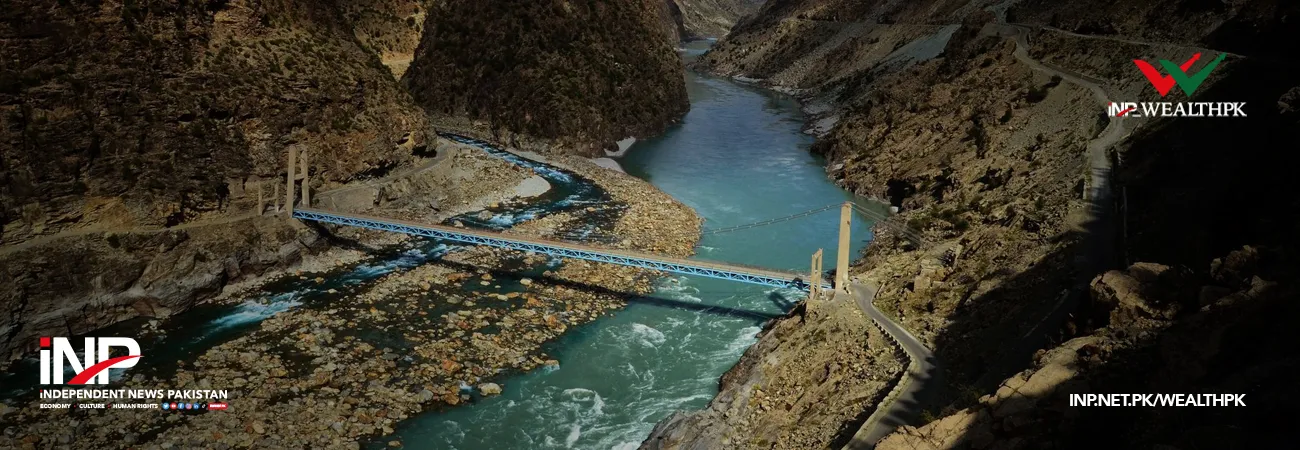
According to the report, the Diamer Bhasha Dam Project is expected to account for a significant share of the projected employment opportunities. As one of Pakistan's largest infrastructure schemes, the project will create jobs in construction, engineering, transport, logistics and other allied services while contributing to the country's long-term water storage and hydropower generation capacity.
The report highlights that investment in education and higher education projects will also generate employment through construction activities, expansion of educational facilities, academic programmes and institutional capacity-building initiatives. At the same time, renewable energy, hydropower and water resource projects are expected to create demand for skilled and semi-skilled workers during both implementation and operational phases.
Alongside employment generation, the government continued efforts to improve the efficiency of development spending through cost rationalisation. According to the report, development proposals underwent extensive scrutiny to eliminate non-essential components and ensure better utilisation of public resources.
The report states that these interventions generated Rs98.273 million in savings during April 2026 alone, taking cumulative savings to Rs12.1 billion during July-April FY2025-26. According to the Ministry of Planning, the exercise strengthened the efficiency of allocating scarce public resources while demonstrating the government's commitment to results-driven and impact-oriented development planning.
The report notes that the cost rationalisation process forms an integral part of the government's broader public investment management reforms. By removing unnecessary expenditures without compromising project objectives, authorities aim to maximise the developmental impact of available financial resources while maintaining fiscal discipline.
According to the document, employment generation remains one of the central objectives of Pakistan's Public Sector Development Programme (PSDP). Infrastructure investment not only creates direct jobs during project execution but also stimulates indirect employment through demand for construction materials, engineering services, transportation, manufacturing and other supporting industries.
The report adds that investments in education, renewable energy, hydropower and water infrastructure are expected to deliver benefits beyond immediate job creation by improving human capital, enhancing energy availability, strengthening climate resilience and supporting sustainable economic growth. These projects are also intended to improve regional development and expand economic opportunities in underserved areas of the country.
According to the Ministry of Planning, the combination of employment generation and prudent resource management reflects the government's efforts to maximise the economic and social returns from public sector investments. The report says these initiatives are expected to support inclusive growth by creating jobs while ensuring that development funds are utilised efficiently and directed towards high-impact projects.

Credit: INP-WealthPk
Related Articles