



INP-WealthPk
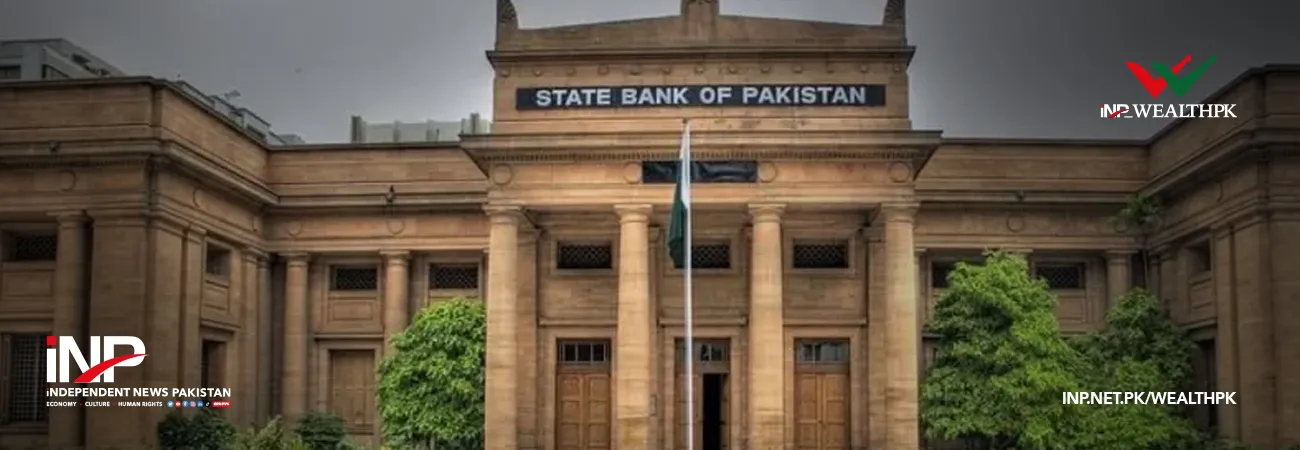
SBP keeps policy rate unchanged at 10.5pc as growth outlook improves
January 27, 2026
Farooq Awan
The Monetary Policy Committee (MPC) of the State Bank of Pakistan on Monday decided to keep the policy rate unchanged at 10.5 percent, citing steady inflation trends, improving economic growth prospects, and a relatively contained current account deficit.
According to the Monetary Policy Statement issued after the MPC meeting, headline inflation stood at 5.6 percent year-on-year in December 2025, in line with expectations, while core inflation remained elevated at around 7.4 percent in recent months. The committee observed that economic activity was gaining momentum faster than anticipated, mainly driven by domestic-oriented sectors, as reflected in recent high-frequency indicators.
The MPC noted that the trade deficit had widened due to a substantial increase in imports and a decline in exports. However, resilient workers’ remittances and benign global commodity prices helped keep the current account deficit relatively contained. Based on these developments, the committee said the outlook for inflation and the current account remained broadly unchanged, while the outlook for economic growth had improved significantly, prompting the decision to maintain the policy rate at its current level.
The committee highlighted several key developments since its last meeting. Provisional data showed real GDP growth at 3.7 percent year-on-year in the first quarter of FY26, compared to 1.6 percent in the same period last year, led by industry and agriculture. Consumer and business confidence improved, while inflation expectations eased. SBP’s foreign exchange reserves surpassed the end-December target, reaching $16.1 billion as of January 16, supported by ongoing interbank foreign exchange purchases.
Meanwhile, Federal Board of Revenue (FBR) revenue growth slowed to 7.3 percent in December, falling short of the target. In the real sector, the MPC noted strong momentum in domestic demand indicators, including auto sales, cement dispatches, POL sales excluding furnace oil, fertilizer off-take, and imports of machinery and intermediate goods. Large-scale manufacturing recorded year-on-year growth of 8.0 percent in October and 10.4 percent in November 2025, raising cumulative LSM growth to 6.0 percent during July–November FY26.
The committee also cited encouraging prospects for the wheat crop based on sowing data and satellite imagery. As a result, real GDP growth for FY26 is now projected in the range of 3.75 to 4.75 percent. On the external front, the current account posted a deficit of $244 million in December 2025, taking the cumulative deficit to $1.2 billion in the first half of FY26. The widening trade deficit was driven by higher imports and a sharp decline in food exports, particularly rice, while high-value-added textile exports remained resilient. Continued growth in workers’ remittances and ICT services exports helped contain the deficit.
SBP projected the current account deficit to remain between 0 and 1 percent of GDP in FY26, with foreign exchange reserves expected to exceed $18 billion by June 2026. In the fiscal sector, FBR tax revenues grew by 9.5 percent in the first half of FY26, significantly lower than the 26 percent growth recorded in the same period last year, resulting in a shortfall of Rs329 billion. While interest payments declined and expenditures remained relatively contained, the MPC noted that achieving the annual primary surplus target would be challenging.
The committee also reported that broad money growth rose to 16.3 percent by January 9, driven by higher private sector credit and government borrowing. Private sector credit expanded by Rs578 billion so far in FY26. Headline inflation is projected to stabilize within the target range of 5–7 percent in FY26 and FY27, although risks remain from global commodity prices, domestic wheat prices, and adjustments in administered energy tariffs.
Credit: INP-WealthPk
Related Articles