



INP-WealthPk

Weekly inflation falls 0.48% as chicken drops 16.68% and tomatoes rise 9.83%
January 26, 2026
Farooq Awan
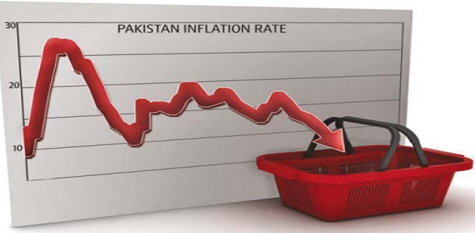
Pakistan’s weekly inflation, measured by the Sensitive Price Indicator (SPI), declined by 0.48% for the week ended January 22, 2026, as sharp reductions in key food items—particularly chicken and kitchen vegetables—more than offset price gains in staples such as wheat flour and eggs, according to the Pakistan Bureau of Statistics (PBS).
The SPI is compiled on a weekly basis to gauge short-term price movements of essential commodities and is calculated on the basis of 51 items collected from 50 markets across 17 cities. The latest PBS reading indicates that price relief was broad enough to pull the combined SPI down to 333.60 from 335.20 a week earlier, reflecting a week-on-week decrease of 0.48%.
Food prices were the dominant driver of the weekly decline. Chicken recorded the steepest fall, dropping by 16.68% during the week. Prices of potatoes fell 8.52%, while onions declined 7.27%, offering notable relief for households given the high frequency of these items in daily consumption. Among other items registering decreases, LPG fell 3.54%, salt powder declined 1.52%, gur fell 1.00%, vegetable ghee (2.5 kg) eased 0.87%, cooking oil (5 litre) slipped 0.53%, pulse masoor decreased 0.27%, and cigarettes edged down 0.11%.
However, the weekly snapshot also captured fresh price pressures in selected essentials, highlighting continued volatility—especially in perishables. Tomatoes rose 9.83% over the previous week, emerging as the biggest gainer. Bananas increased 3.66%, wheat flour climbed 2.27%, eggs rose 1.02%, and firewood increased 0.56%. Smaller weekly increases were also recorded in pulses, including pulse mash (0.53%), pulse moong (0.43%) and pulse gram (0.16%), while sugar increased 0.14% and shirting edged up 0.27%.
PBS data show that the movement was mixed across the basket: out of 51 items, prices of 12 items (23.53%) increased, 11 items (21.57%) decreased, and 28 items (54.90%) remained unchanged. This distribution suggests that the headline weekly decline was driven by a smaller set of high-impact items—particularly chicken and key vegetables—while the majority of the basket remained stable.
The weekly easing was also reflected across expenditure-based consumption groups. The lowest expenditure quintile (Q1) recorded a week-on-week decline of 0.30%, while Q2 fell 0.37%, Q3 dropped 0.39%, Q4 declined 0.45%, and the highest expenditure quintile (Q5) recorded a 0.54% decrease, with the combined index down 0.48%. This indicates that while all groups benefited from the weekly decline, the magnitude of relief was relatively higher for upper quintiles during this particular week.
Credit: INP-WealthPk