


i BLOGS
Trump Extended Ceasefire on Pakistan’s RequestBreaking
April 22, 2026
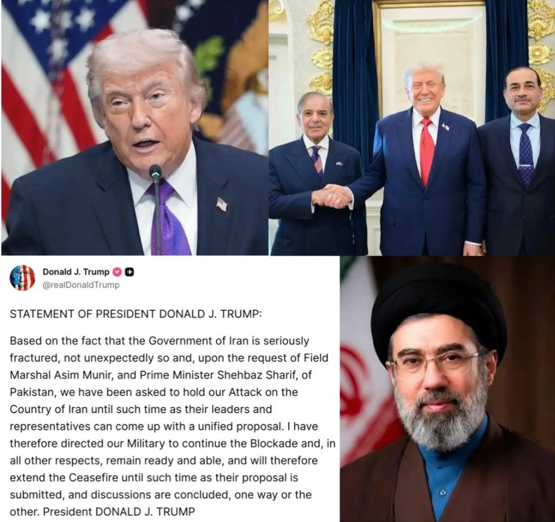
American President Donald Trump issued a public statement clearly saying that on the request of Pakistan’s Field Marshal Asim Munir and Prime Minister Shahbaz Sharif, it has been decided to extend the ceasefire on Iran until their proposal is submitted and discussions are concluded.
Trump said, "Upon the request of Field Marshal Asim Munir, and Prime Minister Shehbaz Sharif, of Pakistan, we have been asked to hold our attack on the Country of Iran until their leaders and representatives can come up with a unified proposal."
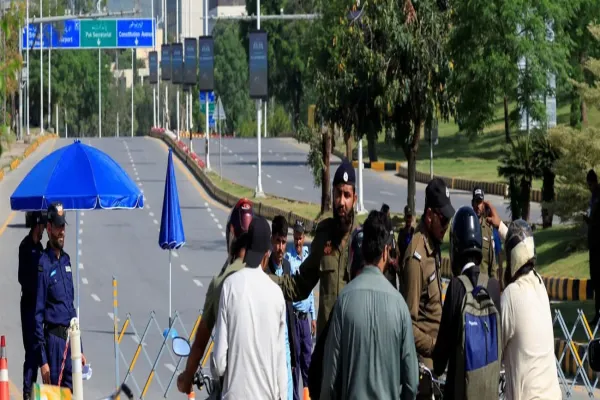
Pakistan's leaders have held peace talks in Islamabad to end a war that has killed thousands of people and hurt the world economy.
But even though he said what looked like a one-sided extension of the ceasefire, Trump also said that the US Navy would keep blocking Iran's trade by sea, which Iran sees as an act of war.
Iranian officials quickly downplayed what Trump said. Tasnim News Agency said that Tehran had not asked for any extra time and that Iran could break the US naval blockade by force if it needed to. An adviser to parliamentary speaker Mohammad Bagher Ghalibaf also said that Trump's announcement was politically motivated.
During the conflict, Trump has changed his tone many times. He has recently threatened serious military action against Iran, such as strikes on important infrastructure. However, he has also shown interest in ending the fighting to calm global markets. The UN has spoken out against threats against civilian infrastructure, saying that these actions break international humanitarian law.
Amir-Saeid Iravani, Iran's ambassador to the UN, said that Tehran is still willing to talk if the US ends its blockade. Iranian officials say that once things calm down, there could be another round of talks in Islamabad.
The fighting started on February 28 when the US and Israel bombed Iran together. Since then, violence has spread throughout the area, including Lebanon and the Gulf states where US military bases are located. Reports say that more than 5,000 civilians have died and hundreds of thousands have been forced to leave their homes.
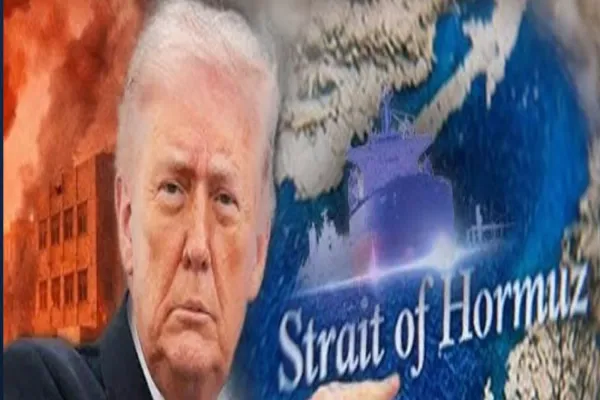
The war has also messed up energy markets around the world. Fighting near the Strait of Hormuz, which is one of the most important oil shipping routes in the world, sent oil prices through the roof and made people worry about a bigger economic slowdown.
Even though the ceasefire has been extended, the talks that were planned are still up in the air. US Vice President JD Vance has put off a possible trip to Pakistan. Meanwhile, Washington and Tehran are still trading threats, making it hard to tell if a long-term deal will happen.
Credit: Independent News Pakistan (INP)
Related News