



i INP-WEALTHPK

Pakistan owes Iran $12m for electricity imported for Makran regionBreaking
November 13, 2026
By Ijaz Kakakhel
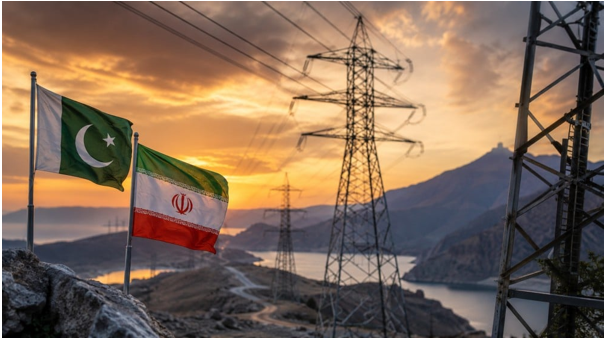
Pakistan owes Iran about $12 million in electricity import payments, while cross-border arrangements allow up to 204 megawatts (MW) to be supplied to Balochistan’s Makran region, including Gwadar, according to data from the Ministry of Energy’s Power Division available to Wealth Pakistan.
The data show that Pakistan imported electricity under an agreement signed with Iran on November 6, 2002, and later amended to accommodate changes in the supply arrangement.
The tenth amendment, initiated on December 27, 2024, for two years, provided for maximum power demand of 204MW through four interconnection lines. The amended arrangement also carries a take-or-pay obligation of 30 million kilowatt-hours of electricity per month.
Under a take-or-pay arrangement, the buyer undertakes to pay for a specified minimum quantity of electricity under the contract’s terms. The monthly obligation does not, by itself, establish how much power was actually imported during any particular month.
Two major cross-border lines account for most of the available supply capacity. The Pola-Jivani connection and the Peshin-Mand connection are each rated at 100MW.
Two smaller connections, Mirjaveh-Taftan and Jalagh-Mashkhail, have capacities of 2MW each, taking the combined maximum to 204MW. All four links connect locations in Iran with receiving points in Pakistan.
The Power Division says the Economic Coordination Committee of the Cabinet approved the agreement signed between Pakistan’s Central Power Purchasing Agency-Guarantee (CPPA-G) and Iran’s Tavanir.
The National Electric Power Regulatory Authority (NEPRA) approved the applicable electricity tariff, while CPPA-G processes invoices and makes payments to the Iranian supplier.
The payments for imported electricity were made regularly in accordance with the approved tariff. However, about $12 million remained payable to Tavanir against electricity already imported from Iran.
The Power Division also clarified that consumers in the areas receiving Iranian electricity are required to pay their bills. They are charged under the tariff and billing mechanism notified by NEPRA, with the Quetta Electric Supply Company (QESCO) responsible for billing, collecting and recovering electricity charges.
The data show that loadshedding has been carried out in areas receiving electricity from Iran in accordance with aggregate technical and commercial (AT&C) losses.
Though the interconnection of the Makran region with Pakistan’s national grid has been completed, the long transmission line creates voltage-related challenges that still require technical intervention.
A study on reactive power compensation using dynamic equipment, including a static synchronous compensator (STATCOM) and its subsequent installation, is underway. The Power Division expects the work to be completed by September 2027, indicating that further system improvements are needed even after the region’s connection to the national grid.
Credit: INP-WealthPk
Related News