



i INP-WEALTHPK
Pakistan’s telecom sector expands as over 57,000 BTS go operational nationwideBreaking
May 18, 2026
By Ijaz Kakakhel
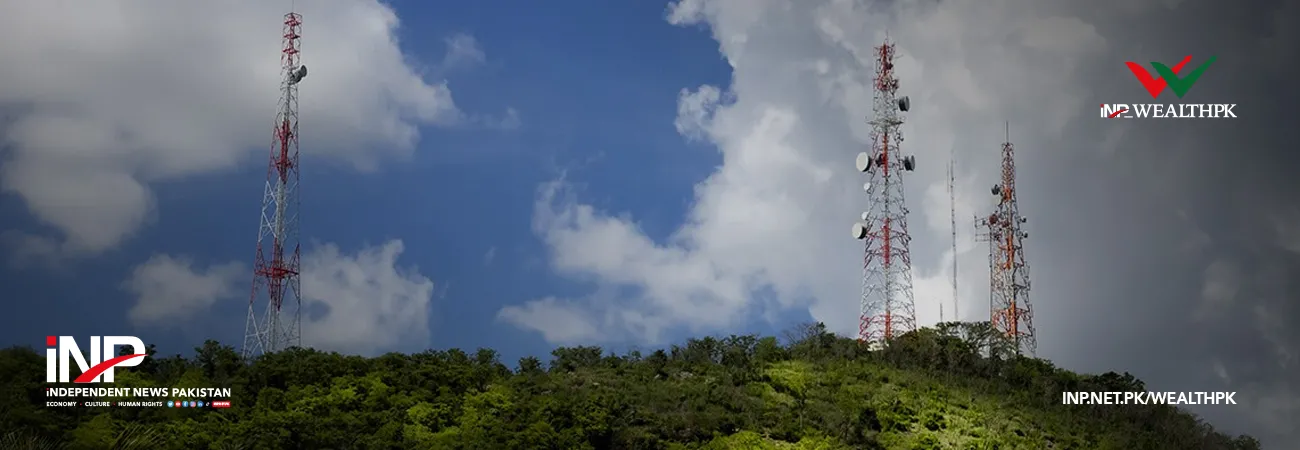
Pakistan’s telecom sector is witnessing significant growth, with more than 57,000 Base Transceiver Stations (BTS) now operational nationwide. Jazz operates the largest share of cellular sites, followed by CMPak, Telenor, and Ufone.
According to the latest infrastructure data available with Wealth Pakistan, Jazz leads the market with 16,247 BTS sites, including 16,003 4G-enabled stations. CMPak follows closely with 15,882 BTS, maintaining a strong balance across 2G, 3G, and 4G services. Telenor operates 13,034 BTS sites, while Ufone maintains 11,881 BTS installations, supporting nationwide mobile coverage.
Overall, Pakistan now hosts 57,029 2G stations, 33,308 3G stations, and 55,088 4G stations.
The latest figures highlight the country’s accelerating shift toward high-speed 4G connectivity, while legacy 2G and 3G networks continue supporting millions of users across urban and rural regions.
The rapid expansion of 4G infrastructure reflects the growing demand for high-speed internet, digital services, and mobile connectivity across both urban and rural areas.
Pakistan is entering a new era of digital transformation through an ambitious and forward-looking telecommunications strategy. Recognizing the increasing importance of connectivity in economic growth, governance, education, healthcare, and innovation, the government has introduced a comprehensive national framework to accelerate the transition towards next-generation technologies, including 5G and future network infrastructure.
A major milestone in this journey was the issuance of the Policy Directive for IMT Spectrum Auction on 6 January 2026. The directive established a long-term, technology-neutral, and market-driven framework for spectrum allocation and network modernization.
Beyond spectrum management, the policy introduced broad reforms aimed at improving efficiency, strengthening digital infrastructure, and attracting both local and foreign investment.
The reforms focus on several strategic areas. Infrastructure sharing among telecom operators has been encouraged to reduce operational costs and prevent unnecessary duplication of networks. The licensing framework is also being streamlined to create a more business-friendly environment for operators and investors.
To enhance affordability and digital inclusion, the government is promoting local manufacturing and supporting the development of a more robust mobile device ecosystem. Additional measures focus on energy efficiency and dedicated power solutions for telecom infrastructure to ensure reliable services nationwide.
To support broadband expansion, the government, under the vision of Prime Minister Shehbaz Sharif, has adopted a unified national policy abolishing Right of Way (RoW) charges across federal, provincial, and local jurisdictions. This landmark decision is expected to significantly reduce the cost and time required for fiber optic deployment, accelerate broadband penetration, and encourage private sector participation, particularly in underserved and remote regions. Proposed amendments to the Pakistan Telecom Act are also under process to provide legal backing for these reforms.
Innovation and digital entrepreneurship are also central to Pakistan’s telecom vision. In December 2025, the Ministry of Information Technology and Telecommunication approved the Mobile Virtual Network Operator (MVNO) Framework. This initiative enables service providers to offer specialized connectivity solutions without building separate physical networks. The framework is expected to promote innovation in IoT services, enterprise connectivity, smart applications, and digital platforms while ensuring efficient utilization of the existing telecom infrastructure.
The government is also preparing for future connectivity ecosystems. Regulations for satellite communications and the Fixed Satellite Services (FSS) licensing framework are in the final stages of development. These initiatives aim to expand broadband access in remote and underserved areas where terrestrial infrastructure remains challenging.
Spectrum reforms, including spectrum sharing and reframing mechanisms, are also under consideration to improve network capacity and support future technologies beyond 5G.
Collectively, these reforms demonstrate Pakistan’s commitment to building an inclusive, modern, and innovation-driven digital economy. By strengthening infrastructure, enabling advanced technologies, and improving regulatory efficiency, the country is laying the foundation for sustainable socio-economic growth and universal digital connectivity.
Credit: INP-WealthPk
Related News