


i NEWS PAK-CHINA
Chinese Energy projects power Pakistan through Global Crisis: ExpertsBreaking
March 30, 2026
As global energy markets reel from disruptions linked to escalating tensions in the Middle East and the closure of key supply routes such as the Strait of Hormuz, Pakistan is finding resilience through its long-term collaboration with China in the energy sector.
Projects under the China-Pakistan Economic Corridor (CPEC) are increasingly positioning the country to withstand external shocks by reducing reliance on imported fuels and expanding indigenous and renewable energy sources, Gwadar Pro reported on Monday.
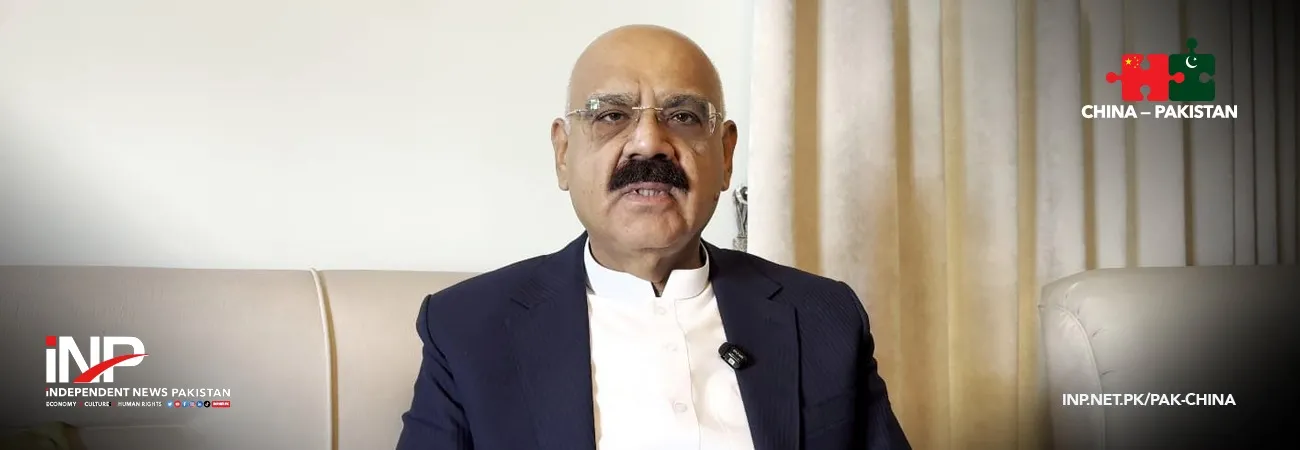
In an exclusive interview with Gwadar Pro, Shah Jahan Mirza, Managing Director of the Private Power and Infrastructure Board (PPIB), who has led the organization for the past decade and overseen the execution of almost all CPEC power projects, discussed Pakistan’s evolving energy landscape, the growing role of renewable resources, and the expanding footprint of Chinese investment in ensuring energy security.
Fast-Tracked Energy Development Under CPEC: “Basically, under China-Pakistan Economic Corridor (CPEC) maximum investment has come to the power projects. That time when CPEC was started in 2013-14, Pakistan was facing about 12 hours of loadshedding like the city of Islamabad was facing 12 hours loadshedding, so one hour electricity was available and one hour was off, so this was the situation when CPEC was started.
Chinese government, Chinese enterprises they worked very hard with Pakistani counterparts and the result was the projects were set off on very fast-track basis. Some of the initial projects were setup on imported fuel to save the time but the ultimate aim of CPEC was to develop the local indigenous resources of Pakistan. In this context the local Thar Coal, that is very critical, and other more critical is the renewable energy which include mainly wind and solar projects and hydro of course.
Wind, solar and hydro are the renewable resources. Under CPEC we have done six projects about 3300 MW on Thar Coal that is pure indigenous resource that will be actually sustainable in such a time when the imported fuels are not available when there is a shortage in the country.”
Renewable Energy Expands Rapidly: “At the same time, the renewable energy projects are solar, wind and hydro. So, solar and wind are around 1400MW that has been done under CPEC. And similarly, there are two largest hydro power projects in private sector in Pakistan done under CPEC.
One is the 884MW Suki Kinari Hydropower project and the other one is 720MW Karot Hydropower Project. These are the two largest hydro power projects or hydro IPPs done in private sector under CPEC. This has helped a lot in bringing in cheap and environment friendly and renewable energy in Pakistan.
In this difficult time when the import of oil and LNG is becoming more and more difficult, and very very expensive, in these times, these local resources whether it is wind, solar or hydro, help actually generate electricity without any import of fuel and not only save a lot of foreign exchange on fuel import but also provide a local resource, which is not dependent on the import and which is not dependent on the international situation or international crises.
So, this is the major contribution of CPEC that they have made Pakistan self-sustainable and self-sufficient, in terms of power generations.” Solar Boom Driven by Consumers: “Solar energy in Pakistan, everyone knows that has increased very rapidly, so the influx of solar has been very past in Pakistan.
Now, we see that the net metering scheme which is the rooftop solar where the consumers connect to the grid; the surplus at day time go to the grid and in the evening, they come back to the grid and get the electricity from the grid. This system was launched in 2025 by the government of Pakistan, initially the response was very slow because the technology and equipment were expensive that time. But in the last three to four years, this has expanded very rapidly.
The reason is that the prices of equipment has come down, and similarly, the government incentives is very lucrative. The government has been buying electricity at Rs. 24 per unit that is very attractive rate. The result is that we have currently, 7,200 MW of solar rooftop projects connected to the grid, and they supply a lot of energy at daytime.
But again, the off-grid which is not actually connected to the grid, there is no exact estimate about these but about 14000MW to 15000MW of that solar has also been installed which has not connected to the grid. The actual number may a bit less or more but that actually put a lot of clean energy into the grid.
It has become more and more visible that going forward, the future is renewable because fortunately, when this renewable expanded in Pakistan, the price of solar equipment has gone down and it is almost the cheapest source of energy in Pakistan because Pakistan is blessed with very long sunshine throughout the year.”
Chinese Role in Investment and Technology: “Investment by China whether it is in the form of funds, it is in the form of loan, it is in the form of equity investment, that is the one part but again almost all the solar system being installed in Pakistan, they are Chinese manufactured.
So, China is helping in two ways; one is, it is supplying efficient, cheap and reliable solar equipment to Pakistani consumers; secondly, making investment into IPPS. When we talk about this thing, I think there is some quantum of wind also, in the next ten-year plan, and there is a quantum of solar also, so maximum investment and maximum installation will be done by the Chinese companies.
So, this is, I think, where Chinese has a lot of experience at home.”: Grid Modernization and Transmission Investment: “Other than that, there is a lot of investment at the grid which is required actually. As we increase the electricity of solar and wind in the grid, which are renewable resources, but they are intermitted resources; very rapidly their generation changes, we need to have very robust and strong and efficient grid.
So, that is I think, the digitisation of grid, is a major requirement for increasing the renewable energy to the target which the government has set up that by 2035, at least 60% percent energy will be generated from the renewable resources. On top of that, the government target is actually, till 2035, the 90% electricity will be generated through renewable resources; which include nuclear as well, nuclear is also clean energy resource.
So, with this, Chinese investment is very much needed, in terms of transmission expansion and the transmission upgradation and the digitisation of the grid, that is very critical. And that is the area where Chinese companies are helping and they are helping a lot. One is that they are working as EPC contractors, as a construction contractor in these transmission lines.
The second route is actually the investment. China has made a major investment in terms of constructing Pakistan first private sector transmission line. This is HVDC transmission line about 900km line from Matiari, interior Sindh, to Lahore and that line has 4000MW capacity and investment of around US$ 1.6 billion.”
Emerging Opportunities in Energy Storage: “One more area which is now becoming very rapidly growing is the battery energy storage. Now because the grid electricity is becoming expensive; maximum consumers are now moving towards the battery backed up solar systems. In the next ten-year generation expansion plan, there are many battery energy storage projects which are large projects, which will be connected to the grid.
This intermittent energy, so we have day time energy, a lot of energy which can be stored in the batteries and that can be used in the evening time. So, as it is a cheaper resource, rather than setting up a new power plant, it is actually a better option and it is a quick option, it provides frequency and the stability to the grid in the evening and meet the demand also.
Fortunately, a lot of research and a lot of development is going into this area and day by day the cost of the battery is coming down… this will be one of the major venues for the investment, and supply of equipment by the Chinese companies.”
Credit: Independent News Pakistan (INP) — Pak-China
Related News