


i NEWS PAK-CHINA
Pakistan, China explore partnership to boost climate-resilient agricultureBreaking
February 13, 2026
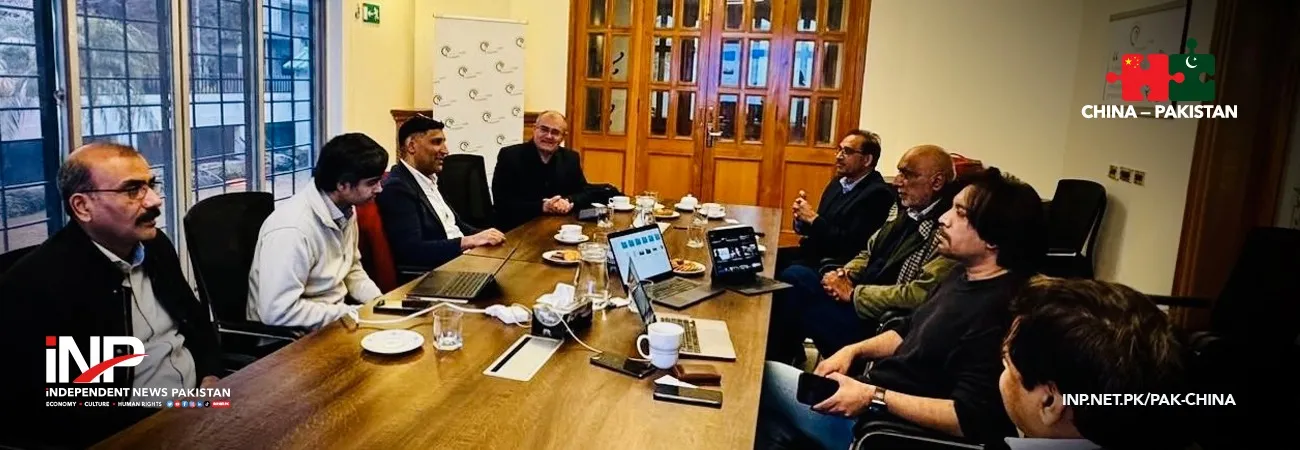
Freedom Gate Prosperity (FGP) hosted a high-level meeting with Dr. Sayad Parastar, Chairman of China-based Henan Pallas Biotechnology Co. Ltd., to explore collaborative strategies aimed at restoring soil health and enhancing agricultural productivity in Pakistan’s climate-stressed regions.
The meeting, held here at FGP’s office brought together leading experts and stakeholders, including Pakistani-German scholar Sarmad Hussain, Shafqat Aziz, Dr. Shahbaz Tariq, Dr. Kausar Khan, Atif Saeed of FGP, and Asad Rafi, CEO of Micronox.
The discussions focused on addressing critical challenges facing Pakistan’s agricultural sector, particularly soil degradation, salinity, nutrient imbalance, and declining fertility, says a report carried by Gwadar Pro on Friday.
Participants described the engagement as a constructive step toward structured and science-driven cooperation between Pakistan and China in sustainable agriculture.
With climate change, water scarcity, and land degradation increasingly threatening food security, both sides emphasized the need for long-term soil restoration strategies rather than short-term yield enhancement measures.
Dr Parastar shared international experiences from arid and salt-affected regions, highlighting the application of S8 (octasulfur)-based solutions as part of integrated soil rehabilitation approaches.
He underscored that soil restoration must be rooted in scientific validation, careful adaptation to local conditions, and continuous monitoring to ensure sustainable outcomes.
Leading the dialogue, FGP CEO Muhammad Anwar stressed that Pakistan’s agricultural revival depends on restoring soil resilience through research-based interventions and cross-border knowledge exchange.
He emphasized the importance of engaging research institutions, government bodies, and farming communities to ensure responsible and transparent implementation.
Sarmad Hussain also contributed to discussions on coordination mechanisms, potential pilot projects, and pathways for structured international cooperation, pointing to the value of combining Chinese technological expertise with Pakistan’s local agricultural knowledge.
Both sides agreed to proceed in a phased and time-bound manner, examining technical parameters, validation processes, and collaboration modalities in the coming weeks. The possibility of pilot demonstrations aligned with Pakistan’s agricultural priorities will also be explored.
The meeting concluded with a shared commitment to advancing practical, evidence-based solutions that strengthen soil resilience, enhance farm productivity, and promote long-term food security, further broadening the scope of China-Pakistan cooperation beyond infrastructure and trade into sustainable agricultural innovation.
Credit: Independent News Pakistan (INP) — Pak-China
Related News