



INP-WealthPk

China’s afforestation model offers pathway for Pakistan’s climate resilience
May 07, 2026
By Azam Tariq
Pakistan’s climate resilience will increasingly depend on how effectively it restores degraded land, protects watersheds, and expands forest cover. China’s long-running afforestation and desertification-control experience offers a practical model for integrating technology, governance, and community participation into a nationally coordinated green development strategy.
China’s state-run news agency Xinhua, citing China’s forestry administration, reported that during the 14th Five-Year Plan period, China afforested 549 million mu of land, restored more than 4.34 million mu of wetlands, and treated 152 million mu of desertified land, raising forest coverage to 25.09%.
For Pakistan—where the Ministry of Climate Change estimates forest cover at less than 5% of total land—the key lesson extends beyond planting more trees. It lies in linking plantation drives with ecological zoning, monitoring, protection, and long-term maintenance.
Speaking with Wealth Pakistan, Aftab Mehmood, Conservator Forests, Diamer, said China’s success in combating desertification carries direct relevance for Pakistan, given shared challenges of fragile ecosystems, rising climate stress, and land degradation.
He noted that China has demonstrated how degraded landscapes can be restored through scientific land management, large-scale afforestation, and the use of drought- and heat-resistant plant species. These measures, he said, are particularly relevant for Pakistan’s arid, semi-arid, and mountainous regions, where soil erosion, forest depletion, and shifting rainfall patterns are weakening ecological stability.
Aftab added that the China-Pakistan Economic Corridor (CPEC) could serve as a platform to expand cooperation beyond infrastructure into climate resilience. Pakistan could benefit from Chinese expertise in GIS-based monitoring, remote sensing, and climate-resilient plantation planning, enabling forest departments to identify vulnerable areas, track survival rates, and strengthen protection mechanisms.
He stressed that governance will remain central to success. “By strengthening governance, ensuring strict protection of forest resources, and promoting community participation, we can effectively curb soil degradation and restore ecological balance,” he said, adding that Pakistan-China cooperation could help transform vulnerable lands into sustainable and productive ecosystems.
Prof Dr Qaisar Mahmood, Professor at the Department of Environmental Science at COMSATS University Islamabad (Abbottabad campus), said Pakistan’s primary lesson from China is consistency.
He noted that large-scale afforestation requires clearly defined targets, long-term planning, strong institutional backing, and credible monitoring systems, rather than short-lived plantation campaigns.
He emphasized that community participation and incentives for farmers could significantly improve plantation survival and management. The focus, he added, should remain on native species and rehabilitation of degraded land rather than simply increasing the number of saplings.
Better forest restoration and watershed protection, he said, can reduce flood risks, control soil erosion, regulate local temperatures, and improve water retention in fragile ecosystems.
Dr Qaisar further highlighted that afforestation can generate broader environmental benefits, including improved air quality, biodiversity conservation, soil stabilization, and increased carbon absorption. However, he cautioned that outcomes will depend on careful planning, proper maintenance, and the selection of species suited to local ecological conditions.
He also underscored the importance of ecological zoning. According to him, horticultural zones could be strengthened in regions such as Dir and Swat, while cereal and vegetable zones could be better organized across Punjab’s plains. Guzara forests could help meet local wood demand, and expanding national parks could support conservation efforts.
He further stressed the need to protect mangroves and coastal ecosystems due to their importance for fisheries, livelihoods, and climate resilience.
At the same time, he noted that urban and household-level greening should complement national forest policy. Promoting indoor plants, green buildings, and improved urban plantation can support carbon sequestration and help reduce smog in rapidly growing cities.
Pakistan’s afforestation agenda will succeed when tree planting is treated as ecological infrastructure rather than a seasonal activity. China’s experience shows that durable outcomes require scientific planning, strong protection mechanisms, community incentives, and consistent policy commitment.
For Pakistan, adopting such an approach can strengthen climate resilience while supporting livelihoods, biodiversity, and sustainable local economies.
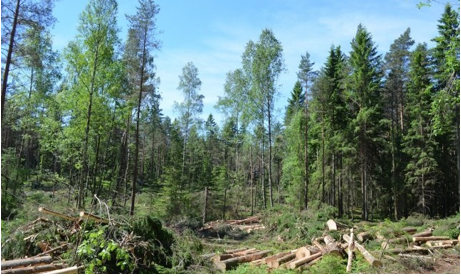
Credit: INP-WealthPk
Related Articles