



INP-WealthPk
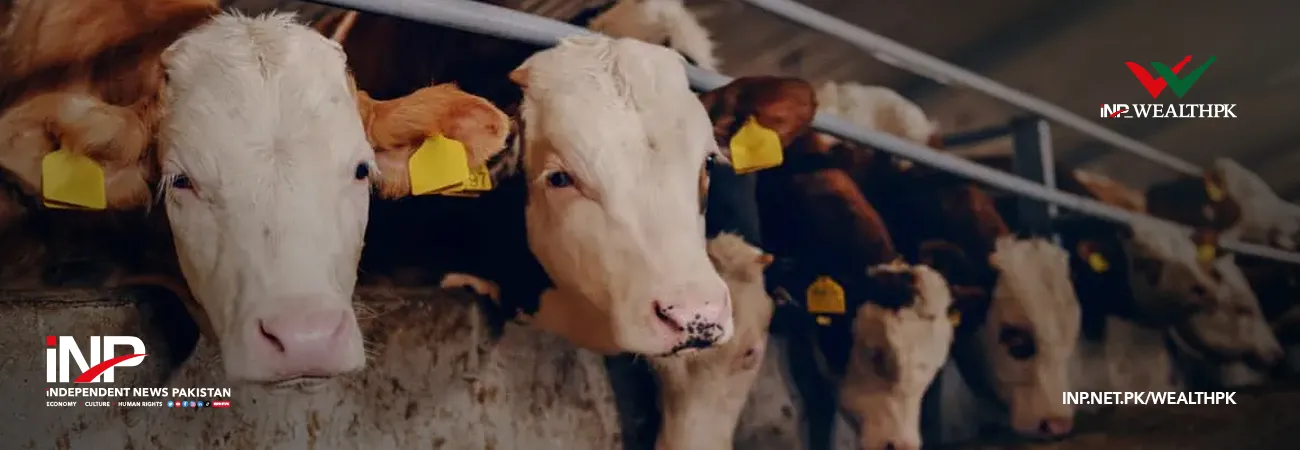
Pakistan-China vaccine partnership seen opening new opportunities for livestock exports
May 11, 2026
By Azam Tariq
Pakistan’s recently announced partnership with China for animal vaccine cooperation is being viewed by livestock experts as a potentially important step toward improving disease control standards and expanding the country’s livestock export potential.
During President Asif Ali Zardari’s recent visit to China, the Sindh Livestock & Fisheries Department signed a joint venture agreement with China’s Luoyang Modern Biology Group for the supply of animal vaccines, including vaccines for foot-and-mouth disease (FMD). The agreement also covers technology transfer and the development of animal traceability systems.
Experts believe the initiative could help Pakistan address long-standing challenges related to livestock diseases, vaccine quality, and export certification requirements.
According to the Pakistan Economic Survey 2024-25, the livestock sector contributes around 14.97% to GDP and 63.6% to agricultural value addition, while supporting more than eight million rural households. The sector also contributes nearly 2.9% to Pakistan’s exports through meat, live animals, and other animal-based products.
Despite this large domestic base, Pakistan’s live animal exports remained limited at just $1.79 million in 2025, according to the UN COMTRADE database. Meat exports, however, reached $511 million in FY2023-24, according to the annual report of the Trade Development Authority of Pakistan (TDAP).
Speaking with Wealth Pakistan, Dr. Umair Nawaz, Manager of Dairy & Livestock at Habib Bank Limited Zarai Services Pakistan, said effective vaccination against FMD is critical for improving Pakistan’s livestock export prospects.
He said major gaps still exist at the smallholder and village level, where unvaccinated animals often enter the supply chain. According to him, FMD-positive cases detected at slaughterhouses become major obstacles for export markets.
“Consistent vaccination along with proper cold chain management can help Pakistan move toward FMD-free status, which is essential for access to premium international markets,” he said.
Dr. Nawaz said Pakistan has also faced issues related to limited public-sector vaccine availability, weak cold chain systems, and low vaccination coverage at small farms due to insufficient awareness among farmers.
He stressed the need for stronger public-private coordination to improve vaccine delivery and monitoring systems. He also highlighted the importance of deploying trained veterinarians at village and market levels to improve affordable vaccination access for small farmers.
Ahmed Faraz, a livestock expert and farm manager, described the Pakistan-China cooperation as a positive development for the country’s livestock industry.
He said China has advanced expertise in biotechnology and scientific research, adding that successful disease control through effective vaccination could significantly improve Pakistan’s export performance.
“The global market demands disease-free and antibiotic-residue-free meat,” he said, adding that locally produced vaccines based on indigenous disease strains could prove highly beneficial for Pakistan.
Faraz said Pakistan currently relies mostly on imported vaccines that may not fully match local disease strains. He noted that local production using local strains could improve effectiveness and disease management outcomes.
He also emphasized the importance of livestock traceability systems for export certification, noting that importing countries require complete records regarding animal origin, disease history, and treatment details.
Experts believe that improved vaccination coverage, proper cold chain management, and gradual implementation of digital livestock tracking systems could help Pakistan align its livestock sector with international sanitary and phytosanitary standards required by premium export markets.
Credit: INP-WealthPk
Related Articles