INP-WealthPk

Pakistan's SCO chairmanship opens new development financing opportunities
September 07, 2026
By Azam Tariq
Pakistan's newly assumed chairmanship of the Shanghai Cooperation Organisation (SCO) gives Islamabad an opportunity to push development financing higher on the regional agenda as member states advance consultations on a proposed SCO Development Bank and expand existing interbank cooperation, experts say.
Pakistan assumed the chairmanship of the SCO Council of Heads of State for 2026-27 following the Bishkek summit, according to the Ministry of Foreign Affairs. The country will host the next SCO Heads of State summit in Islamabad in 2027.
Experts say the chairmanship comes at a critical time for the SCO's financial and economic cooperation, potentially giving Pakistan a strategic platform to champion its own priorities in connectivity, climate resilience, green development, and trade.
Discussions on new regional financing mechanisms are already underway. According to the SCO Secretariat, the fourth consultation on the proposed SCO Development Bank was held in Shenzhen on June 29-30, bringing together delegates from 28 countries to discuss key elements of the proposed institution and a work plan for further consultations.
In May, SCO finance ministers and central bank governors also discussed financial stability, greater use of national currencies in mutual settlements and progress in consultations on the proposed development bank, according to the SCO Secretariat.
Speaking to Wealth Pakistan, Ambassador Naela Chohan, former Pakistani diplomat, said the proposed development bank reflected the SCO's gradual expansion from its traditional security focus towards a broader economic and development agenda.
She said Pakistan's chairmanship offered an opportunity to give greater attention to development and infrastructure cooperation and help translate the organisation's wider economic ambitions into practical initiatives.
Dr Shafqat Munir Ahmed, Deputy Executive Director (Policy) at the Sustainable Development Policy Institute (SDPI), told Wealth Pakistan that an emerging SCO financing mechanism could provide Pakistan with an additional avenue for financing development projects.
He said Pakistan could seek support for priorities such as climate resilience, green industrialisation, connectivity and trade facilitation if these areas fell within the eventual financing framework.
Ahmed described a regional financing mechanism as a potential “regional public good”, particularly if it offered competitive financing terms and was designed around development priorities shared by SCO member states.
Existing financial cooperation within the SCO is also expanding. According to the SCO Secretariat, the SCO Interbank Association adopted its Development Strategy for 2027-31 in July and established a working group on environmental, social and governance, sustainable and socially inclusive financing.
The chairmanship of the association is scheduled to pass to the Pakistani side in October 2026.
According to the SCO Secretariat, the Interbank Association already serves as a mechanism for financing and banking support for government-backed investment projects in priority areas of SCO cooperation.
Dr Muhammad Khan, former head of the Department of International Relations at the National Defence University (NDU), told Wealth Pakistan that the emerging SCO financial architecture should be viewed in the context of broader efforts to diversify the international development-finance system.
He said additional SCO-based financing institutions could provide member states with alternatives to traditional Western-led international financial institutions (IFIs), particularly for development financing and project lending.
Khan argued that such diversification could give developing countries a broader range of financing choices and potentially greater negotiating space over their development priorities.
He also linked the SCO's economic cooperation agenda with its opposition to unilateral economic sanctions, saying sanctions imposed outside the United Nations framework could restrict legitimate business activity and impose economic costs on ordinary citizens.
“Business is what brings prosperity to the people of states, and restricting it ultimately punishes the public,” he said.
Khan said Pakistan should use its SCO chairmanship to identify viable development projects and develop a pipeline that could eventually seek financing through emerging SCO mechanisms.
He said projects focused on regional connectivity, climate resilience, green development, and trade could position Pakistan to benefit from a broader regional financing architecture if the proposed SCO Development Bank and other financing mechanisms advance.
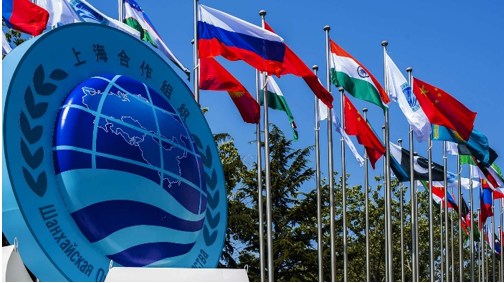
Credit: INP-WealthPk
Related Articles