


INP-WealthPk
Private sector-led livestock development model recommended for Pakistan
September 07, 2026
By Azeem Ahmed Khan
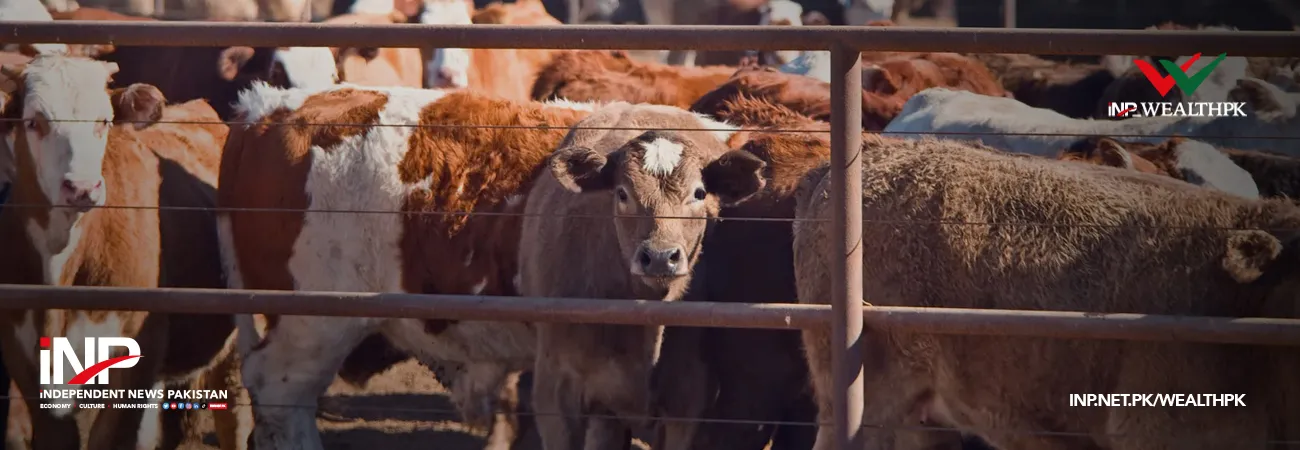
The government has been urged to shift towards a private sector-led livestock development model, with businesses taking the lead in investment, production, processing, innovation and exports while the government focuses on policy, regulation, standards and market facilitation.
According to recommendations of the Ministry of National Food Security and Research available with Wealth Pakistan, greater private-sector participation is needed to modernise the livestock industry, increase productivity and value addition, and strengthen its contribution to economic growth.
The proposed approach envisages a clearer division of responsibilities between the government and private sector, with private enterprises driving commercial activities and investment while the public sector provides an enabling policy and regulatory environment.
The documents identify low productivity, fragmented and informal value chains, limited value addition, disease risks, inadequate traceability, regulatory bottlenecks and insufficient integration with international markets among the constraints preventing the livestock sector from achieving its full potential.
To address investment and modernisation gaps, the recommendations call for targeted fiscal, financing and investment incentives across different segments of the livestock economy.
These include dairy, meat, poultry, animal feed, genetics, biotechnology, processing and cold-chain infrastructure, providing a broad range of opportunities for private investment and technological upgrading.
The proposed model seeks to shift livestock development away from fragmented interventions towards commercially viable value chains in which investment, production and processing are more closely linked with domestic and international market requirements.
Formalisation of livestock value chains is also considered important for attracting investment and increasing commercial activity. The recommendations call for expanding formal milk collection and chilling systems and refrigerated logistics, while modernising livestock markets and improving quality monitoring.
Strengthening accredited laboratories and enforcing modern slaughter and food-safety standards have also been recommended to provide the supporting infrastructure needed for a more formal and commercially competitive livestock industry.
The documents further call for rationalising regulatory and fiscal barriers affecting investment, formalisation and exports, with the objective of creating a more enabling environment for livestock businesses.
Under the proposed approach, the government's role would increasingly centre on policy formulation, regulation, standard-setting and market facilitation, while private businesses would assume a larger role in investment and commercial development.
The recommendations envisage livestock-sector transformation progressing from higher productivity towards commercialisation, formalisation, value addition and export competitiveness.
Greater private investment in modern production practices, processing facilities, logistics and supporting services is expected to help develop higher-value livestock supply chains while creating additional economic activity in rural areas.
The documents indicate that effective implementation of the proposed reforms could improve animal productivity and farmer profitability, strengthen food safety, stimulate private investment, expand higher-value processing and improve the sector's export competitiveness and foreign-exchange earning potential.
Continued policy support and institutional oversight have also been identified as important for translating the recommendations into coordinated interventions and measurable outcomes for food security, farmer prosperity, investment, economic growth and livestock exports.
Credit: INP-WealthPk
Related Articles