


i BLOGS
What is the Cipher Case?Breaking
May 18, 2026
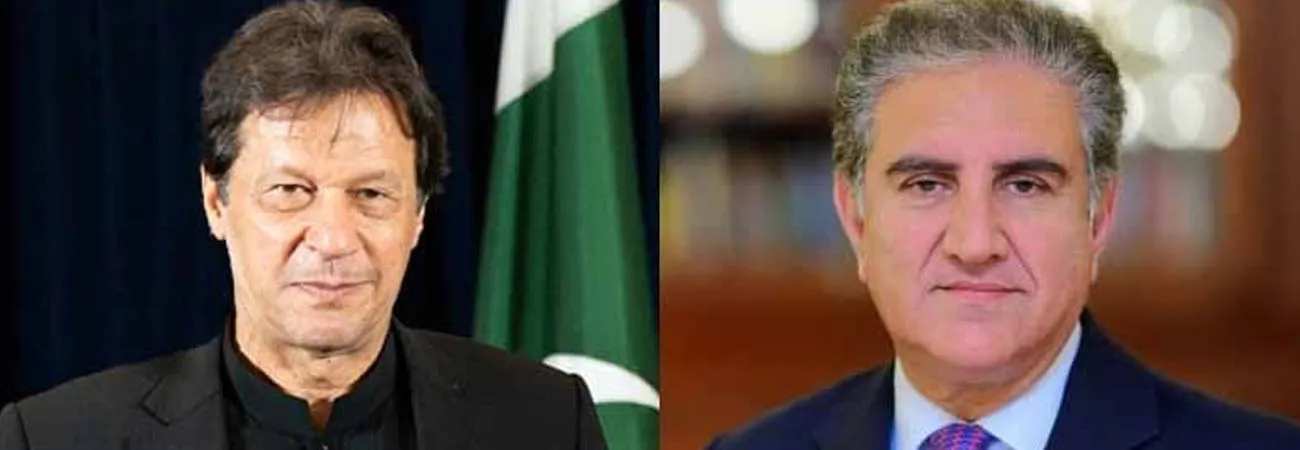
The political drama around former Prime Minister Imran Khan and former Foreign Minister Shah Mahmood Qureshi took a dramatic turn when a special court constituted under the Official Secrets Act handed down 10 years in prison to both the leaders in the cipher case.
The case relates to a classified diplomatic cable, called the “cipher,” which the Federal Investigation Agency (FIA) said was retained and misused by Imran Khan illegally after he was removed from office.
But for millions of Pakistanis the cipher is far more than a legal case. It was a watershed moment in the political history of Pakistan – one that raised serious questions about foreign interference, national sovereignty and the limits of an independent foreign policy.
The Beginning of the Controversy
In March 2022, Khan waved a document in front of supporters at a public rally, saying it contained proof of a “international conspiracy” to remove his government.
At the time, his claims were largely dismissed by political opponents and sections of the media as an attempt to construct a political narrative. Critics said there was no hard evidence publicly released and many thought the allegations were inflated for political reasons.
But Imran Khan persisted in claiming that outside pressure was being exerted to effect regime change in Pakistan.
“I have a government that is being undermined from within by foreign money and political influence,” he said.
He claimed that certain local actors knowingly participated in this effort, while others were unknowingly being used as instruments of a broader geopolitical agenda.
The row intensified when reports emerged of a diplomatic conversation between Donald Lu, a senior US official, and Pakistan’s ambassador to the United States.
The Diplomatic Message
The message, which was later linked to the cipher, supposedly indicated that Pakistan would be diplomatically isolated if Imran Khan remained in power. It also said that relations with Washington could improve if the no-confidence vote against him passed.
PTI supporters interpreted the alleged message as a direct threat to Pakistan’s sovereignty and democratic process.
This kind of language was deeply disturbing for many Pakistanis, given the nuclear capability of Pakistan and its strategically important position in global politics. To them the question was not just one political leader, but whether foreign powers could influence political outcomes inside Pakistan.
Why Did Many People Change Their Minds
Many people were skeptical when Imran Khan first talked about the cipher in public as the real document was not out in public. His words were often dismissed as political rhetoric without any proof.
But bits of the diplomatic dispatch have been coming to light and discussed publicly over the years, leading many of his followers to argue that Imran Khan’s warnings were not all made up after all.
For his supporters, the appearance of the document and its decryption proved the fears he expressed in 2022 were real. They believe history is now revealing what was once dismissed as a conspiracy theory.
On one hand, Imran Khan is seen as a leader who has been punished for charting an independent foreign policy and revealing external pressure. To the second, he is accused of misusing sensitive state documents for political gain and violating national security laws.
What is undeniable, however, is that the cipher case has already earned a permanent place in Pakistan’s political history – and its full implications may continue to shape the future of the country for years to come.
Credit: Independent News Pakistan (INP)
Related News