i NEWS PAK-CHINA
Chinese, Pakistani researchers collaborate to reduce metal pollution in tomatoesBreaking
February 09, 2026
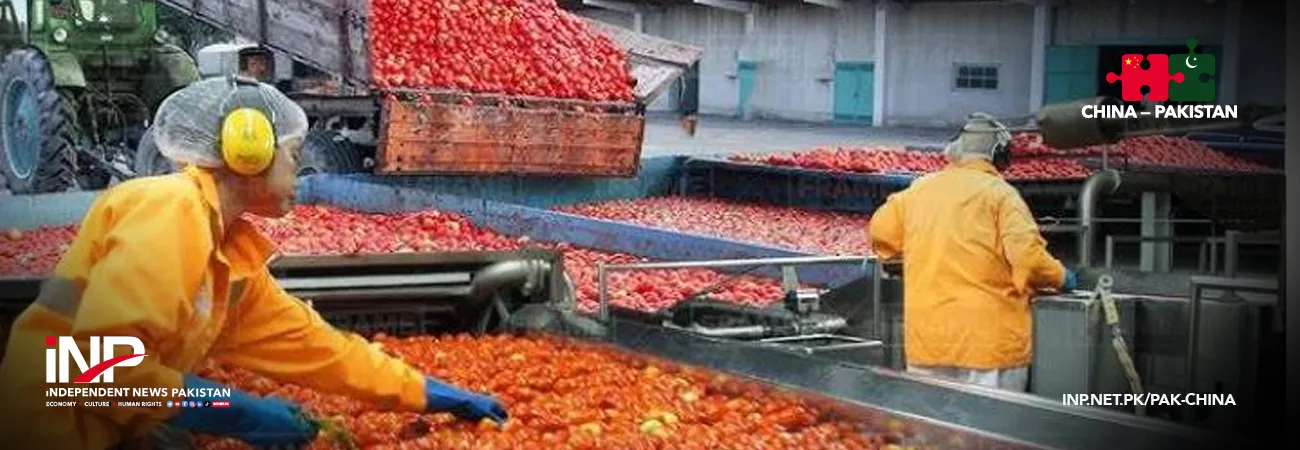
Tomatoes, a vital crop for Pakistan's economy, are at risk. With annual production exceeding 569,000 tonnes, tomatoes not only provide sustenance to millions of smallholders but also generate over $100 million in export revenue. However, a new and growing threat is putting this essential industry in jeopardy: heavy metal pollution, China Economic Net reported on Monday. Industrialisation in Pakistan, particularly the tannery industries in cities such as Sialkot, Kasur, and Lahore, has led to the contamination of irrigation canals and agricultural soils with hazardous metals like chromium (Cr), cadmium (Cd), and lead (Pb).
These metals, when absorbed by tomato plants, pose serious health risks to consumers, including carcinogenic effects, as they accumulate in edible parts of the fruit. “The situation is further exacerbated by the fact that tomatoes have a relatively high metal translocation factor, making them particularly susceptible to accumulating these toxic metals.
Farmers face potential yield losses of up to 50% and a sharp decline in fruit quality.
The contamination exceeds permissible limits set by organisations such as the Codex Alimentarius and the EU, threatening the safety of Pakistan’s tomato exports,” Tahir Naqqash, Assistant Professor, Institute of Molecular Biology and Biotechnology, Bahauddin Zakariya University, Multan told China Economic Net.
“We are developing a system in collaboration with Shenyang Normal University (SNU) where microbes and plants will work together to detoxify the soil, particularly targeting cadmium, a major pollutant in industrial areas. We aim to prevent cadmium from entering the tomato plant and accumulating in its fruit." Naqqash said.
At the end of last year, his participation in a Training Camp on Ecological and Green Development at SNU gave him the insight to consider not only how to remove the metals but also what to do with the residues after the bioremediation process.
“Here I observed that we can extract heavy metals from the residues and those metals can be re used for the processing,” he said.
Pakistan's tomato industry, spanning approximately 61,000 hectares, is concentrated in Sindh, Khyber Pakhtunkhwa, Balochistan, and parts of Punjab. Conventional remediation methods, such as the application of chemical amendments or soil excavation, are costly, non-selective, and environmentally disruptive, often leading to secondary pollution without offering a permanent solution.
“Indigenous microbial communities in contaminated soils offer a promising bioremediation avenue. Native plant-growth-promoting rhizobacteria have evolved adaptive mechanisms, including enzymatic reduction, biosorption onto cell walls, and production of siderophores that chelate metals, reducing their toxicity.
Biochar, derived from agricultural residues is an eco-friendly sorbent with high surface area and porosity, capable of immobilizing heavy metals via ion exchange, complexation, and precipitation. When nanosized biochar magnetized with iron oxides, it gains superior adsorption kinetics, magnetic separability, and microbial hosting capabilities, preventing leaching and enabling post-use recovery,” Naqqash said.
Credit: Independent News Pakistan (INP) — Pak-China
Related News